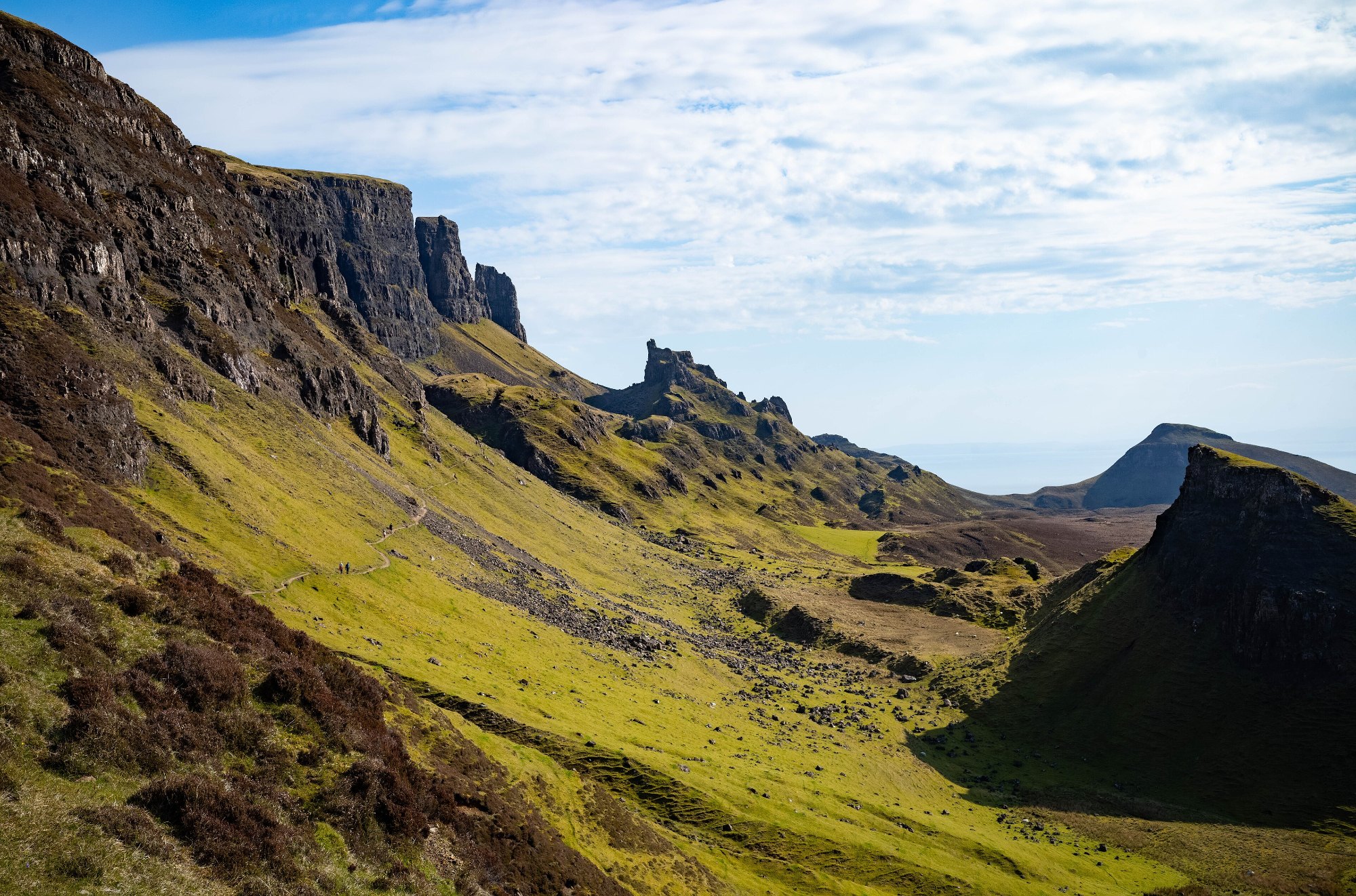
Photo above: The Quiraing on Skye. rboed*, Wikimedia Commons, CC BY 2.0, cropped.

Scotland is a road trip of lochs, bare mountains and castles, on single-track roads where you let oncoming traffic pass at a passing place. You drive on the left, and the finest stretches are in the Highlands, on the west coast and on the islands. Below you can read how to get there from mainland Europe, what to sort out in advance for the United Kingdom and which routes are worth it.
- From BrusselsEdinburgh approx. 11h40
- EntryETA (£20) and passport
- Alcohol0.5 g/l
- Drivingon the left, in mph
On this page: Regions Road trip Rules When to go Food Questions
The best regions and routes for a road trip
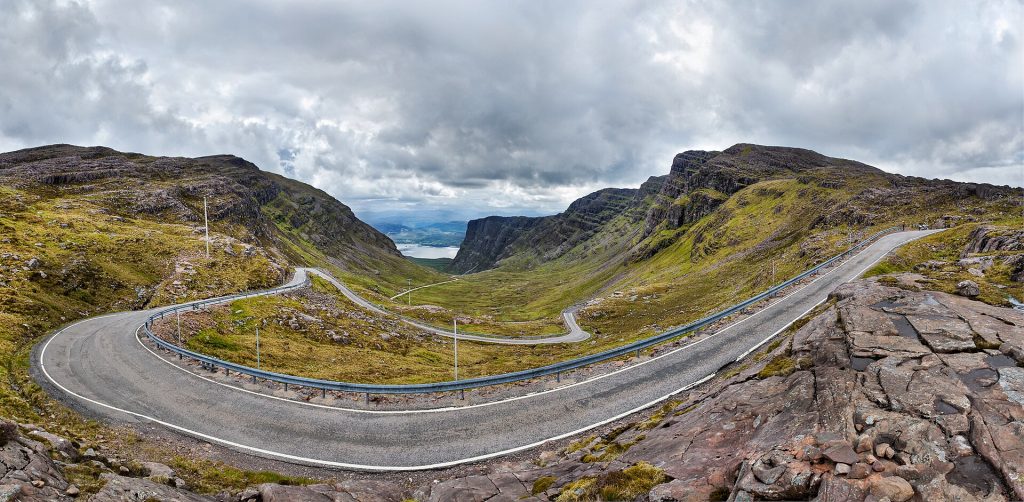

830 km
North Coast 500
Scotland’s best-known road trip, over the Bealach na Bà and past Torridon. It gets busy: go in spring or autumn.
More about this region
Scotland’s best-known road trip: a 516-mile loop (about 830 km) from Inverness through the northern Highlands. Allow 11 to 13 hours of pure driving, spread over 5 to 7 days. Highlights are the Bealach na Bà to Applecross, Torridon, Smoo Cave and the Duncansby Stacks. From Brussels you reach Inverness in approx. 14h40.
To be fair, the NC500 suffers from its own success. It gets busy, campervans park in car parks too small for them, and according to The Scotsman 28 campsites called the £40 campervan pass unfair competition. In August 2026 a proposal in Sutherland sought to ban campervans overnight from the car parks in Durness and Golspie. We found no final decision; a similar plan was dropped in 2025. So go in spring or autumn, book your campsites, or choose one of the quieter routes below.
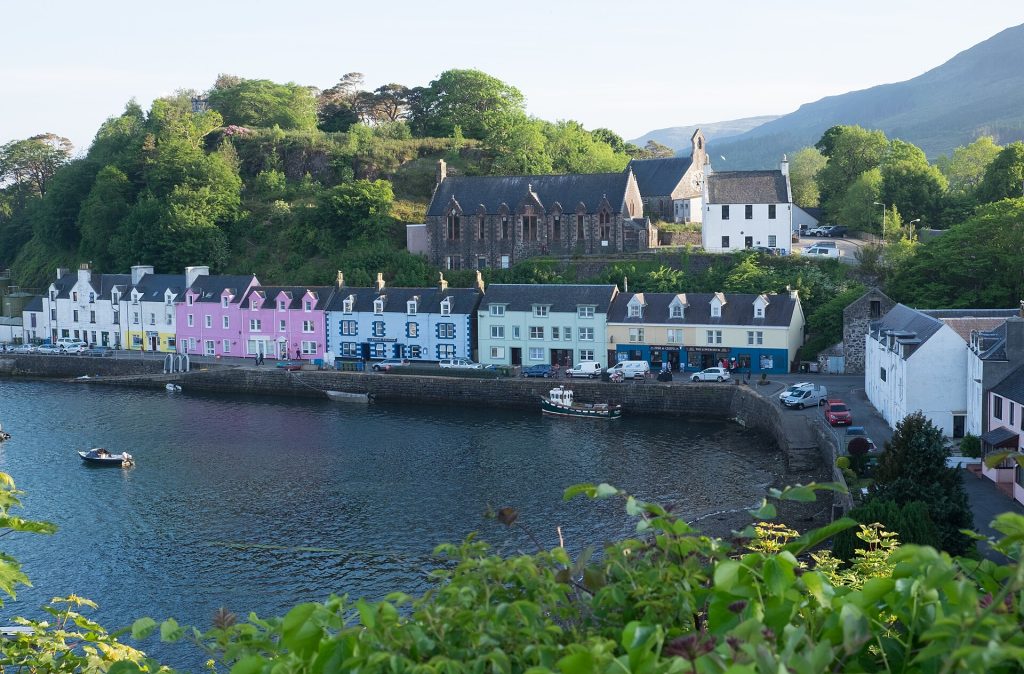

Island
Isle of Skye
Past Eilean Donan Castle you drive on to the island, to Portree and the castles of Dunvegan and Armadale.
More about this region
Past Eilean Donan Castle you drive on to Skye, with Portree and the castles of Dunvegan and Armadale.
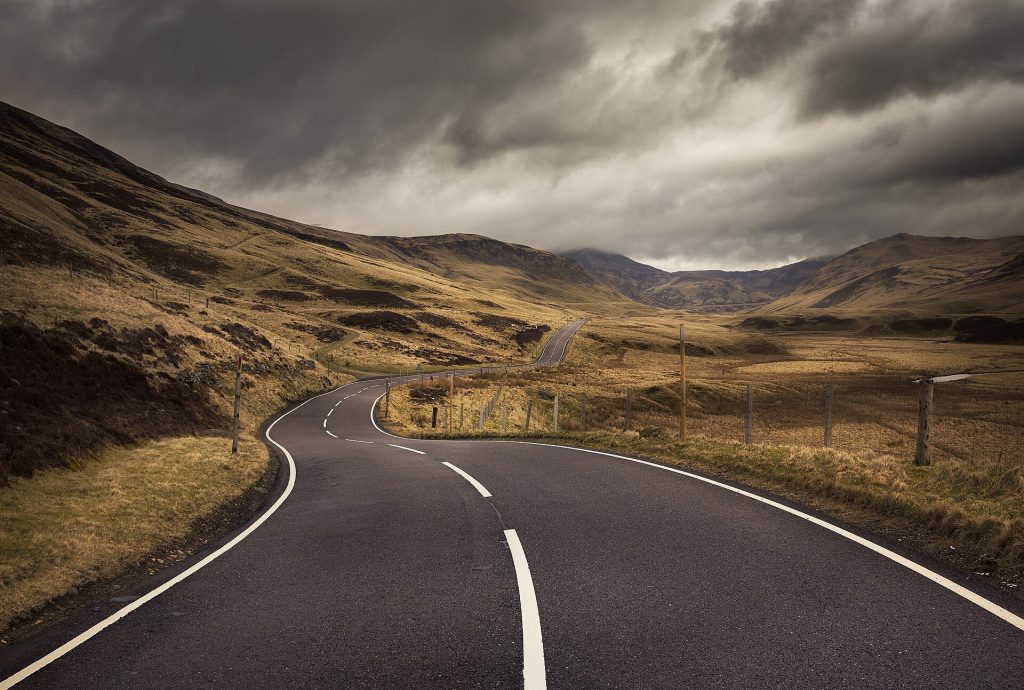

90 miles
SnowRoads through the Cairngorms
Over the Cairnwell Pass at 670 m, the highest public road in the UK. Allow 3 to 5 days.
More about this region
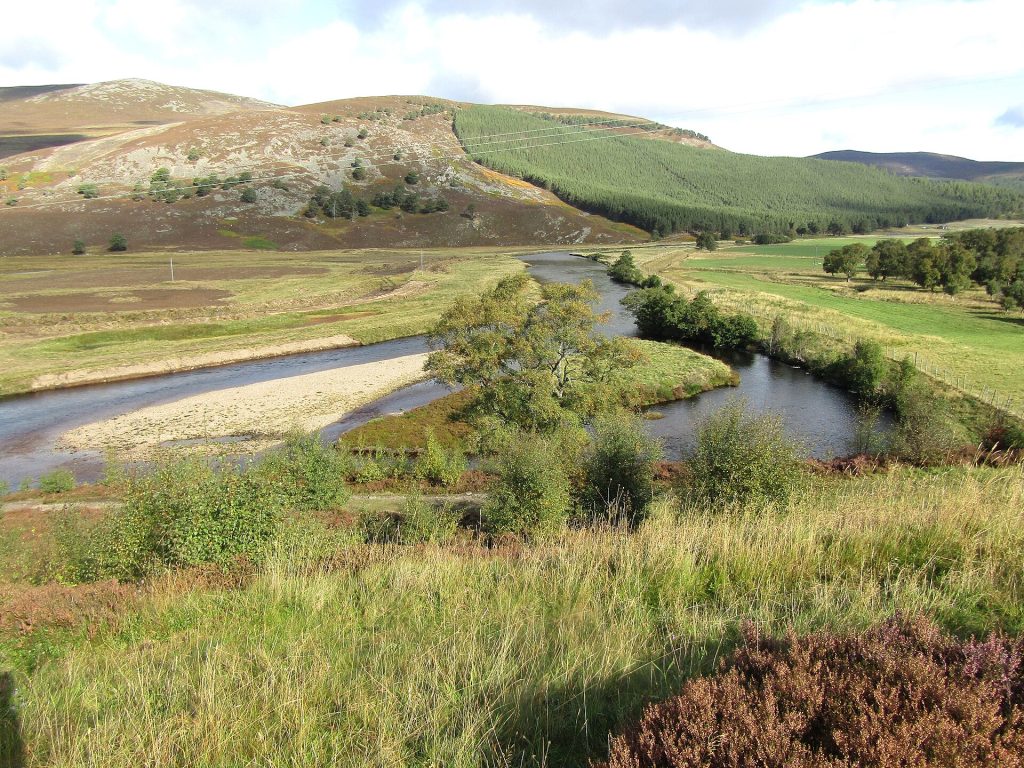
From Blairgowrie to Grantown-on-Spey (90 miles, 3 to 5 days) over the Cairnwell Pass at 670 m, the highest public road in the UK. Along the way you find artworks and properly dark skies for stargazing.

5 to 6 hours
North East 250
Gannets at Troup Head, a cooperage in Speyside and Braemar. Good all year.
More about this region
A loop through Aberdeen, Speyside and Royal Deeside, good for 5 to 6 hours of driving. You see gannets at Troup Head, the Speyside Cooperage and Braemar. The route works all year, with a different focus each season.

129 miles
Loch Lomond, Argyll and Mull
Past lochs and Castle Stalker, and from Oban by ferry to Mull. Camping in the national park needs a permit.
More about this region
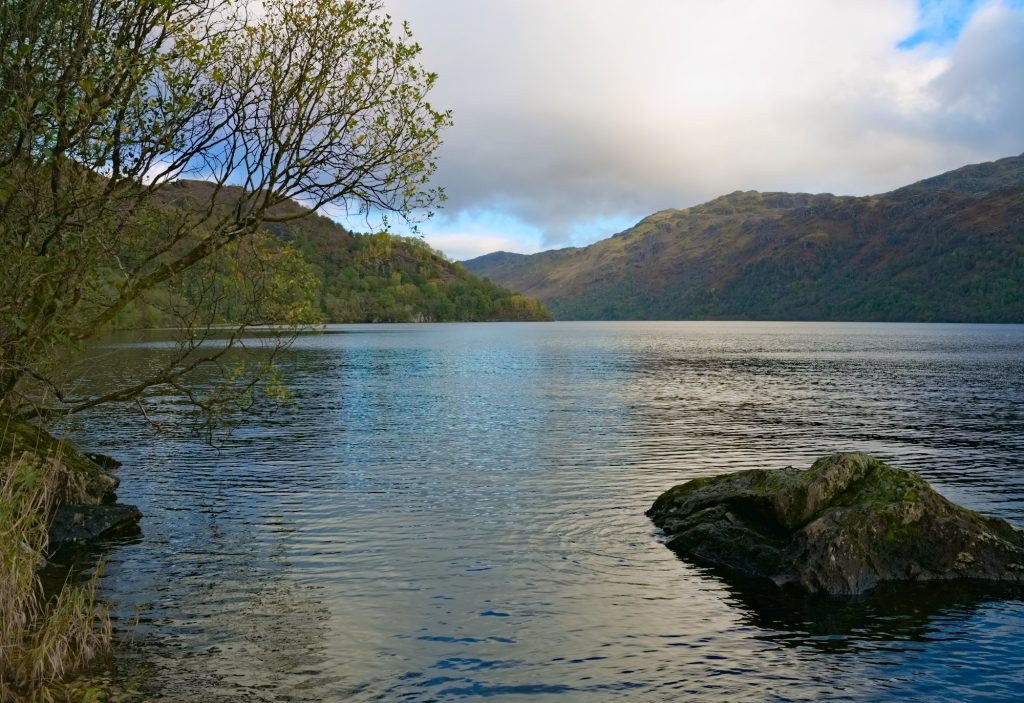
The Argyll Coastal Route (Tarbet–Fort William, 129 miles) runs past lochs, mountains and Castle Stalker. Via the harbour of Oban, a CalMac ferry takes you to Mull and Tobermory. If you camp in Loch Lomond & The Trossachs National Park, remember the permit.

300 miles
South West Coastal 300
Dark skies in Galloway Forest Park, the Mull of Galloway and Culzean Castle. Good all year.
More about this region
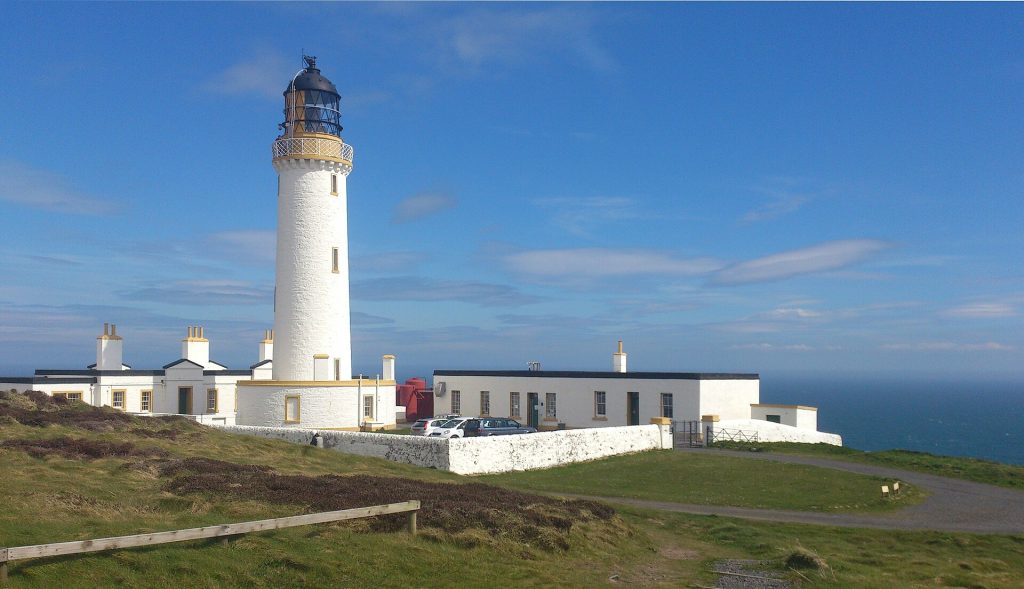
Through Dumfries & Galloway and Ayrshire (300 miles, 6 to 7 hours of driving), good all year. Highlights are the Dark Sky Park in Galloway Forest Park, the Mull of Galloway and Culzean Castle.
Road trip guide
North Coast 500 in six days
6 days · 830 km from Inverness
Day by day around the northern Highlands: driving times, where to sleep and honest tips about the crowds.
The rules at a glance
Last checked on 24 November 2026. Rules and prices change: check the official sources listed at the bottom just before you leave.
The crossing and the drive through England
Tunnel or overnight ferry
Through the tunnel you reach Edinburgh in approx. 11h40. On the overnight ferry to Newcastle you sleep on board.
More details
- Channel Tunnel (LeShuttle): 2h20 from Brussels to the terminal at Coquelles near Calais, then 35 minutes platform to platform to Folkestone. From there it is 8h45 to Edinburgh or 11h45 to Inverness.
- Ferry to Dover: DFDS sails from Calais (about 100 minutes) and from Dunkirk (from 2 hours) to Dover. We have not calculated driving times for this route.
- Overnight ferry IJmuiden–Newcastle (DFDS): 3h00 from Brussels to IJmuiden, then a daily crossing of about 16h45. From Newcastle it is about 1.5 hours to the Scottish border and 5h45 to Inverness: approx. 25h25 in total, but you sleep on board.
- Overnight ferry Rotterdam Europoort–Hull (P&O): 2h15 from Brussels to Europoort, an overnight crossing, and then 5h05 from Hull to Edinburgh.
The tunnel is fastest; the overnight ferry to Newcastle saves you most of the drive through England.
Through England on the way
- From Folkestone to Edinburgh it is 745 km, with the same speed limits as in Scotland. The alcohol limit does differ: 0.8 g/l in England, 0.5 g/l in Scotland.
- Dartford Crossing: if you take the Thames crossing east of London, you pay the Dart Charge of £3.50 per crossing between 6am and 10pm, in advance or by midnight the day after. The M6 Toll is also a toll road.
- Cities: for London, register your car for the ULEZ in advance, and Birmingham, Bristol and Bath, among others, have a Clean Air Zone.
What to sort out for the UK
ETA (£20) and passport
Without an ETA you cannot board, and an ID card is not enough. Apply for the ETA at least 3 working days ahead.
More details
- ETA: mandatory for visitors from the EU, and strictly enforced since 25 February 2026: without an ETA you cannot board. It costs £20 per traveller, children included, and is valid for 2 years (or until your passport expires). Apply at least 3 working days ahead via gov.uk or the official app; other sites charge more.
- Passport: Belgians need a passport; an ID card is not enough. Check on GOV.UK what applies to your nationality.
- Documents: with an EU driving licence you may drive for up to 12 months. Bring your vehicle registration certificate and proof of insurance, such as a green card. An EU number plate with the country letter is recognised as the national identifier.
Driving on the left and single-track roads
Keep left, speeds in mph
On single-track roads you let oncoming traffic pass at a passing place. Never park in one.
More details
- Keep left, overtake on the right. Go clockwise around roundabouts; traffic already on the roundabout has priority. At junctions without signs or markings, nobody has priority.
- Speeds are in miles per hour. You recognise a built-up area by its street lighting, not by a sign.
- Phone: you may not hold it, not even in a traffic jam. Hands-free calls and navigation in a holder are allowed.
- Animals: expect livestock and deer on the road, especially in spring and summer.
Single-track roads and passing places
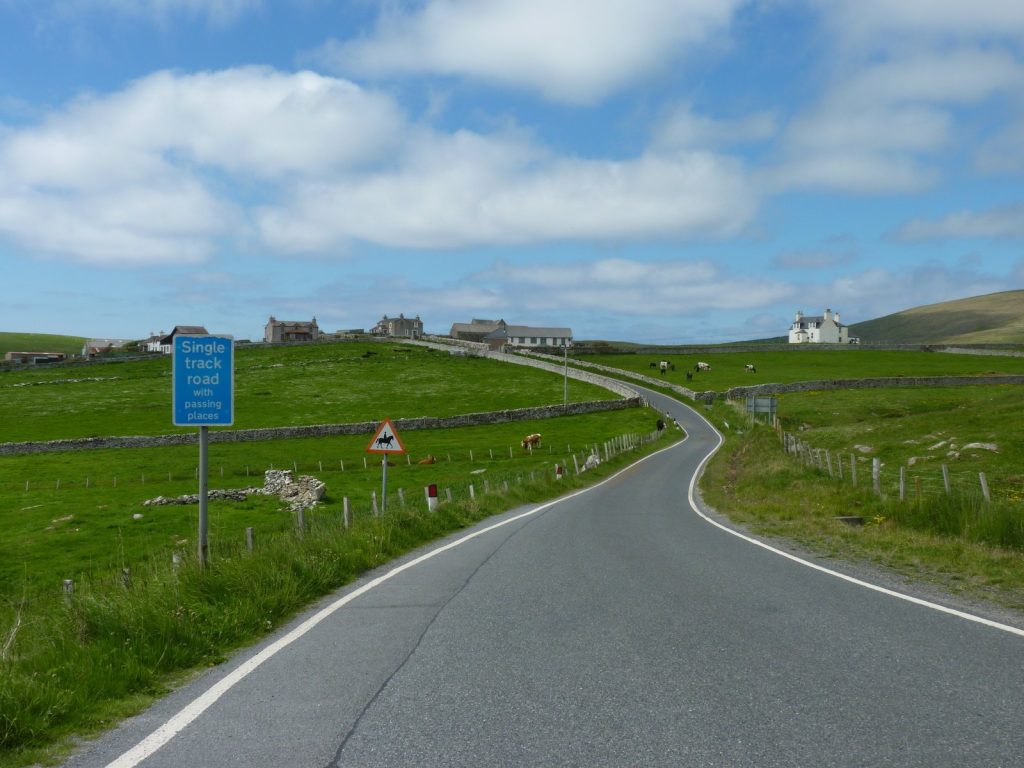

- In the north, the west and on the islands many roads are single-track. Oncoming traffic, or someone who wants to overtake? Pull into a passing place on your left, or wait opposite one on your right. Traffic going uphill gets priority where possible; reverse to the previous passing place if needed (Highway Code, rule 155).
- Never park in a passing place: it can earn you a fine. Let faster traffic past and thank drivers who wait for you with a wave.
- In a campervan: if you cannot reverse a few hundred yards, avoid such roads. If your van is larger than a VW T5 (about 16 to 18 ft), avoid the Bealach na Bà (take the A832) and the B869 near Drumbeg (take the A894).
Vignettes, tolls and low-emission zones
No vignette, but LEZs in four cities
Glasgow, Edinburgh, Aberdeen and Dundee: petrol at least Euro 4, diesel Euro 6. No registration needed.
All rules
- Vignette: there is none, and most roads are free. Exceptions include the M6 Toll and the Dartford Crossing.
- LEZ Scotland: Glasgow, Edinburgh, Aberdeen and Dundee, day and night. Petrol cars must be at least Euro 4, diesels Euro 6. Cameras recognise foreign plates; no registration is needed. The first fine is £60 (halved if paid within 14 days), then it doubles each time, up to £480.
- ULEZ London: £12.50 per day for a car that does not meet the standards. Cars registered abroad must be registered with TfL in advance, even if they comply; processing can take up to 10 working days.
The full picture is in our guide to vignettes, tolls and low-emission zones in Europe.
What to carry in your car
Nothing mandatory
A vest and triangle are not required. Your headlamps must not dazzle, though.
More details
- Nothing is mandatory: a hi-vis vest and a warning triangle are not required; the Highway Code only gives advice on them. Place a triangle at least 45 metres behind your car, but never on a motorway. Whatever your home country requires stays in the car: your car has to meet the rules of the country where it is registered, also abroad.
- Headlamps: the lights of a car built for driving on the right point the wrong way, and dazzling other road users is banned (rule 114). We found no explicit requirement to adjust them. Adjust them (with LED lights often via the menu) or fit headlamp beam deflectors.
The packing list for all countries is in our guide to mandatory car equipment by country.
Winter
No winter tyre requirement
What you must do: clear all windows of snow and ice before you set off.
More details
In winter winter tyres and snow chains are not mandatory, although winter tyres may still be needed in the Highlands and rural areas. What you must do: clear all windows of snow and ice before you set off. More in our guide to winter tyres and snow chains in Europe.
Where to stay overnight
In lay-bys, with everything inside
A roof tent counts as a vehicle. Wild camping is for tents, not for your car.
All rules
- Campsites are the safe choice everywhere; book in high season.
- In your car, campervan or roof tent you may rest overnight in official lay-bys, as long as everything stays inside the vehicle: no awning, chairs or cooking outside. In Scotland a roof tent counts as a vehicle, so the campervan rules apply. In Loch Lomond & The Trossachs, lay-bys are for short breaks only.
- Highland Campervan Scheme: with a voluntary £40 pass for 7 days you may stay from 10pm to 8am at 12 designated car parks, including in Ullapool, Durness and Gairloch. You may not return within 72 hours, and you cannot book.
- Stay the Night: from 1 April to 31 October you can pay to stay overnight at some Forestry and Land Scotland forest car parks, only in a self-contained vehicle with its own toilet.
More in our guide to sleeping in your car, campervan or roof tent.
Wild camping with a tent is allowed under the Scottish Outdoor Access Code: in small numbers, no more than two or three nights in one place, well away from buildings and roads. The right does not cover motor vehicles. In the camping management zones of Loch Lomond & The Trossachs you need a permit from 1 March to 30 September (£4.50 per tent per night). These rules are under review: the Park Authority Board considers the proposals between December 2026 and February 2027, and any changes apply from 1 March 2028 at the earliest. As of 24 November 2026 no decision had been taken. In England and Wales you camp only with the landowner’s permission. See our guide to wild camping in Europe.
Off-road and unsealed roads
Only with the landowner’s permission
In practice on private land. Green lanes with vehicle rights are in England and Wales.
All rules
- Scotland: the right of access does not cover motor vehicles. Driving off the road is only allowed with the landowner’s express permission, and in case of nuisance the police can seize your vehicle. Routes with vehicular rights are rare and usually shorter than a mile.
- On private land it is possible, for example at the Land Rover Experience in Butterstone near Dunkeld or with lessons in a Defender at Gleneagles. Ask whether you may use your own car.
- England and Wales: you may drive green lanes that have vehicular rights. On a BOAT (Byway Open to All Traffic) you may; on a UCR (unclassified county road) the right is presumed, but check it. You can find routes through TrailWise2 by the Green Lane Association (GLASS).
More in our guide to legal off-road driving in Europe.
Everything in one table: Scotland at a glance
| Topic | What applies |
|---|---|
| Driving time from Brussels | Edinburgh approx. 11h40, Inverness approx. 14h40, via the Channel Tunnel (35 min in the tunnel included) |
| Speed limits | 30 mph (48 km/h) in built-up areas, 60 mph (96 km/h) on single carriageways, 70 mph (112 km/h) on dual carriageways and motorways |
| Alcohol | Scotland 0.5 g/l (breath 22 µg/100 ml); England and Wales 0.8 g/l |
| Vignette and tolls | No vignette, mostly toll-free (exceptions include the Dartford Crossing and the M6 Toll); you do need an ETA (£20) and a passport |
| Low-emission zones | LEZ in Glasgow, Edinburgh, Aberdeen and Dundee (no registration); ULEZ London: register in advance |
| Mandatory in the car | Nothing: a vest and triangle are not required; your headlamps must not dazzle |
| Winter | No requirement for winter tyres or snow chains; you must clear snow and ice from your windows |
| Sleeping in a car or roof tent | In lay-bys with nothing set up outside; a roof tent counts as a vehicle |
| Wild camping | With a tent for 2 or 3 nights (Access Code), not with your car; permit at Loch Lomond from 1/3 to 30/9 |
| Off-road | Off the road only with the landowner’s permission, in practice on private land; green lanes only in England and Wales |
| Emergency number | 999 or 112 |
The driving times on this page are model values from the OSRM route planner, without breaks, traffic, border checks or waiting time at terminals and ports.
When to go
best timegood or openfire ban or camping permit
The full picture
- Spring and early autumn: for the NC500, April to June and September to October are best: milder weather, long days and fewer people. In winter, opening hours are limited.
- All year: the South West Coastal 300 and the North East 250, which in winter is about small towns and distilleries.
- Fixed dates: fire ban in the Cairngorms from 1 April to 30 September, permits at Loch Lomond from 1 March to 30 September.
- Midges are found mainly near boggy ground: bring DEET and a head net. We found no reliable source on the months when they are worst.
Food and local produce
- Ullapool: locally landed seafood, on the NC500.
- East Neuk (Fife): award-winning fish and chips in Anstruther and the working fishing harbour of Pittenweem, on the Fife Coastal Route.
- Royal Deeside: the Fife Arms in Braemar and the Balmoral Arms in Ballater.
- Galloway: the Wanlockhead Inn, with local ingredients.
- Whisky belongs to Speyside and Galloway, with the Bladnoch Distillery among others. Leave the tasting to whoever is not driving.
Frequently asked questions
Do I need an ETA and a passport?
As an EU visitor you need an ETA: £20 per traveller, children included, and without it you cannot board. Belgians also need a passport, as an ID card is not enough. Apply for the ETA at least 3 working days before you leave.
Can I sleep in my car or roof tent in Scotland?
You may rest overnight in official lay-bys, as long as everything stays inside the vehicle. A roof tent counts as a vehicle, so the right to wild camp does not cover it. You are on safe ground at a campsite, with the Highland campervan pass or through Stay the Night.
Is the North Coast 500 still worth it?
Yes, if you avoid the crowds: choose spring or autumn, book your overnight stays and do not take a large campervan over the Bealach na Bà. If you want peace and quiet, the North East 250 and the South West Coastal 300 are good alternatives.
Official sources
- Entry: GOV.UK – ETA, Belgian Foreign Affairs – United Kingdom (Dutch), GOV.UK – EU driving licence
- Traffic rules: GOV.UK – speed limits, GOV.UK – drink-drive limit, Highway Code – rules 103–158, Traffic Scotland – country roads
- Tolls and low-emission zones: GOV.UK – Dart Charge, mygov.scot – Low Emission Zones, TfL – ULEZ
- Equipment and winter: Highway Code – breakdowns, Traffic Scotland – winter tyres
- Overnight stays: Highland Council – Campervan Scheme, Loch Lomond & The Trossachs – motorhomes, Loch Lomond & The Trossachs – permits, Scottish Outdoor Access Code – camping
- Off-road: ScotWays – motor vehicles, Lake District – unsealed roads
- Crossing: LeShuttle, DFDS – IJmuiden–Newcastle, DFDS – Dover–Dunkirk
- Routes and NC500: VisitScotland – North Coast 500, VisitScotland – scenic routes, Highland Council – Sutherland Motion (31/8/2026)
- Emergency numbers: GOV.UK – 999 and 112
- Driving times: calculated with OSRM, map data © OpenStreetMap contributors
Driving on?