Image above: AI-generated mood image, not a real place.
Drive across Europe and every country charges you for the road in a different way. Austria and Switzerland use a vignette, France, Italy, Spain and Portugal charge tolls per section, and Norway uses cameras. Germany and the United Kingdom are largely free. On top of that come low-emission zones in cities, each with its own sticker or registration, and more and more of it has to be arranged online and in advance. Below you will find, country by country, what you need, what it costs and how to avoid scam websites.
Last checked on 24 November 2026. Prices and rules change, often on 1 January: check the official source listed at the bottom just before you leave.
At a glance: vignettes, tolls and low-emission zones by country
| Country | Vignette | Tolls | Low-emission zones |
|---|---|---|---|
| Belgium | Not yet. Digital vignette announced from 1/5/2027, not final | Only the Liefkenshoek Tunnel | LEZ in Antwerp, Ghent and Brussels |
| France | None | Péage per section; a few free-flow motorways | Crit’Air required in the ZFEs, also for foreign cars |
| Germany | None | None, except two private tunnels | Umweltplakette in 35 Umweltzonen |
| Switzerland | CHF 40; 2027 vignette valid 1/12/2026 to 31/1/2028 | Via the vignette; car trains and some private roads extra | Not fully researched |
| Austria | Digital only; 2027 annual vignette €108.90 (€106.80 if bought in 2026) | Section tolls (Brenner and others); tolls on panoramic roads | No sticker zones; IG-L speed limits |
| Italy | None | Closed toll system; free-flow on the A36, A59 and A60 | ZTL with cameras; Area C and Area B in Milan |
| Spain | None | Some AP motorways; AP-68 toll-free since 11/11/2026 | ZBE in more than 50 cities, rules per city |
| Portugal | None | Partly electronic tolls; about 951 km toll-free since 2025 | Per municipality |
| Norway | None | AutoPASS with cameras; many ferries too | None found |
| United Kingdom | None | Mostly toll-free; exceptions include the Dartford Crossing and the M6 Toll | ULEZ in London (register in advance); LEZ in 4 Scottish cities |
What changes around 1 January 2027?
- Austria: digital vignette only. Prices rise by 2% on 1 January 2027.
- Switzerland: the 2027 vignette is valid from 1 December 2026, still at CHF 40.
- Belgium: a digital road vignette has been announced from 1 May 2027, but has not yet been finally approved.
- Brussels: the government intends to introduce an annual LEZ pass, priced the same as the €350 fine. No official date yet.
- Flanders: no tightening of the LEZs in Antwerp and Ghent; an evaluation follows in 2027.
- Italy: the ban on Euro 5 diesels in the Po Valley (including Lombardy and Veneto) has been postponed to 1 October 2027, according to the Italian press. We have not seen official confirmation.
Watch out for scam websites
Search online for a vignette or a Crit’Air sticker and you often see middlemen first, charging a surcharge, or even phishing sites. The Swiss authorities explicitly warn about this for the e-vignette. Fake text messages circulate about the French free-flow tolls, and for the UK ETA the British government advises against sites that charge more. Only buy through these channels:
- Austria: the ASFINAG webshop and app, or a sales point: ASFINAG toll stations and vending machines, ÖAMTC, ARBÖ, ADAC, and selected petrol stations and tobacconists (Trafiken).
- Switzerland: the e-vignette only through the customs authority’s Via portal (via.admin.ch, also reachable via e-vignette.ch).
- France: the Crit’Air sticker only through certificat-air.gouv.fr.
- Belgium: the road vignette will only be sold online, through the official website or an approved partner.
- United Kingdom: the ETA and the Dart Charge through gov.uk, ULEZ registration through TfL.
Check that the domain belongs to the government or the road operator. If the price is higher than on this page, you are dealing with a middleman.
The rules by country
Belgium
- Vignette: Belgian motorways are currently free. Flanders has announced a digital road vignette from 1 May 2027, on sale from 2 April 2027. It applies to Belgian and foreign vehicles with at least four wheels up to 3.5 tonnes, on regional roads and motorways. Local roads stay free.
- Provisional prices for Euro 4 and newer: €9 per day, €12 for 10 days, €19 per month, €30 for two months and €100 per year. Euro 0 to 3 pays €125 per year, a zero-emission car €90.
- Not final yet: everything is subject to final approval by the Flemish Parliament. The vignette is linked to your number plate and is only sold online. Brussels announces it too; for Wallonia we found no official confirmation.
- Tolls: the only toll tunnel is the Liefkenshoek Tunnel in Antwerp: €8 in cash or €6.20 by card, for a car lower than 3 m (rate of 28/9/2026).
- LEZ Antwerp and Ghent: foreign cars register free of charge, once for the Flemish LEZs and separately for Brussels. According to the City of Ghent, Dutch cars do not need to register.
- LEZ Brussels: almost the whole region. Since 1 January 2026, Euro 5 diesels and Euro 2 petrol cars are banned. For those cars, since 1 July 2026 a first warning letter is followed by a €350 fine, at the earliest 3 months after the first offence. One fine covers 12 months. A day pass costs €35, up to 24 times a year (according to the Belgian consumer organisation Test-Achats).
- Wallonia: no regional LEZ.
More on Belgium, with routes and seasons: driving in Belgium.
France
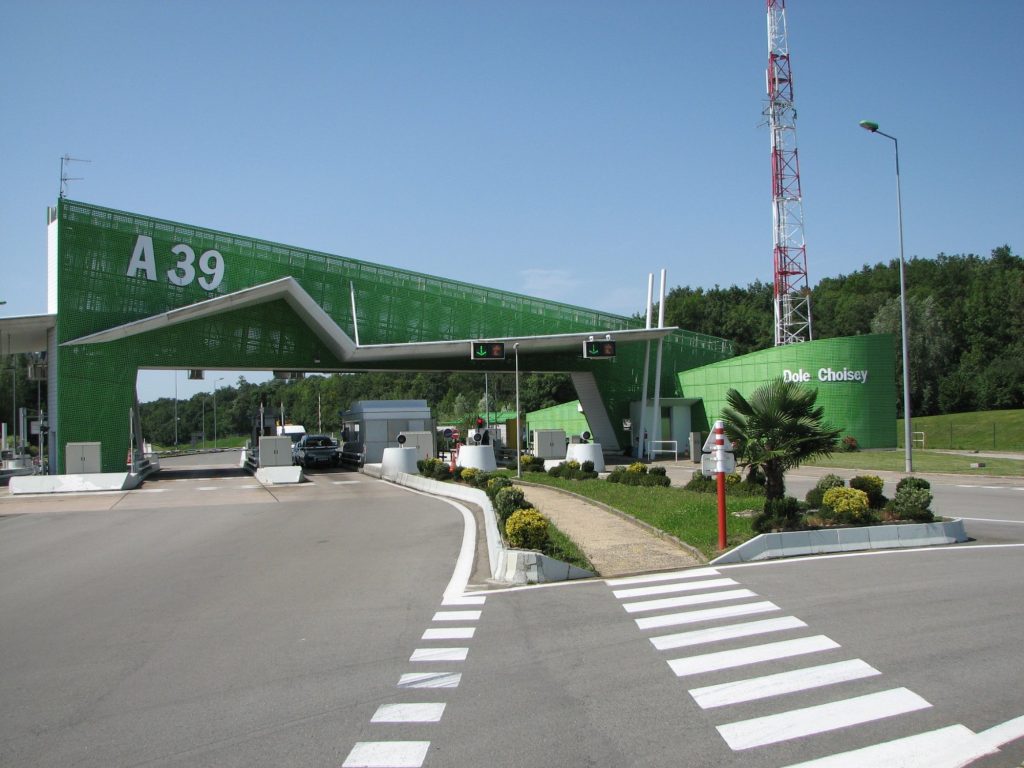

- Tolls (péage): there is no vignette. Usually you take a ticket at the entrance and pay at the exit. Not all motorways charge: those in Brittany are largely free.
- Free-flow, without barriers: on the A79 (Allier), the A13-A14 (Paris–Caen), the A69 (Toulouse–Castres) and the Boulay junction on the A4. Cameras read your number plate. You pay within 72 hours online, at a sales point or with a toll tag.
- Paid late? Then €90 is added, or €10 if you pay within 15 days. After two months it can rise to €375.
- Tunnels to Italy: the Mont Blanc and Fréjus tunnels charge a toll. We have not checked their rates for this page.
- Crit’Air and ZFE: in the 25 low-emission zones (ZFE), every car must display a Crit’Air sticker, including foreign-registered cars. Paris and Lyon ban cars rated Crit’Air 3 and above, roughly diesels from before 2011 and petrol cars from before 2006. In Paris the zone lies inside the A86 and applies on weekdays from 8am to 8pm. Fine: €68.
- Ordering: only through certificat-air.gouv.fr, for €5.11, postage included. The sticker comes by post, so order in good time. How to order and the rules per city are on our page about the Crit’Air sticker.
- Are the ZFEs staying? Yes: on 21 May 2026 the Conseil constitutionnel struck out the article that abolished them.
More on France, with routes and seasons: driving in France.
Germany
- Vignette and tolls: none for cars. Only two private tunnels charge a toll: the Warnow Tunnel in Rostock and the Herren Tunnel in Lübeck.
- Umweltplakette: in 35 Umweltzonen (as of October 2026) you need a green emissions sticker, also with a foreign car. Driving without one costs €100.
- The number of zones is falling. Since late 2024, 11 have gone, including Hanover, Mannheim and Ulm. Stuttgart still requires the sticker.
- A French Crit’Air sticker does not count in Germany.
- Order the sticker before you leave, from an approved issuer such as TÜV or DEKRA. Zones can also change during your trip.
More on Germany, with routes and seasons: driving in Germany.
Switzerland
- Vignette: CHF 40, annual only. You need it on motorways for cars, campervans, trailers and caravans up to 3.5 tonnes.
- 2027 vignette: valid from 1 December 2026 to 31 January 2028.
- E-vignette or sticker: both are valid. The e-vignette is linked to your number plate, the sticker to one vehicle.
- Without a vignette: a CHF 200 fine plus the vignette.
- Extra charges: the car trains, such as Realp–Oberwald under the Furka and the Vereina, and some private roads, such as the gravel road through the Gasterntal (CHF 20 per day).
- Low-emission zones: we have not fully researched these for Switzerland. Geneva uses its own sticker (Stick’AIR) during smog peaks. We have not checked that against an official source.
More on Switzerland, with routes and seasons: driving in Switzerland. All about the e-vignette and the sticker: Swiss vignette 2027.
Austria
- Digital only: from the 2027 vignette year onwards, the windscreen sticker no longer exists. The vignette is linked to your number plate. Enter it correctly: a wrong plate counts as an offence.
- Prices from 1/1/2027: 1 day €9.80, 10 days €13.10, 2 months €32.64 and 1 year €108.90. Until 31/12/2026 you still pay €9.60, €12.80, €32.00 and €106.80.
- 2027 annual vignette: valid from 1 December 2026 up to and including 31 January 2028. Buy it in December 2026 and you still pay €106.80.
- The 18-day rule: an annual or two-month vignette bought online by a consumer, through the ASFINAG webshop or app, only becomes valid 18 days after purchase. This is due to the right of withdrawal for distance purchases.
- How to avoid the wait: buy online at least 18 days before you travel, or buy at a sales point (ÖAMTC, ARBÖ, ADAC, ASFINAG, selected petrol stations and Trafiken). There the vignette is valid immediately or from the date you choose. You can also buy a 1-day or 10-day vignette online with immediate effect.
- Vignette-free: the A1 Walserberg–Salzburg-Nord, the A12 Kiefersfelden–Kufstein-Süd and the A14 Hörbranz–Hohenems. Watch out for the Altach exit.
- Without a valid vignette you pay a substitute toll (Ersatzmaut). If you do not pay it, you risk a fine of €300 to €3,000.
- Section tolls (2026 rates, single trip): A13 Brenner €12.50, A10 Tauern €15, S16 Arlberg €13 and A11 Karawanken €9. You do not need a vignette on those sections. You can also pay digitally in advance and use a separate lane.
- Panoramic roads (2026 rates): the Großglockner High Alpine Road costs €46.50 per day (€36.50 after 6pm), the Timmelsjoch €20 single and the Felbertauernstraße €13.50. Most panoramic roads are only open from May to October or early November. For the winter rules, see our page on winter tyres and snow chains.
- Low-emission zones: we found no sticker zones for cars. Signs marked “IG-L” do lower the speed limit on some roads, for air quality.
More on Austria, with routes and seasons: driving in Austria. All about the digital vignette and section tolls: Austria vignette 2027.
Italy
- Tolls: no vignette, but a closed system: take a ticket at the entrance, pay at the exit. White lanes are for cash, blue lanes for cards and yellow lanes for Telepass only.
- Unable to pay? You get a “mancato pagamento” slip and pay afterwards through autostrade.it. Do it quickly: in one example, €24 in tolls rose to €57.29 with collection costs.
- Free-flow: the A36 (Pedemontana), A59 and A60 around Milan have no barriers. Check before your trip how to pay afterwards.
- Mountain roads: for the former military roads Alta Via del Sale and Strada dei Cannoni you buy an online day ticket of €20 per car. They are closed in winter, and the 2027 dates have not been published. Read more about roads like these in our guide to legal off-road driving in Europe.
- ZTL: many historic centres are off limits without a permit. Cameras record every entry, and every entry can cost you about €100. The letter can arrive up to 360 days later, or up to about a year and a half with a hire car.
- Hotel inside a ZTL? Ask the hotel to register your number plate; that only covers that zone.
- Milan: since January 2026, Area C has been active every day from 7.30am to 7.30pm, weekends included. Entry costs €7.50 per day; arrange it in advance. In Area B, Euro standards apply to diesels.
More on Italy, with routes and seasons: driving in Italy.
Spain
- Vignette: none. A toll tag is handy but not required.
- Tolls: only on some AP motorways, such as the AP-6, AP-51 and AP-61 around Madrid, the AP-9 in Galicia, the AP-66 León–Asturias and the AP-7 Málaga–Guadiaro.
- New since 11 November 2026: the AP-68 between Zaragoza and the La Rioja–Álava border is toll-free. In Bizkaia and Álava tolls remain, with large discounts.
- ZBE: more than 50 cities enforce a low-emission zone (zona de bajas emisiones). The DGT environmental label only exists for Spanish cars. Each city decides how foreign cars can enter.
- Barcelona: register your car in advance in the metropolitan register. If it does not meet the standards, you can apply for up to 10 day passes a year.
- Madrid: registration is often required. The fine is €200.
More on Spain, with routes and seasons: driving in Spain.
Portugal
- Vignette: none. Roads with electronic tolls only have no toll booths: cameras record your number plate.
- EasyToll: with a foreign plate you link your bank card to your number plate at a machine at the border. The official source lists the A28, A24, A25 and A22.
- Other options: TollCard (prepaid, valid for one year), TollService (3 days unlimited for €20 plus €0.74) and Via Verde Visitors (a temporary device for all motorways).
- Toll-free since 1 January 2025: about 951 km of motorway, including the A4, A13, A22, A23, A24, A25 and parts of the A28. Handy for routes through the interior and the Algarve. As a result, some border roads with an EasyToll point are now free. We have not checked whether all those points still operate.
- Low-emission zones: each municipality sets its own zones. We were unable to check the Lisbon zone (ZER).
More on Portugal, with routes and seasons: driving in Portugal.
Norway
- AutoPASS: there is no vignette, but all vehicles pay tolls. The toll gantries work automatically with cameras.
- With a foreign car you have two options. Register your car with Epass24: no tag and no discount, but the right rate for your emissions class. Or sign an agreement with a toll service provider for a tag, with a 20% discount. Light vehicles cannot get that tag at the border, so order it in advance.
- Nothing arranged? Then you receive an invoice by post afterwards, at the highest rate for your vehicle size.
- Ferries are part of the road network. Most crossings are paid through AutoPASS. Without a prepayment agreement you pay per crossing by card via FerryPay. Book popular routes such as Geiranger–Hellesylt in advance.
- Private toll roads (bomvei): for example the Peer Gynt Vegen (NOK 95 and NOK 85 for its two toll sections) and the Jotunheimvegen (NOK 120). The road up to Dalsnibba costs NOK 420 per car in 2027.
- Low-emission zones: we found no zones with a sticker or registration. If you drive on studded tyres in Oslo, Bergen or Trondheim, you do pay a fee.
More on Norway, with routes and seasons: driving in Norway.
United Kingdom
- Before you go: there is no vignette, but visitors from the EU need an ETA (£20). Belgians also need a passport; an ID card is not enough.
- Tolls: most roads are free. Exceptions include the M6 Toll and the Dartford Crossing.
- Dartford Crossing (over the Thames, east of London): between 6am and 10pm you pay the Dart Charge, £3.50 per crossing for a car. Pay in advance or by midnight the day after you cross, or you risk a fine.
- ULEZ London: covers all boroughs. A car that does not meet the standards pays £12.50 per day. Cars registered abroad, Belgian ones for example, must be registered with TfL in advance, even if they comply. Processing can take up to 10 working days.
- Congestion Charge in central London: weekdays 7am to 6pm, weekends 12pm to 6pm. Since 2 January 2026 it has cost £18 per day, according to an official TfL notice. Some TfL web pages still show the old amount of £15.
- LEZ Scotland: Glasgow, Edinburgh, Aberdeen and Dundee, day and night. Petrol cars must be at least Euro 4, diesels Euro 6. Cameras recognise foreign plates; no registration is needed. The first fine is £60 (halved if paid within 14 days), then it doubles each time, up to £480.
- Clean Air Zones in England: including Birmingham, Bristol and Bath.
More on Scotland, with routes and seasons: driving in Scotland.
What to sort out before you leave
Our practical summary of the rules above. It is not legal advice: rules change, so check the official source before you leave.
- Plan your route, including cities, tunnels and mountain roads. That tells you which vignettes and registrations you need.
- Vignettes: buy the Austrian vignette online at least 18 days ahead, or at a sales point on the way. For Switzerland, get an e-vignette through via.admin.ch or a sticker. Check your number plate twice.
- Stickers and registrations: Crit’Air through certificat-air.gouv.fr for French ZFEs, an Umweltplakette for German Umweltzonen, and registration for London (ULEZ) and Barcelona. In Italy, check whether your hotel is inside a ZTL.
- Tolls: for Norway and Portugal, decide in advance how you will pay. Pay barrier-free tolls on time: within 72 hours for French free-flow, by midnight the next day for the Dartford Crossing.
- Keep every confirmation as a PDF or screenshot on your phone.
- Equipment: for what you must carry in the car, see our page on mandatory car equipment by country.
Frequently asked questions
Do I need a vignette in Germany?
No. Germany has no vignette and no tolls for cars, apart from two private tunnels. If you drive into a city with an Umweltzone, you do need a green Umweltplakette.
How do I avoid the 18-day wait for the Austrian vignette?
Buy the annual or two-month vignette at least 18 days before you cross the border, or buy it at a sales point such as ÖAMTC, ARBÖ or ADAC: then it is valid straight away. For a short trip you can also buy a 1-day or 10-day vignette online with immediate effect.
Will I need a vignette to drive through Belgium?
If the plan goes ahead, yes. Flanders has announced the vignette from 1 May 2027 for Belgian and foreign vehicles up to 3.5 tonnes, from €9 per day for Euro 4 and newer. The Flemish Parliament still has to give final approval. We will update this page once there is more clarity.
Can a fine follow me home?
Count on it. Cameras read foreign number plates, for example in Italian ZTLs, Scottish LEZs and at Norwegian toll gantries. The letter often comes by post, in Italy up to 360 days later. And if you pay a toll late, you pay more.
Official sources
- Belgium: Vlaanderen.be – road vignette from 1 May 2027 (Dutch), Vlaanderen.be – low-emission zones (Dutch), LEZ.brussels, Brussels Environment – LEZ since 1 January 2026 (French)
- France: Certificat qualité de l’air (Crit’Air), Service Public – Circuler en ZFE, Ministère de la Transition écologique – free-flow tolls
- Germany: Umweltbundesamt – Umweltzonen in Deutschland
- Switzerland: FOCBS – Swiss motorway vignette, FOCBS – buying the e-vignette on the Via portal
- Austria: oesterreich.gv.at – Vignette, ÖAMTC – Vignette 2027, Großglockner – prices and opening times
- Italy: Autostrade per l’Italia – payment at the toll gate, EVZ – ZTL fines
- Spain: Ajuntament de Barcelona – foreign number plates in the ZBE
- Portugal: gov.pt – traffic rules and tolls
- Norway: AutoPASS – driving a foreign-registered vehicle
- United Kingdom: GOV.UK – Dart Charge, TfL – ULEZ, TfL – Congestion Charge notice 2026 (PDF),mygov.scot – Low Emission Zones, GOV.UK – ETA