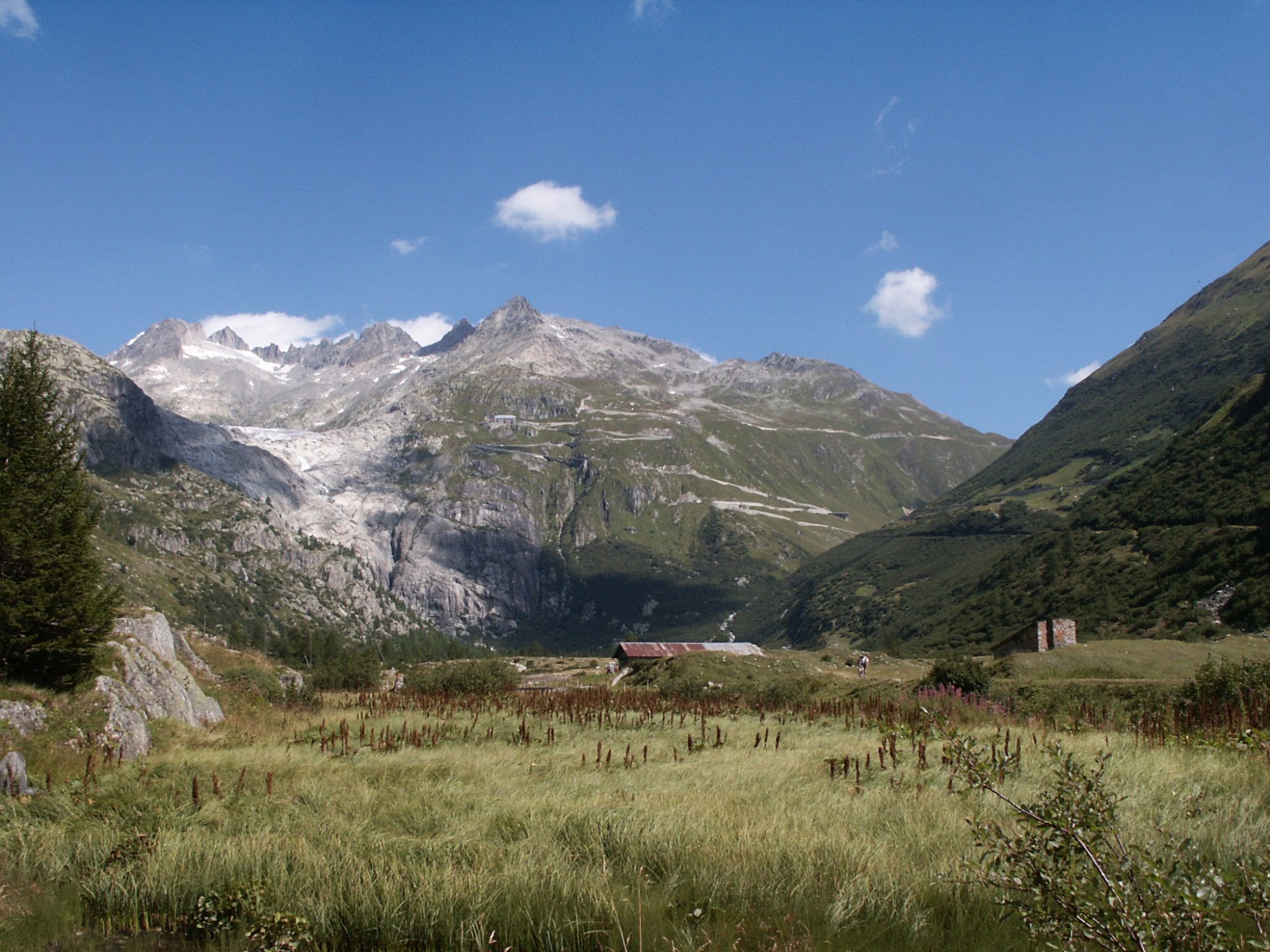
Photo above: The road up to the Furka Pass. Norbert Aepli, Wikimedia Commons, CC BY 2.5, cropped.

Switzerland is the land of mountain passes: the Furka with its view of the Rhône Glacier, the cobbles of the Tremola and the hairpins of the Maloja. From Brussels, Basel is just over six hours’ drive, and the Bernese Oberland and the Gotthard area a long day. Budget for a vignette, fixed fines from the first km/h over the limit, and high passes that only open in summer.
- From BrusselsBasel in 6h10
- VignetteCHF 40 a year
- Speed120 on motorways, 80 outside towns
- High passesUsually June to October
On this page: Regions Road trip Rules When to go Food Questions
The best regions and routes for a road trip
With the driving time from Brussels, without breaks or traffic.
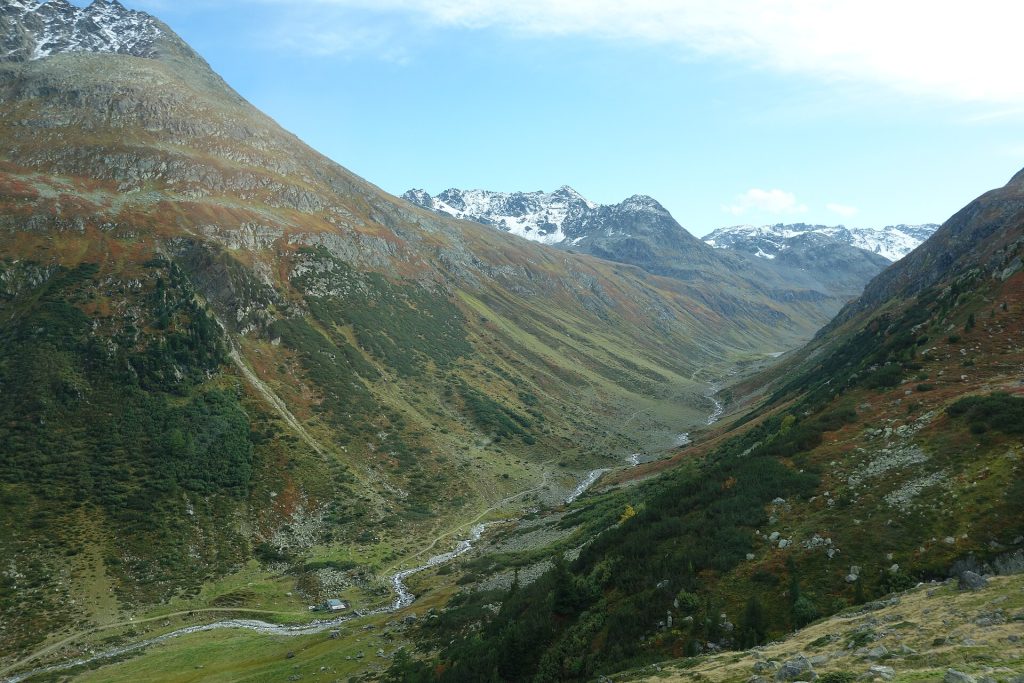

6h10
The Grand Tour of Switzerland
1,643 km in 8 stages, past 5 Alpine passes, 22 lakes and 13 UNESCO sites. Drive it between April and October.
More about this region
A 1,643 km circuit in 8 stages, taking in 5 Alpine passes, 22 lakes and 13 UNESCO sites. Some 650 signs show the way, clockwise. You go from the Furka (2,429 m) down to Lake Maggiore (193 m). Drive it between April and October. Basel is 6h10 from Brussels, Zurich 7h10.
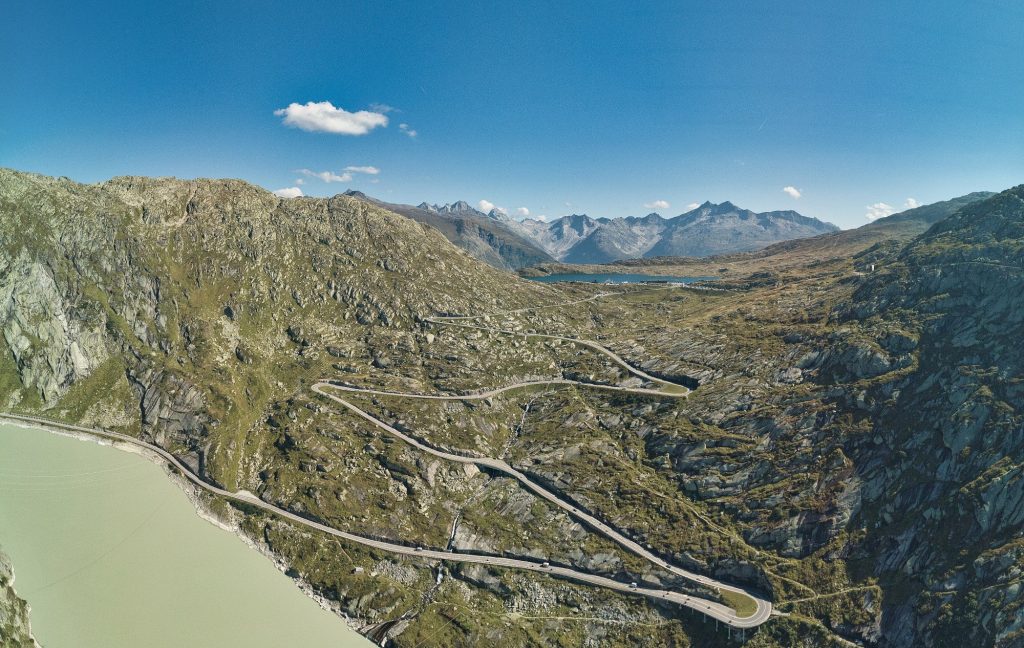

7h55
Grimsel, Furka and Susten
The classic three-pass drive, with a view of the Rhône Glacier. Open roughly from June to October.
More about this region
The classic three-pass drive: the Furka (2,429 m) with its view of the Rhône Glacier, the Grimsel (2,164 m) with its lakes and the Susten with its sweeping bends. Open roughly from June to October; in 2026 the Furka and Grimsel opened on 29 May, according to the Swiss press. Andermatt is 8h10 from Brussels, Interlaken 7h55.
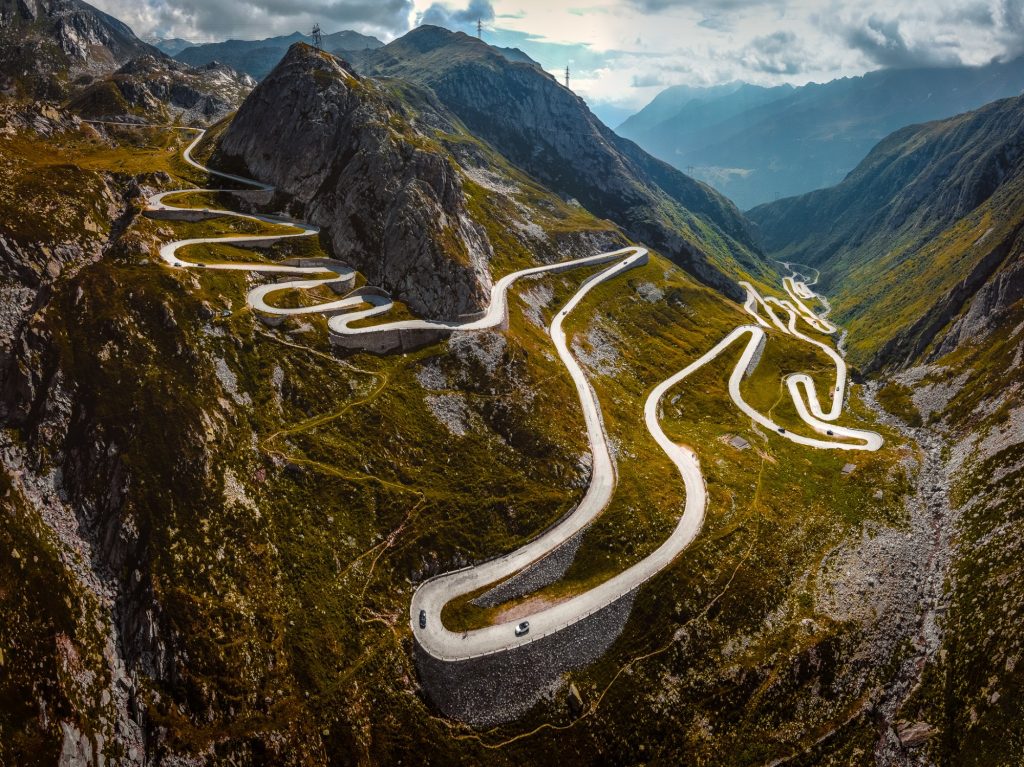

8h10
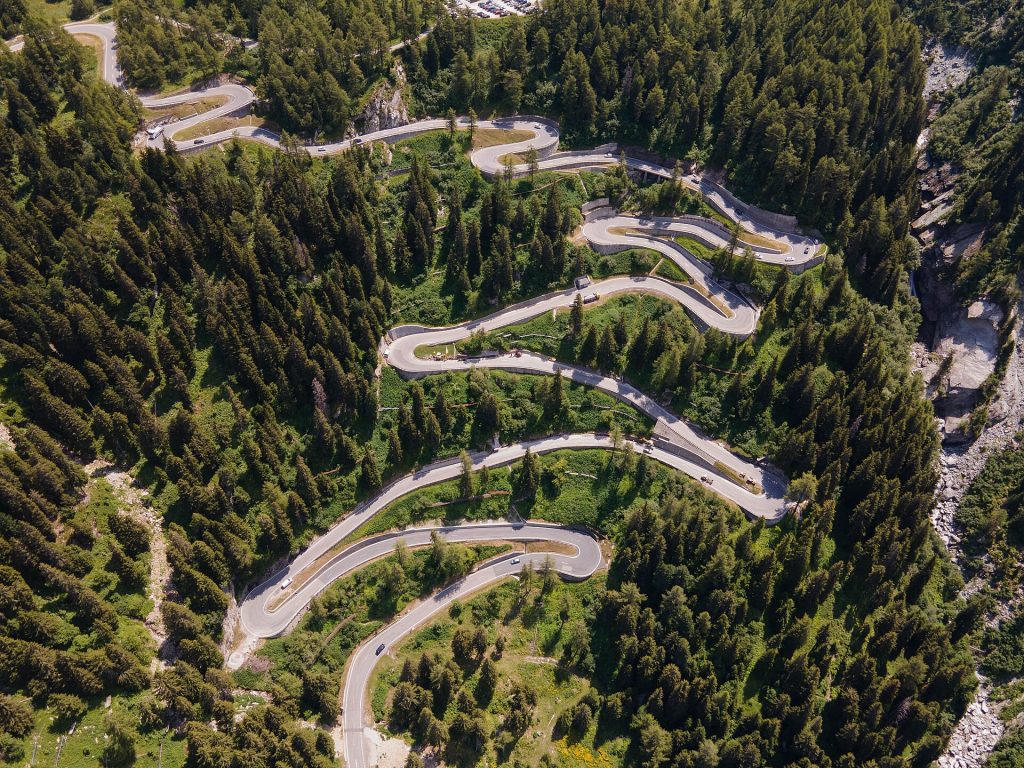
The Gotthard via the Tremola
The old cobbled road to Ticino, with its hairpin bends. Usually closed from November to May.
More about this region
A cobbled road over the “gateway to Ticino”. The pass is usually closed from November to May; in 2026 it closed on 5 November, according to the press. The tunnel is the alternative.

9h45
Engadine: Julier, Maloja and Ofen Pass
Three passes that are open all year, with the Maloja hairpins and the Ofen Pass through the National Park.
More about this region
Three passes that are open all year. The Julier (2,284 m) is cleared year-round, the Maloja drops in hairpins to the Bergell (Val Bregaglia), and the Ofen Pass (2,149 m) crosses the National Park. Via the Bernina (2,328 m) you continue to the Valposchiavo. St. Moritz is 9h45 from Brussels via the Julier.

6h10
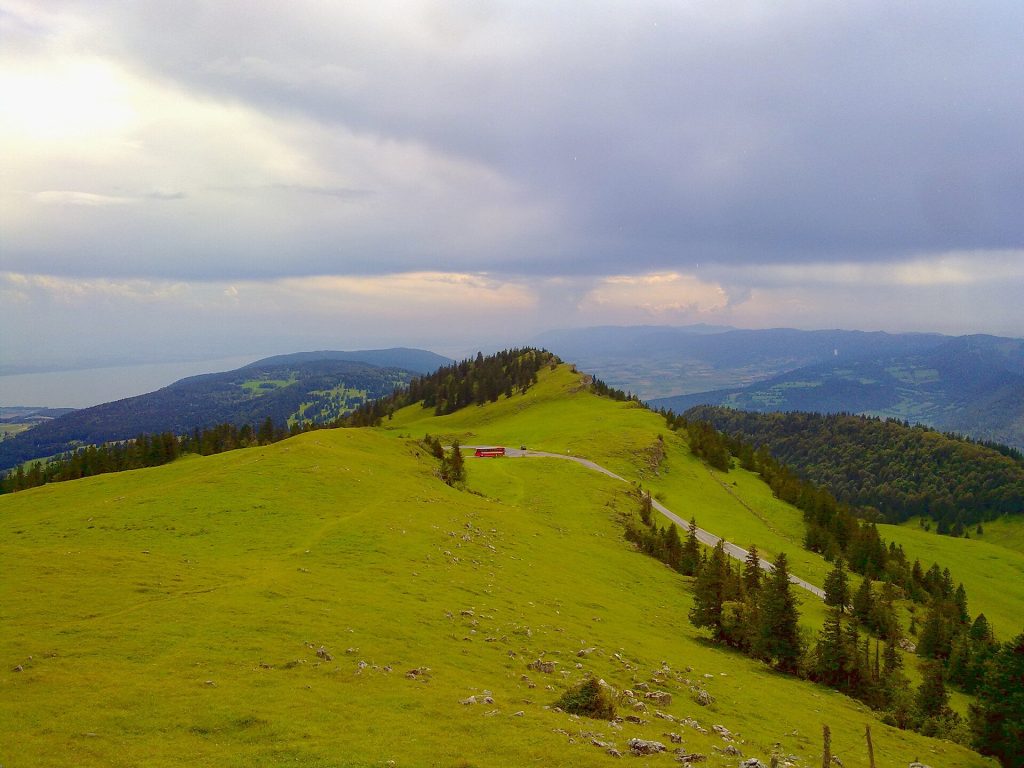
The Jura heights
A quiet back road over Les Rangiers, the Vue-des-Alpes and the Chasseral. Usually open all year.
More about this region
A quiet back road from Basel (6h10), over Les Rangiers, Mont-Crosin, the Vue-des-Alpes and the Chasseral. Usually open all year; only the Chasseral is closed from December to April. Along the way, try Tête de Moine cheese.

8h15
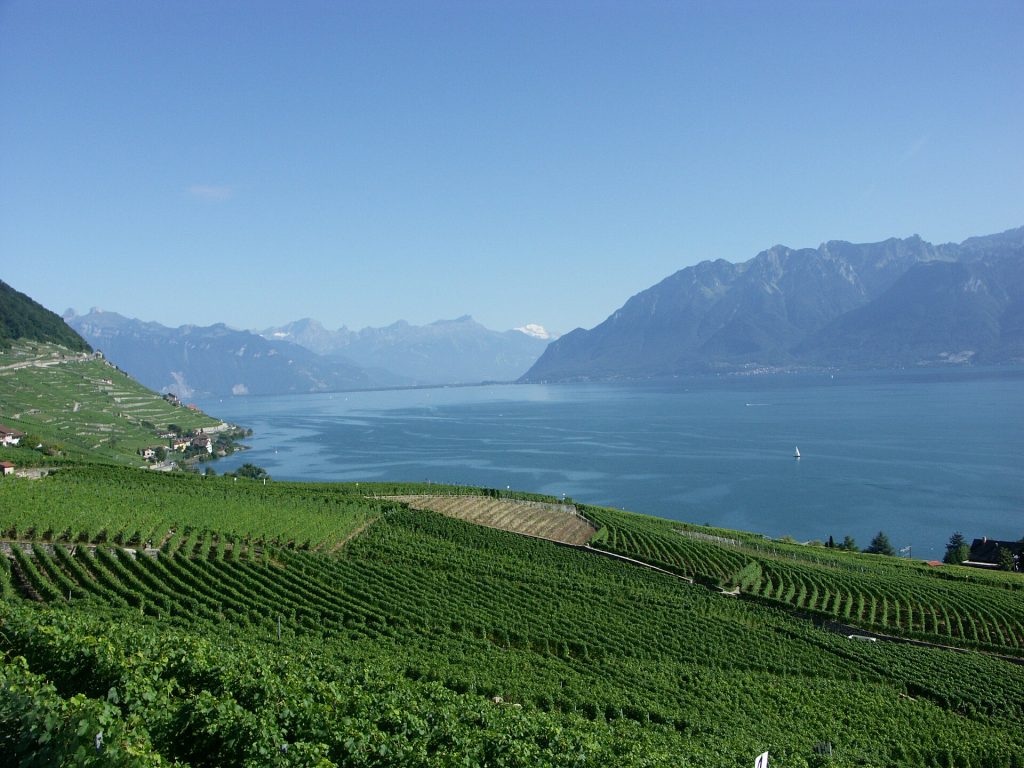
Vaud Alps and Lavaux
Chasselas vineyard terraces with views of the lake, and passes in the Vaud Alps that are open all year.
More about this region
In Lavaux you drive past Chasselas vineyard terraces with views of the lake. In the Vaud Alps, the Col du Pillon and the Col des Mosses are open all year. The Col de la Croix is closed from November to May. Geneva is 8h15 from Brussels.
Road trip guide
Grimsel, Furka and Susten in 2 days
± 120 km · loop from Andermatt · Tremola optional
Three Alpine passes in one loop, day by day: driving times, where you can legally sleep and when the passes are open.
The rules at a glance
Last checked on 24 November 2026. Rules change: check the official source listed at the bottom just before you leave.
Driving in Switzerland
Fixed fines from 1 km/h over the limit
120 on motorways, 80 outside towns. Radar detectors are banned and customs confiscate them.
All rules
- Fixed fines from 1 km/h over the limit, after the measuring tolerance is deducted. For example, 6 to 10 km/h too fast costs CHF 120 in a built-up area, CHF 100 outside and CHF 60 on the motorway.
- Losing your licence: from 25 km/h over in a built-up area, 30 km/h outside and 35 km/h on the motorway, your licence is withdrawn for at least 3 months. At 40, 60 or 80 km/h over, criminal proceedings follow, possibly with a prison sentence and confiscation of your car.
- Radar detectors are banned: importing, carrying and using them. Customs confiscate the device.
- On the motorway, overtaking on the right costs CHF 250, and failing to leave an emergency corridor or to merge in turn costs CHF 100 each.
- Phones hands-free only; otherwise you pay CHF 100. Running a red light costs CHF 250.
- Leaving the engine running while stationary costs CHF 60. Worth knowing if you warm up your campervan in the morning.
- Mountain roads: on a narrow road, the driver going downhill stops and lets the uphill driver pass. Postbuses always have priority on narrow mountain roads and sound their horn before a bend.
- Passes: some passes have weight or trailer restrictions. On the Umbrail, a caravan or campervan is not recommended.
- Driving licence: from age 18 you may drive on a foreign licence for up to a year. Children up to 12 years or 150 cm travel in a child seat.
- Keep an eye on: on busy stretches the limit drops dynamically to 80 km/h in traffic jams. Because of a fuel shortage, the government is also examining 80 km/h on all motorways as an emergency measure, but on 24 November 2026 nothing had been decided. A transit charge for foreign drivers has no amount or date yet either. Check before you leave.
Vignette, tolls and low-emission zones
Vignette required: CHF 40 a year
The 2027 vignette is valid from 1 December 2026 to 31 January 2028. Only buy the e-vignette at via.admin.ch.
All rules
- Vignette: CHF 40, annual only. You need it on motorways, for cars, campervans, trailers and caravans up to 3.5 tonnes.
- 2027 vignette: valid from 1 December 2026 to 31 January 2028.
- E-vignette or sticker: both are valid. The e-vignette is linked to your number plate, the sticker to one vehicle. Only buy the e-vignette on the customs Via portal (via.admin.ch); the government explicitly warns against scam websites. More on e-vignette or sticker, and when you need two: Swiss vignette 2027.
- Without a vignette: a CHF 200 fine plus the vignette.
- Extra charges: the car trains, such as Realp–Oberwald under the Furka and the Vereina, and some private roads, such as the gravel road through the Gasterntal.
- Low-emission zones: we have not fully researched these for Switzerland. Geneva uses its own sticker (Stick’AIR) during smog peaks; we have not checked that against an official source.
- Coming through Germany, you need no vignette there, but you do need an Umweltplakette to enter a German Umweltzone.
All countries side by side are in our guide to vignettes, tolls and low-emission zones in Europe.
What you need in the car
Only a warning triangle is mandatory
Daytime lights are mandatory. A vest, first-aid kit and extinguisher are recommended.
More details
- Warning triangle: the only mandatory item. Without one you pay CHF 40. ÖAMTC and Touring say it must be within reach.
- Hi-vis vest, first-aid kit and fire extinguisher: not mandatory, but recommended.
- Daytime lights are mandatory. Driving without lights costs CHF 40.
- Documents: your driving licence, the vehicle registration certificate and proof of insurance.
- Country identifier: we found no source on whether the EU band on your plate is enough in Switzerland. To be safe, keep a separate country sticker in the glovebox.
We rely on the TCS, the insurer Mobiliar, the ÖAMTC and Your Europe; we could not consult the Swiss legal text itself. This assumes an EU-registered car. The full packing list is on our page about mandatory car equipment by country.
Winter
No winter tyre law, but you can be liable
The high passes are usually closed from November to May or June. Then you take the car train or a tunnel.
More details
In winter, winter tyres are not required by law. But if you have an accident in a car that is not ready for winter, you can be held (partly) liable and your insurer can reduce its payout. Recommended: from October to Easter. Ignoring the “snow chains mandatory” sign costs CHF 100. The high passes are usually closed from November to May or June; then you take a car train (Realp–Oberwald, Vereina) or the tunnel under the Gotthard or the San Bernardino. If you drive through Germany, the German winter rule applies there. More in our guide to winter tyres and snow chains.
Where to stay overnight
Rules by canton and municipality
No camping behaviour. The TCS counts a night in a roof tent outside a campsite as wild camping.
All rules
- Campsites: the TCS runs its own campsites, including in Disentis, Thusis, Scuol, Gordevio, Olivone and La Tène. On the Nomady platform, private hosts offer pitches for tents and vehicles.
- Mountain huts: the Swiss Alpine Club (SAC) has more than 150. If you want to camp near a hut, ask the hut warden for permission first.
- Sleeping in your car or campervan: there is no national rule; the canton and municipality decide. Your vehicle must fit within a parking bay, and camping behaviour is not allowed. In Aargau you may stay one night in a public car park unless a sign bans it, in Ticino not at rest areas and car parks, in Fribourg only at official motorhome areas, and in Geneva not without a permit.
- National Park: visits during daylight only, and that includes staying overnight in your vehicle along the Ofen Pass road. Staying the whole night in a car park costs CHF 150.
- Roof tent: the TCS counts staying overnight with a roof tent outside a campsite as wild camping, and says Stellplätze (motorhome areas) are not meant for roof tents. With a roof tent, choose a campsite.
- Wild camping: here too, the canton and municipality decide. Generally tolerated: one night with a small tent above the tree line, in a small group; an emergency bivouac; or camping on private land with permission. Always banned: nature reserves, the National Park, federal game reserves (CHF 150) and wildlife rest zones. Valais always requires a permit, and in Uri municipalities such as Andermatt and Realp ban it.
- Fires only at official fireplaces, never in wind. In dry spells the cantons announce fire bans; check waldbrandgefahr.ch.
Read more in our guides to sleeping in your car, campervan or roof tent and wild camping in Europe.
Off-road and unpaved roads
Forests are banned, fine CHF 100
Legal ways off the tarmac: the gravel road through the Gasterntal (CHF 20 a day) or a TCS training course.
All rules
Switzerland is first and foremost a country for paved passes, but there are a few legal ways to leave the tarmac.
- Forests: off limits to motor vehicles. The fixed fine is CHF 100, and up to CHF 20,000 in ordinary criminal proceedings. Cantons only grant permits for a good reason, and recreation is not one of them. Ignoring a general no-driving sign also costs CHF 100.
- Gasterntal (Kandersteg): a private gravel road, fine in an ordinary car too. You pay CHF 20 a day at the ticket machine or via PayByPhone (annual permit CHF 60). Through the gorge, traffic is one-way in hourly time slots. Open in summer, roughly from mid-May to mid-November; the road closes in thunderstorms or heavy rain.
- TCS courses: from 1 January 2027 they are called Offroad Standard and Advanced (6 hours, in your own off-roader or SUV; Standard requires at least 20 cm of ground clearance). Offroad Expert takes place at Offroadpark Geisingen, just across the German border. Prices are not listed on the course pages. Note: your vehicle is not insured through the TCS during the course.
- Roadbook drive: the TCS Jura section organises the yearly “Aventure 4×4” for your own registered 4×4.
What is legally possible in the other countries is in our guide to legal off-road driving in Europe.
Everything in one table: Switzerland at a glance
| Topic | What applies |
|---|---|
| Driving time from Brussels | Basel 6h10 · Interlaken 7h55 · St. Moritz 9h45 |
| Speed limits | 50 km/h in built-up areas, 80 outside, 100 on expressways, 120 on motorways |
| Alcohol limit | 0.5 g/l; 0.1 for new drivers and professional drivers |
| Vignette and tolls | Vignette CHF 40; 2027 vignette valid 1/12/2026 to 31/1/2028 |
| Low-emission zones | Not fully researched |
| Mandatory in the car | Warning triangle only; daytime lights mandatory |
| Winter rules | No winter tyre requirement, but liability applies; chains where a sign says so |
| Sleeping in the car/roof tent | By canton and municipality; roof tent: the TCS counts it as wild camping |
| Wild camping | By canton; one night above the tree line tolerated |
| Off-road | Forests banned (CHF 100); Gasterntal gravel road (CHF 20 a day), TCS training |
| Emergency number | 112; police 117, fire 118, ambulance 144 |
The driving times are route-planner model values, without breaks or traffic jams.
When to go
peak seasonusually open
Details by region
- April to October for the Grand Tour. The high passes are only reliably passable in summer.
- Mid-May or early June to late October: the high passes in Uri, Valais and Bern are usually open then (Furka, Grimsel, Susten, Nufenen, Gotthard, Klausen).
- July and August are peak season on the passes.
- All year: in Graubünden the Julier, Maloja, Bernina and Ofen passes. The Albula is closed from December to May, the Flüela from January to May.
- Check the current status of the passes with the TCS or on alpen-paesse.ch before you leave.
Food along the way
- Graubünden: Bündnerfleisch, salsiz and dried game; pizzoccheri and chisciöl from the Valposchiavo; cheese from the Val Müstair.
- Valais: Raclette du Valais AOP and Hérens cattle from the Val d’Hérens.
- Emmental: the Emmentaler AOP show dairy in Affoltern, and Kambly biscuits in Trubschachen.
- Fribourg: La Maison du Gruyère in Pringy and Maison Cailler chocolate in Broc.
- Jura: Tête de Moine AOP from Bellelay and the plum brandy Damassine AOP.
- Basel and Ticino: Läckerli in Basel, the Saturday market in Bellinzona.
- Grand Tour Snack Box: CHF 25 with a first filling for two, from around 50 outlets.
Frequently asked questions
Do I need a vignette in Switzerland, and where do I buy it?
Yes, on the motorways. The vignette costs CHF 40 and only comes as an annual vignette; the 2027 vignette is valid from 1 December 2026 to 31 January 2028. Choose a sticker or an e-vignette, and only buy the latter on via.admin.ch.
Are the Swiss passes open in winter?
The high passes, such as the Furka, Grimsel, Susten, Gotthard and Klausen, are usually closed from November to May or June. The Julier, Maloja, Bernina and Ofen passes stay open all year, and car trains and tunnels are an alternative.
Can I spend the night in my roof tent in a car park?
Do not count on it. There is no explicit rule, but the TCS counts a roof tent outside a campsite as wild camping, and says Stellplätze are not meant for it. The canton and municipality decide. A campsite is always a safe choice.
Can I go off-road in Switzerland?
To a limited extent. Forests are off limits, but the private gravel road through the Gasterntal is open for CHF 20 a day, even in an ordinary car. With your own 4×4 you can take a TCS course or join the “Aventure 4×4” in the Jura.
Useful words
Switzerland has four language regions, so a pass or village often has more than one name: the Ofen Pass is also called Pass dal Fuorn. You will see these German terms on signs and in traffic reports:
- Wintersperre: winter closure
- Schneeketten obligatorisch: snow chains mandatory
- Fahrverbot: no vehicles allowed
- Autoverlad: car train
- Stellplatz: motorhome area
- Wildcampen: wild camping (the TCS also uses it for a roof tent outside a campsite)
Official sources
- Traffic rules: Your Europe – Switzerland, ch.ch – driving over the speed limit, ch.ch – alcohol in road traffic, FOCBS – radar detectors banned
- Emergency numbers: ch.ch – emergencies and danger
- Vignette: FOCBS – Swiss motorway vignette, FOCBS – buying the e-vignette on the Via portal
- Equipment: TCS – Warnweste obligatorisch?
- Winter and passes: ch.ch – winter tyres, TCS – Pässe in der Schweiz, MySwitzerland – Alpine passes
- Overnight stays: TCS – Wild campen in der Schweiz, Swiss National Park – protection regulations
- Off-road: Gasterntal – Zufahrt, Forstamt Thurgau – Fahrverbote auf Waldstrassen, TCS – Offroad Standard
- Routes: MySwitzerland – Grand Tour of Switzerland
- Current affairs: ADAC – Tempo 80 in Switzerland (24/11/2026, German)
Driving on?