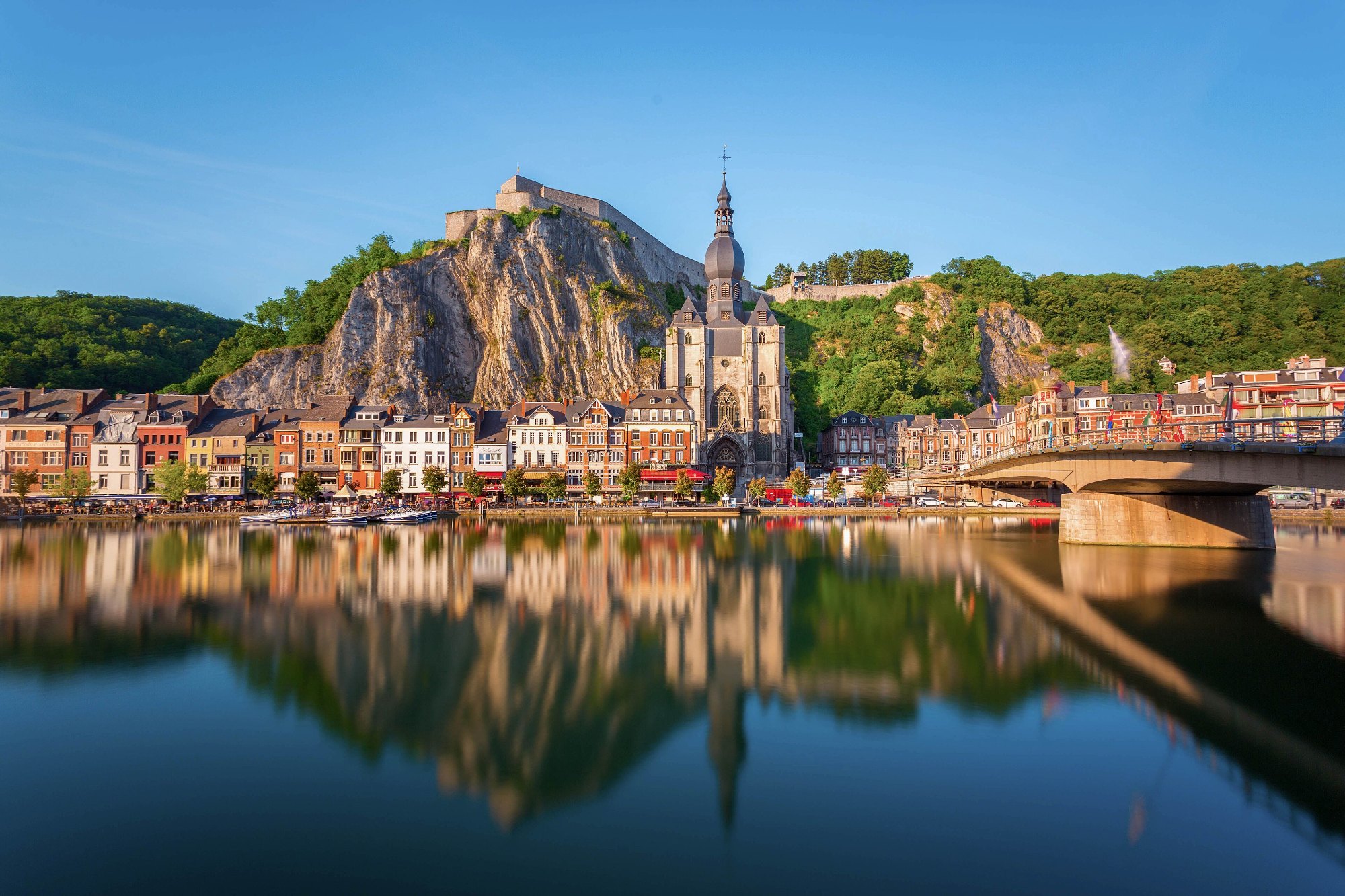
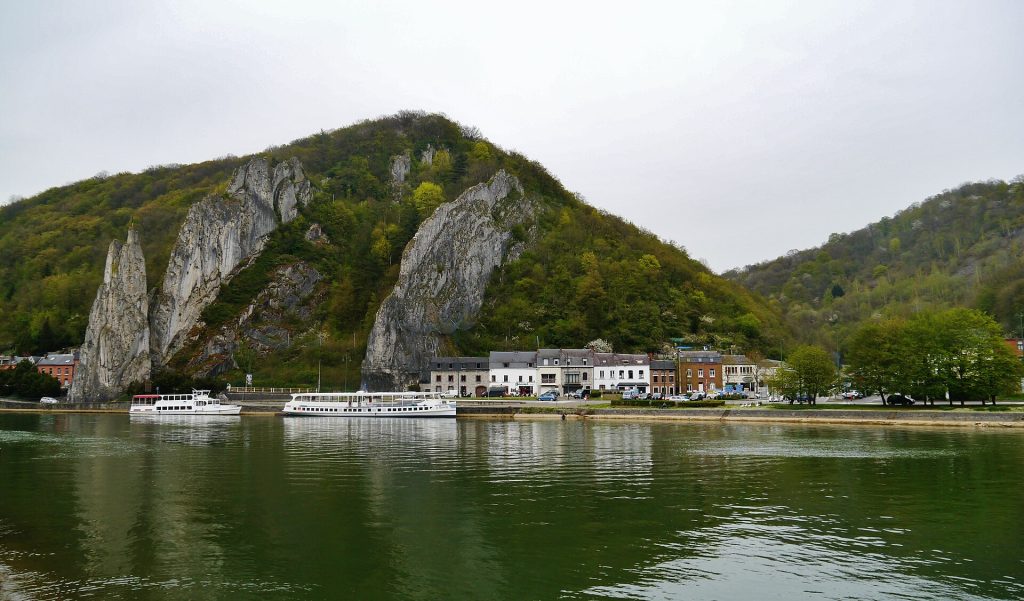
Photo above: Dinant on the Meuse, with the citadel on top of the rock. jiuguangw, Wikimedia Commons, CC BY-SA 2.0, cropped.

Belgium is small, but within two hours of Brussels you can be driving through the forests of the Semois, across the moorland of the High Fens or along the dunes of the coast. That makes it a road trip in its own right, or an easy first stage on the way to France or Germany. What catches visitors out is that Flanders, Wallonia and Brussels each set some of their own rules, from speed limits to low-emission zones and where you may sleep.
- From BrusselsDinant in 1h15
- VignetteNone yet, planned from 1/5/2027
- Low-emission zonesLEZ in Antwerp, Ghent and Brussels
- Outside built-up areas70 in Flanders, 90 in Wallonia
On this page: Regions Road trip Rules When to go Food Questions
The best regions for a road trip
Each with the driving time from Brussels.
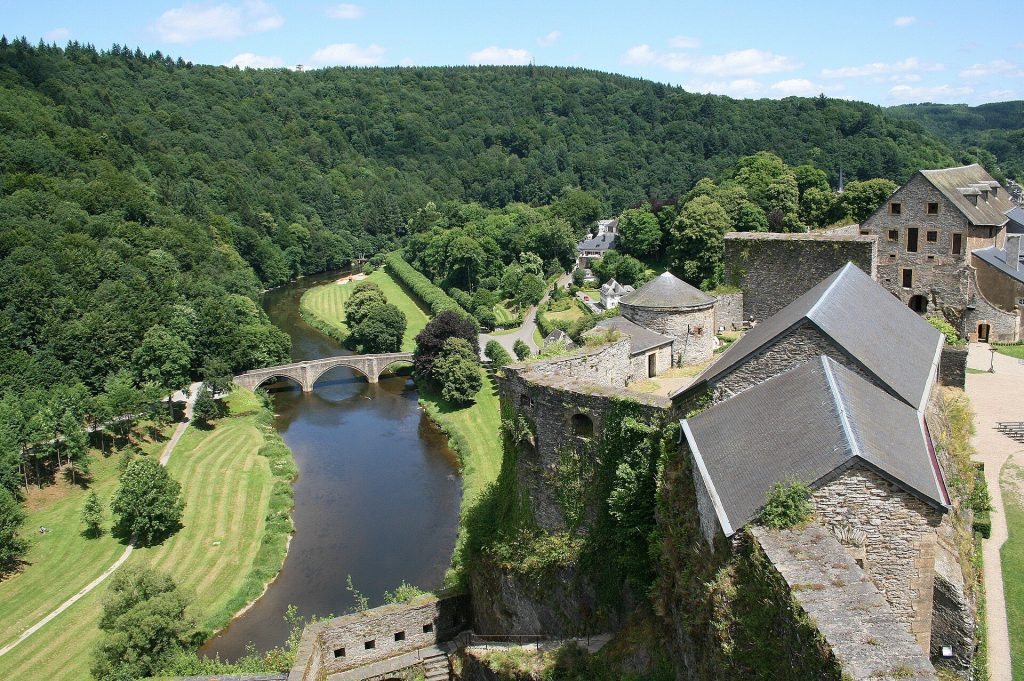

2h00
Semois Valley and Gaume
Castles, tobacco-drying barns and forest along the Semois, with the warmer Gaume just to the south.
More about this region
From Arlon via Florenville and Herbeumont to Bouillon and Vresse, you follow the Semois through the Vallée de la Semois National Park, more than 80% of it forest. Along the way: the castles of Bouillon and Herbeumont, old tobacco-drying barns, and the GR 16 footpath if you want to stretch your legs. Just to the south lies the Gaume around Virton, often 1 to 3 °C warmer than the rest of Luxembourg province, with a dialect of its own.
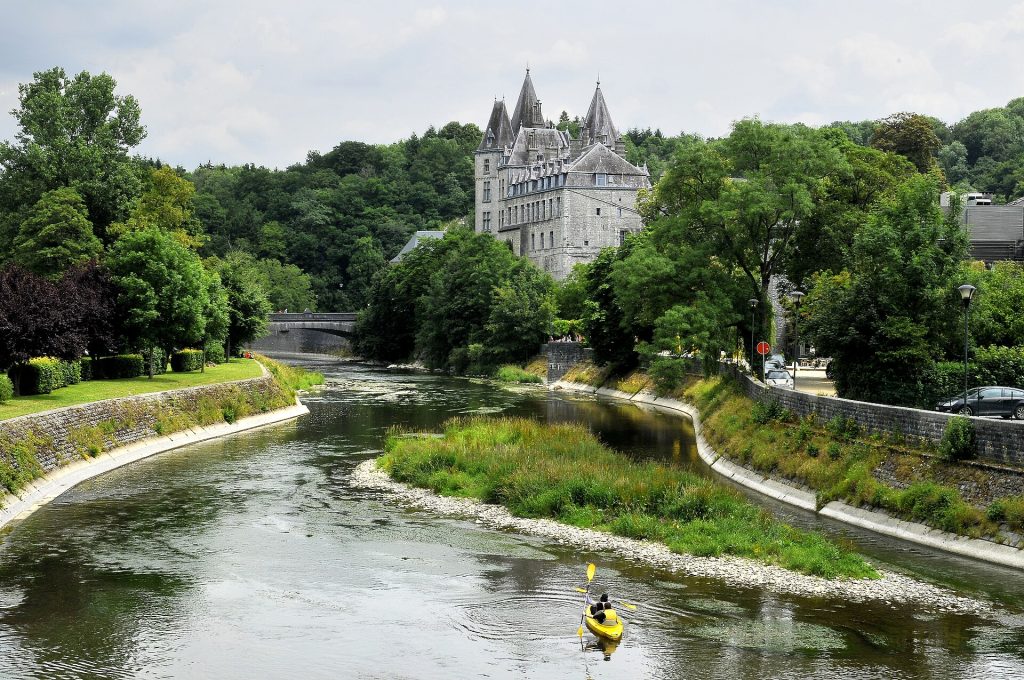

1h35
Ourthe Valley
From Houffalize via La Roche-en-Ardenne and Durbuy to Liège: kayaking, caves and viewpoints.
More about this region
The Ourthe winds from Houffalize via La Roche-en-Ardenne, Hotton and Durbuy to Liège. It is a valley for stopping: kayaking, visiting the caves of Hotton or taking in the view from the Roche aux Faucons.
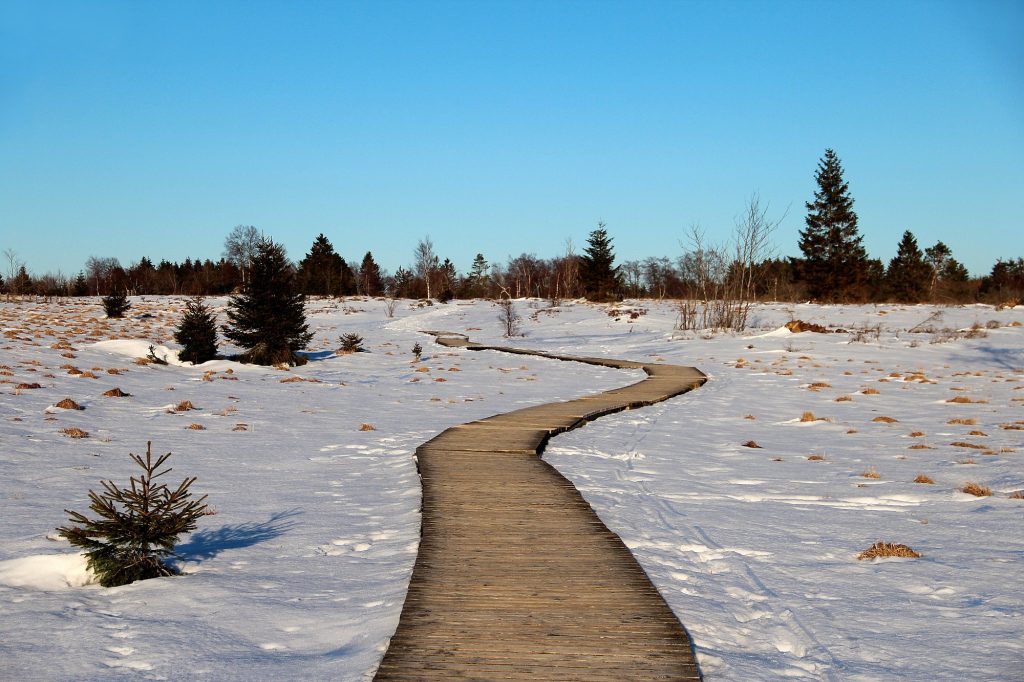

1h50
High Fens and East Belgium
Raised bog more than 10,000 years old, with the Signal de Botrange as the country’s highest point.
More about this region
Around Eupen, Malmedy and Sankt Vith, Belgium looks different: raised bog more than 10,000 years old, with the Signal de Botrange (694 m) as the country’s highest point. It is often wet, cold and misty, and heavy snow is possible in winter. In zone B you walk freely on the paths, zone C is guided only and closed from mid-March to the end of June, and zone D is off limits.

1h15
Meuse Valley around Dinant
The citadel of Dinant and the Rocher Bayard, easy to combine with the Eau d’Heure lakes.
More about this region
The closest of the Walloon highlights: the citadel of Dinant, the Rocher Bayard and the caves of La Merveilleuse. Make a long weekend of it with the Lakes of the Eau d’Heure, some 50 km south of Charleroi: five lakes, with the Plate Taille as the largest lake in Belgium. They lie in the Entre-Sambre-et-Meuse National Park, where the GR124 passes 13 bivouac zones.

1h35
Westhoek and the coast
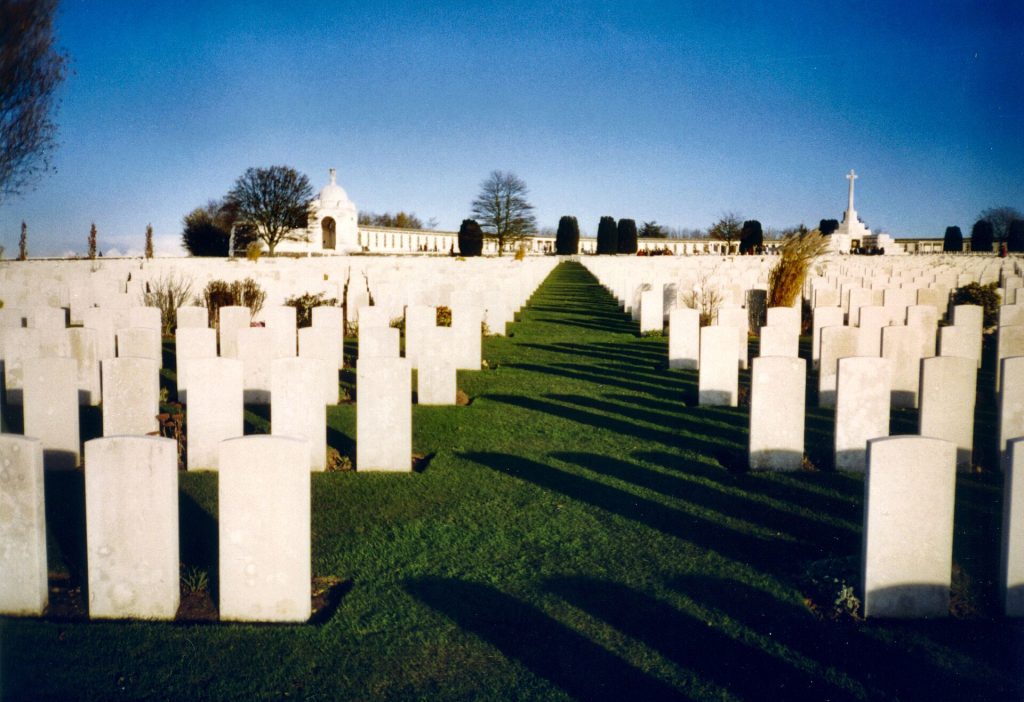
The First World War front line and the Last Post in Ypres, with the dunes and the coastal tram close by.
More about this region
Around Ypres (Ieper), Poperinge, Diksmuide and Veurne you drive along the First World War front line, with Tyne Cot and Langemark. Every evening at 8 pm the Last Post sounds at the Menin Gate. Combine it with the coast: dunes from De Panne to Knokke-Heist, a coastal tram covering some 67 km, and in Oostduinkerke shrimp fishers who still work on horseback.

1h10
Kempen and Haspengouw
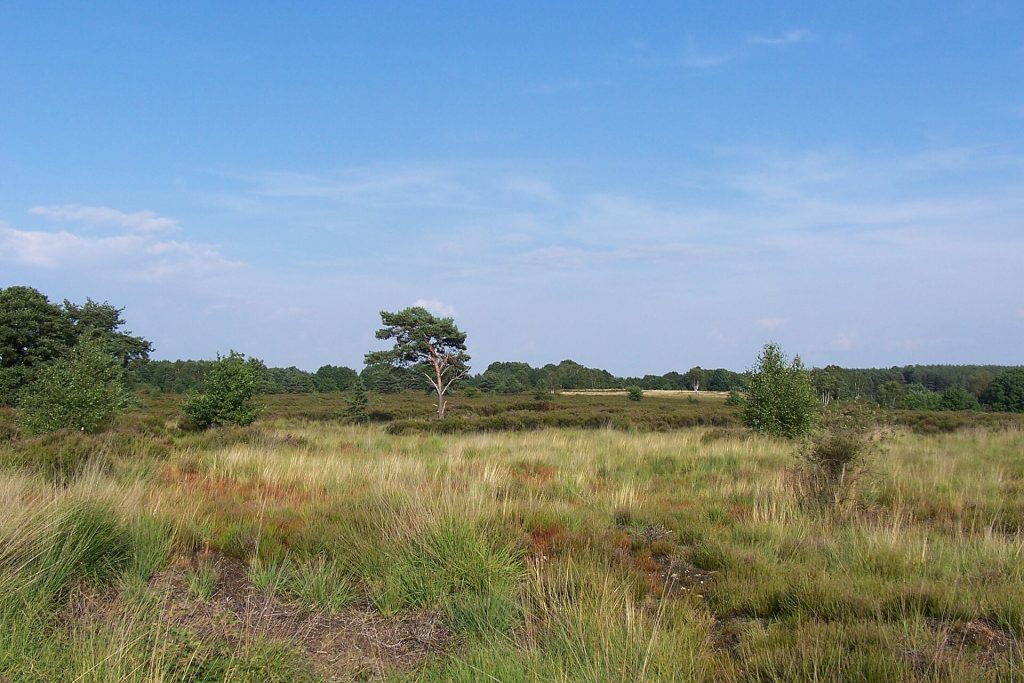
Heathland and pine forest in Hoge Kempen National Park, fruit and wine in Haspengouw.
More about this region
Hoge Kempen National Park around Genk, Maasmechelen and Lanaken combines heathland, such as the Mechelse Heide, with pine forest and a coal-mining past. The park has six entrance gateways. Combine it with Haspengouw (Hesbaye), the country’s main fruit-growing region, with some of its northernmost vineyards. Shorter still: the Hallerbos (0h30), which turns blue with bluebells for a few weeks in spring.
Road trip guide
Semois Valley and Gaume in 3 days
3 days · from Arlon to Vresse-sur-Semois
Day by day through the Gaume and along the Semois: driving times, where you can legally sleep and what not to miss on the way.
Sleeping outdoors? All bivouac zones in Belgium, with map, rules and parking.
The rules at a glance
Last checked on 24 November 2026. Rules differ by region and municipality, and they change: check the official source listed at the bottom just before you leave.
Driving in Belgium
Outside built-up areas 70 in Flanders, 90 in Wallonia
Motorways 120 everywhere, Brussels 30 as the rule. From 0.8 g/l your licence is withdrawn on the spot for 15 days.
All rules
Most traffic rules are national, but the speed limit outside built-up areas, low-emission zones and the rules for nature differ by region. These are the points visitors meet most often:
- Speed outside built-up areas: 70 km/h by default in Flanders, 90 km/h in Wallonia. So when you drive from Flanders into Wallonia, the default limit changes. In Brussels, 30 km/h has been the rule since 2021, except on main roads. Sources contradict each other on the limit outside built-up areas in Brussels (70 or 90 km/h), so follow the signs there. Motorways are 120 km/h everywhere.
- Priority to the right: it applies unless signs or road markings say otherwise. On a roundabout, traffic already on it has priority. Trams have priority, except at traffic lights or when a police officer directs traffic.
- Zip merging is mandatory where lanes narrow. Once traffic jams form, you leave a rescue lane free.
- Phones: holding one is banned, also in a traffic jam or at a red light. Fines start at €116.
- Rear fog light: only when visibility is below 100 metres.
- Alcohol: the limit is 0.5 g/l, or 0.2 g/l for professional drivers. Since February 2026, from 0.8 g/l your licence is withdrawn on the spot for 15 days, and after any positive test you may not drive for 12 hours.
- New highway code from 1 June 2027: road signs will get new numbers. According to press reports, after a breakdown you will then switch on your hazard lights first. Only if that is not possible do you place the triangle, and then only on motorways and expressways.
- Language: Dutch in Flanders, French in Wallonia and German in the nine municipalities of the German-speaking Community, including Eupen and Sankt Vith. Brussels is officially bilingual, but almost everyone speaks French there. English is the most widely known second language. A few basic phrases of French or German help in the south and east.
Vignettes, tolls and low-emission zones
No vignette yet, but LEZs in three cities
Flanders has announced a digital vignette from 1 May 2027. The only toll is in the Liefkenshoek Tunnel.
All rules
- Vignette: Belgian motorways are currently free. Flanders has announced a digital road vignette from 1 May 2027, for Belgian and foreign vehicles up to 3.5 tonnes, linked to your number plate and sold only online. Provisional prices for Euro 4 and newer start at €9 per day. The Flemish Parliament still has to give final approval.
- Tolls: only in the Liefkenshoek Tunnel in Antwerp: €8 in cash or €6.20 by card, for a car lower than 3 metres (rate of 28/9/2026).
- LEZ registration: foreign cars register free of charge, once for the Flemish LEZs (Antwerp and Ghent) and separately for Brussels. According to the City of Ghent, Dutch cars do not need to register.
- LEZ Brussels: almost the whole region. Since 1 January 2026, Euro 5 diesels and Euro 2 petrol cars are banned. Since 1 July 2026 a first warning letter is followed by a €350 fine. A day pass costs €35, up to 24 times a year (according to the consumer organisation Test-Achats).
- Wallonia: no regional LEZ.
For the full details, see our page on vignettes, tolls and low-emission zones in Europe.
What to carry in your car
Warning triangle and hi-vis vest
A first-aid kit and a fire extinguisher are only mandatory for Belgian plates.
More details
With a foreign-registered car, a warning triangle is mandatory, and the driver wears a hi-vis vest after a breakdown on motorways and expressways. A first-aid kit and a fire extinguisher of at least 1 kg are only mandatory for Belgian plates, although the Dutch motoring club ANWB recommends carrying them. Children shorter than 135 cm travel in a suitable child seat. What else you need in other countries is on our page on mandatory car equipment by country.
Winter
No winter tyre requirement
Snow chains only on snow or black ice, and studded tyres are banned.
More details
In winter, winter tyres are not mandatory. A winter tyre with a lower speed rating than prescribed is only allowed from 1 October to 30 April, with a visible sticker. Snow chains may only be used on snow or black ice, and studded tyres are banned. Note that the Ardennes and the High Fens can be wintry while it rains in Brussels. More in our guide to winter tyres and snow chains.
Where to stay overnight
Rules by region and municipality
In Brussels, 24 hours at most in a vehicle. In Flemish nature you only camp in a bivouac zone.
All rules
A campsite remains the safest choice. In Wallonia there are also motorhome areas (aires d’accueil pour motor-homes) and approved farm campsites (camping à la ferme). Apps such as Park4Night and CamperContact show motorhome areas and private spots.
- Sleeping in your car, Flanders: there is no regional rule. You may sleep in a legally parked car, unless the municipality bans it. Ghent, for example, bans overnight stays in a motorhome on the public road.
- Wallonia: camping on the public road is banned, except at motorhome areas.
- Brussels: in all 19 municipalities you may stay in a vehicle on public space for 24 hours at most.
- Roof tent: no rule mentions it. From the definition of camping, though, it follows that an unfolded roof tent probably counts as camping. That is our interpretation, not a written rule. At a campsite you are always fine.
- With a tent: in Flemish nature only in a bivouac zone, booked for free via Natuur en Bos, the Flemish nature agency. You stay one night (6 pm to 10 am), with no more than 3 tents and 10 people, and walk the last stretch from the car park. All zones, with rules and parking, are in our overview of bivouac zones in Belgium. In a Walloon forest you may only stay at designated aires (fine €25 to €100, sometimes doubled). In Brussels parks and green spaces camping is banned.
More in our guides to sleeping in your car, campervan or roof tent and wild camping in Europe.
Off-road and unpaved roads
Banned in forests and nature areas
The legal way: join an organised drive on a temporarily waymarked route in Wallonia.
All rules
The honest answer: Belgium is strict. What is possible mostly comes down to organised drives.
- Flanders: recreational motor vehicles are not allowed in forests and nature areas. For unpaved municipal roads outside them we found no general ban, but a road sign or a municipal regulation can still close them. Always check the sign and the local rules.
- Wallonia: in forests you may only drive on paved roads, not on chemins (earth or gravel) or sentiers. The Walloon authorities can propose a settlement of €50 to €150.
- The legal way in: temporarily waymarked routes, marked with an official sign showing a date and an authorisation number. The organiser applies at least 45 days in advance. For you, that means joining an organised drive.
- Off-road sites: there is no public list of approved 4×4 sites. One example we did find: a club weekend in 2025 on a rented site in Bertrix.
For more gravel under your wheels, the neighbouring countries offer more, such as the chemins ruraux in France. Country by country, see our guide to legal off-road driving in Europe.
Everything in one table: Belgium at a glance
| Topic | What applies |
|---|---|
| Driving time from Brussels | Dinant 1h15, Durbuy 1h35, Bouillon 2h00 |
| Speed limits | Built-up areas 50 km/h (Brussels: 30 as the rule); outside built-up areas 70 in Flanders, 90 in Wallonia; motorways 120 |
| Alcohol | 0.5 g/l (professional drivers 0.2); from 0.8 g/l your licence is withdrawn on the spot for 15 days |
| Vignette and tolls | None yet. Digital vignette announced from 1/5/2027, not final. Only toll: the Liefkenshoek Tunnel |
| Low-emission zones | LEZ in Antwerp, Ghent and Brussels, with free registration for foreign cars; none in Wallonia |
| Mandatory in the car | Foreign-registered car: warning triangle, and a vest for the driver after a breakdown. Belgian cars also carry a first-aid kit and fire extinguisher |
| Winter | No winter tyre requirement; chains only on snow or black ice; studded tyres banned |
| Sleeping in your car or roof tent | Differs by region and municipality; Brussels max. 24 h. Roof tent: no rule (probably camping) |
| Wild camping | Regulated regionally: bivouac zones in Flanders, only designated spots in Walloon forests, not in Brussels green spaces |
| Off-road | Banned in forests and nature areas; Wallonia: organised drives on temporarily waymarked routes |
| Emergency number | 112 (ambulance and fire), 101 (police) |
Driving times are model values from central Brussels, without breaks or traffic.
When to go
- Spring: bluebells in the Hallerbos. In the High Fens, zone C is then closed for the black grouse breeding season.
- Spring to autumn: the season for the Semois and Ourthe valleys.
- Summer: the coast and the Eau d’Heure lakes. In drought, parts of the High Fens can close because of the fire risk.
- Autumn: during a hunt, traffic in the Ardennes forests can be restricted or banned. Watch for the signs.
- Winter: snow on the High Fens. The Westhoek works all year round.
Food along the way
- Ardennes: ham and pâté, often made from game.
- Land van Herve: Herve cheese from raw cow’s milk, with an EU-protected name.
- Liège and Verviers: Liège waffles, Liège syrup, boulets à la liégeoise and rice tart.
- Dinant: couque de Dinant and flamiche dinantaise.
- Chimay: cheese washed in beer.
- Geraardsbergen: mattentaart, a protected geographical indication since 2006.
- Ghent: waterzooi and cuberdons.
- Coast: grey shrimps. Haspengouw: fruit and wine.
Frequently asked questions
Do I need to register my car for the Belgian LEZs?
With a foreign-registered car, yes: registration is free, once for Antwerp and Ghent together and separately for Brussels. According to the City of Ghent, Dutch cars are an exception. Euro 5 diesels and older are banned from the Brussels LEZ, apart from a limited number of day passes.
Can I sleep in my car in Belgium?
It depends where you are. In Flanders it is allowed if you are legally parked, unless the municipality bans it. In Wallonia camping on the public road is banned, except at motorhome areas. In Brussels you may stay in a vehicle for 24 hours at most. Never put anything outside your car.
Will I need a vignette to drive through Belgium?
Not today. If the plan goes ahead, a digital vignette will be needed from 1 May 2027 for Belgian and foreign cars up to 3.5 tonnes. The Flemish Parliament still has to approve it.
Where can I drive off-road in Belgium?
Not in forests and nature areas. In Wallonia you can join an organised drive on a temporarily waymarked route. There is no public list of 4×4 sites.
Useful words
In Dutch (Flanders) and French (Wallonia and Brussels):
- voorrang van rechts / priorité de droite: priority to the right
- ritsen / tirette: zip merging
- lage-emissiezone / zone de basses émissions: low-emission zone
- bivakzone / aire de bivouac: bivouac zone
- aire d’accueil pour motor-homes: motorhome area
- chemin / sentier: unpaved road / narrow path, closed to motor vehicles in Walloon forests
- verboden toegang / accès interdit: no entry
Official sources
- Traffic rules: Your Europe – Belgium, Belgian police – priority to the right (Dutch), Vlaanderen.be – new highway code (Dutch)
- Emergency numbers: 112.be
- Vignette and low-emission zones: Vlaanderen.be – road vignette from 1 May 2027 (Dutch), Vlaanderen.be – low-emission zones (Dutch), LEZ.brussels
- Equipment: Belgian police – mandatory equipment (Dutch, pdf)
- Winter: Touring – winter tyres and snow chains in Belgium (Dutch)
- Overnight stays and nature: Natuur en Bos – bivouac zones (Dutch), Codex Vlaanderen – Forest Decree (Dutch), Wallex – Code forestier (French), City of Brussels – parking camper vans
- Off-road: Wallonie.be – Circuler en forêt (French), Wallonie.be – temporary waymarking (Dutch), Vlaanderen.be – visiting nature (Dutch)
Driving on?