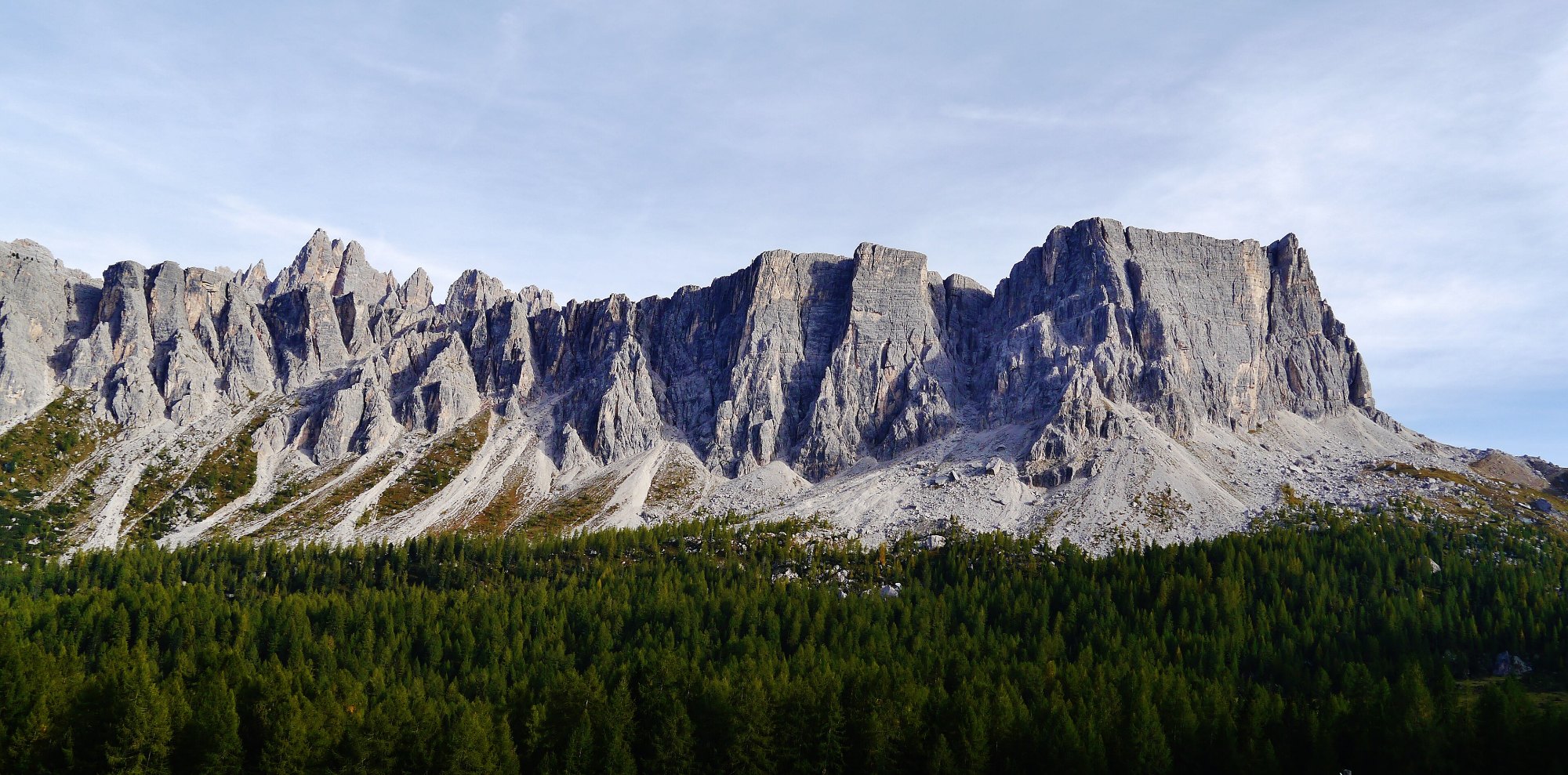
Photo above: At the Passo Giau in the Dolomites. Zairon, Wikimedia Commons, CC BY-SA 4.0, cropped.

Italy is a country to drive slowly: over the passes of the Dolomites, along the gravel roads of Tuscany and across old military roads high up in Piedmont. Two classic traps wait for foreign cars along the way: the toll system and the ZTL zones in historic town centres. Below you will find what to arrange in advance, what has to be in your car and where the best routes are.
- From BrusselsBolzano in 10h50
- TollsTicket on entry, no vignette
- ZTLCameras in historic centres
- Autostrada130, 110 in rain
On this page: Regions Road trip Rules When to go Food Questions
The best regions and routes for a road trip
With the driving time from Brussels, without breaks or traffic.

10h50
The Dolomites and South Tyrol
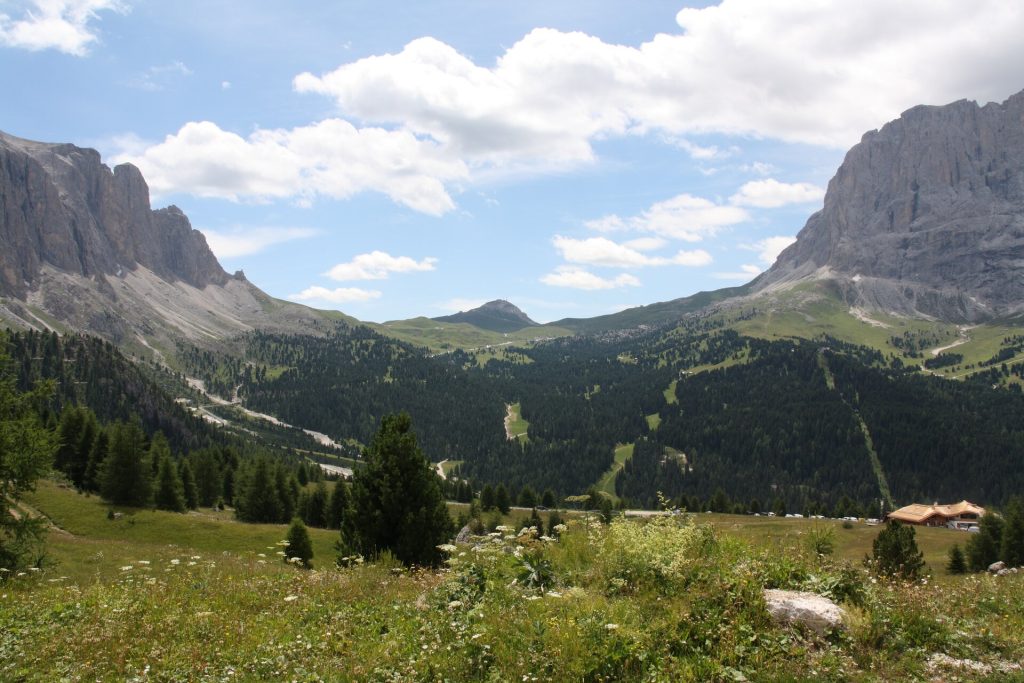
The Great Dolomites Road from Bolzano to Cortina, over passes such as the Pordoi. Go in June or September.
More about this region
The Great Dolomites Road (SS48) runs from Bolzano to Cortina, over passes such as the Pordoi: 15.6 km and 33 bends. Choose June or September, or drive before 10am in July and August. In South Tyrol you can also follow the Strada del Vino: some 150 km past castles and Lake Caldaro. Bolzano is 10h50 from Brussels.

10h45
The Stelvio
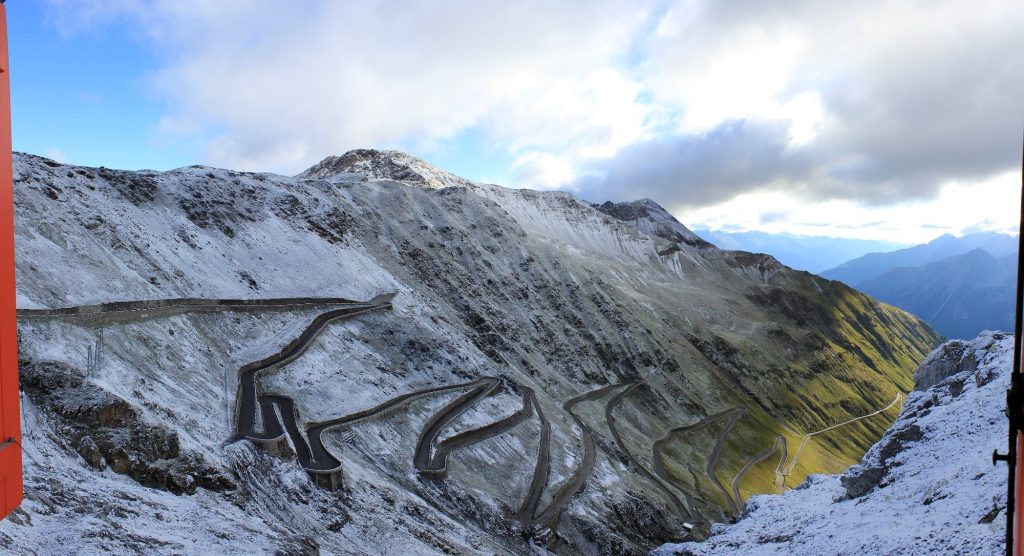
46.8 km and around 60 hairpins up to 2,757 metres. Usually only open from June to September.
More about this region
46.8 km, around 60 hairpins and 2,757 metres high, in the Stelvio National Park. Usually only open from June to September. Bormio is 10h45 from Brussels, via a summer route over Swiss passes.

12h00
Lake Garda and the Strada della Forra
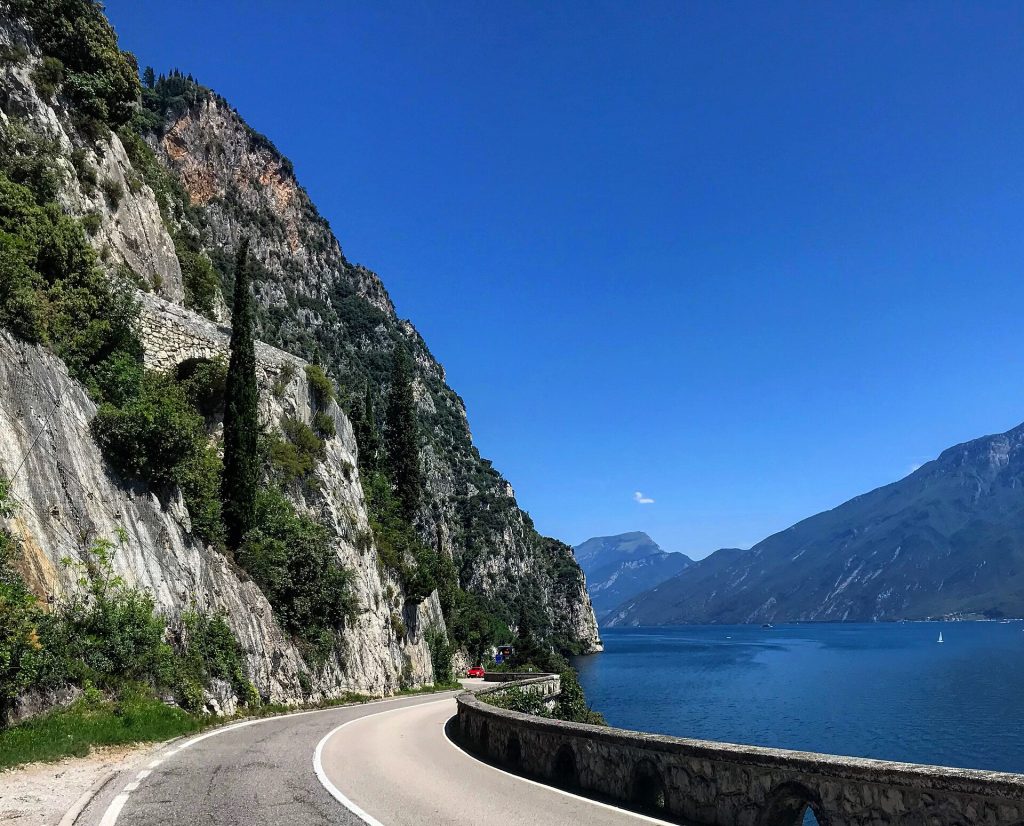
A 9.1 km gorge road by Lake Garda, reopened in August 2025. Not for large campervans.
More about this region
A 9.1 km gorge road at Lake Garda, open again since August 2025. The lower section is one-way uphill, and it is not a road for large campervans. Riva del Garda is 12h00 from Brussels.

10h30
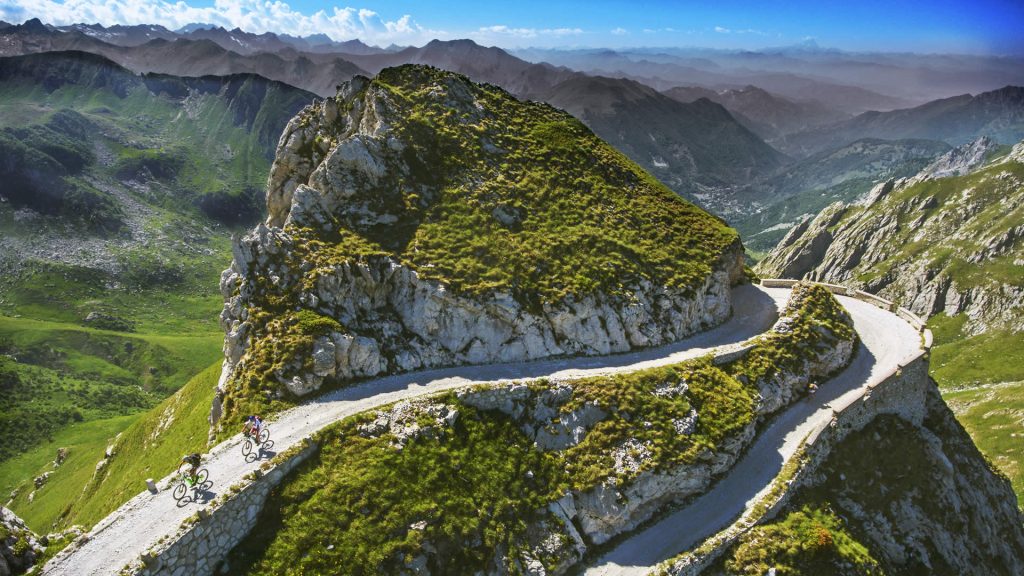
Piedmont: the high gravel roads
Legal gravel driving at altitude, on the Alta Via del Sale and the Assietta up to 2,566 metres.
More about this region
This is where you can legally drive unpaved roads at altitude. The Alta Via del Sale is 56 km long, 30 km of it high up between 1,800 and 2,100 metres. The Assietta runs for around 60 km of gravel along a ridge up to 2,566 metres. Plan them together: the Alta Via del Sale is closed on exactly the days the Strada dei Cannoni is open. Limone Piemonte is 12h40 from Brussels, Susa (for the Assietta) 10h30 via the Fréjus tunnel.

13h25
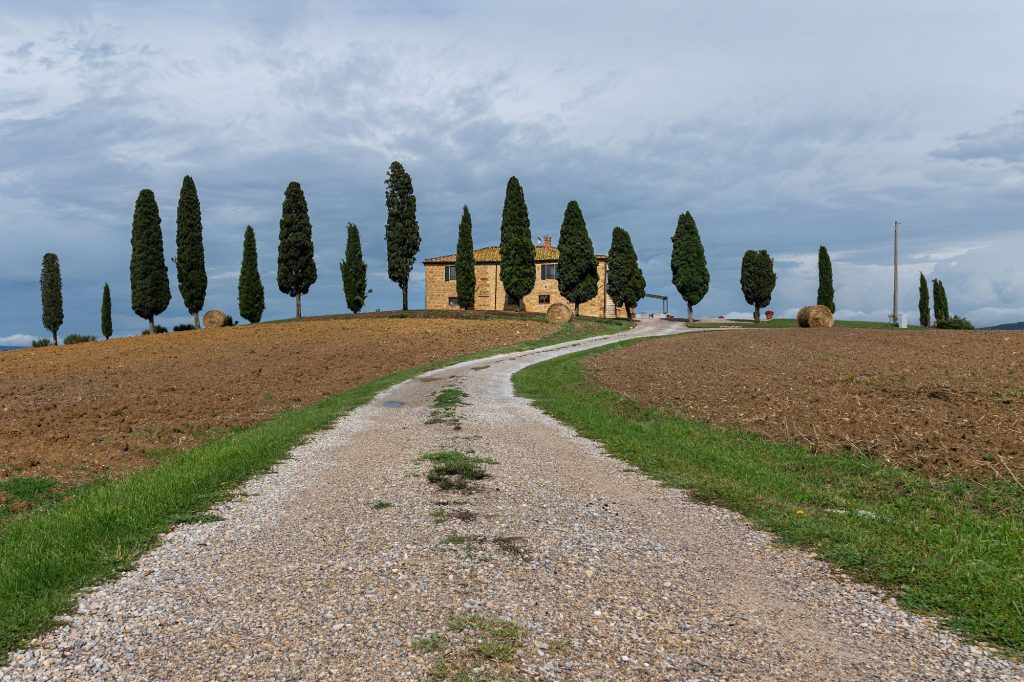
Tuscany on the strade bianche
151 km of tarmac and gravel through the Crete Senesi and the Val d’Orcia. Allow 2 to 3 days.
More about this region
Through the Crete Senesi and the Val d’Orcia, Visit Tuscany describes a 151 km route over tarmac and gravel (originally for motorcyclists), past the cypress avenue at La Foce. Allow 2 to 3 days. With more time, drive a two-day route from the Chianti via Siena and the Val d’Orcia to the Maremma coast. Florence is 13h25 from Brussels, Siena 14h10.

40.5 km
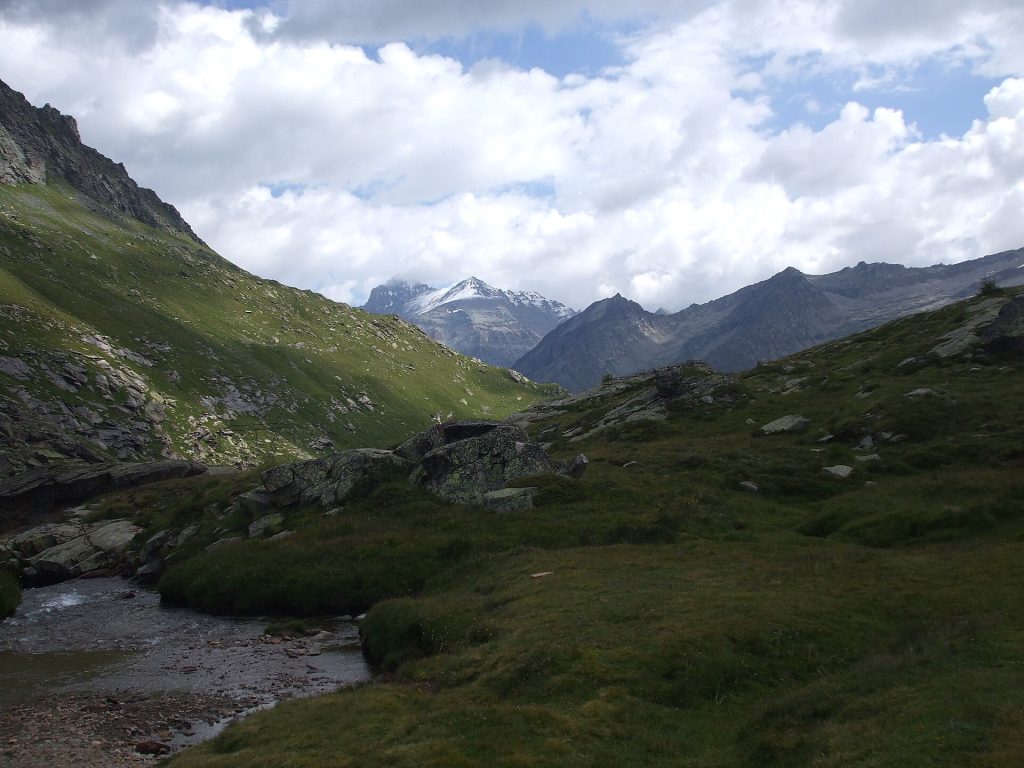
Colle del Nivolet in Gran Paradiso
A climb to 2,621 metres in Italy’s oldest national park. Closed from mid-October to mid-May.
More about this region
From Locana you climb 40.5 km to 2,621 metres, in Italy’s oldest national park. The road is closed from 15 October to 15 May. In summer 2025 a weekend limit of 350 vehicles applied on part of the road (km 11.5 to 18.5 of the SP50), with online booking; check before you go whether that also applies in 2027.
Road trip guide
Alta Via del Sale in 4 days
4 days · on gravel from the Piedmont Alps to the Ligurian Sea
Day by day along the old salt road: driving times, where you can legally sleep and when the road is open.
The rules at a glance
Last checked on 24 November 2026. Prices and rules change, often on 1 January: check the official source listed at the bottom just before you leave.
Driving in Italy
Autostrada 130, 110 in any rain
90 outside towns, 110 on main roads. Fines have been steep since the new highway code of December 2024.
All rules
- Speed: 50 km/h in built-up areas (sometimes 30 or 70), 90 km/h on roads outside them, 110 km/h on main roads (strade extraurbane principali) and 130 km/h on the autostrada. In any kind of precipitation, ordinary rain included, the limit drops to 110 on the autostrada and 90 on main roads.
- Fines have been steep since the new highway code of 14 December 2024: 10 to 40 km/h over the limit costs €173 to €694, a phone in your hand €250 to €1,000. With a foreign car you can pay a fine on the spot at a 30% reduction.
- Alcohol: 0.5 g/l, and 0.0 for novice drivers (first 3 years) and professional drivers. Between 0.5 and 0.8 g/l the fine is already €543 to €2,170.
- Lights: outside built-up areas you drive with dipped headlights, also in daytime. In tunnels dipped headlights are mandatory and parking is not allowed.
- Keep right: the hard shoulder is for emergency services. Always stop for pedestrians on a zebra crossing.
- Parking: blue lines are paid, white lines usually free, yellow lines reserved. At motorway service areas you may stay for 24 hours at most.
- Children shorter than 150 cm travel in a seat suited to their weight and height.
- Pets: if you travel with more than one animal, a crate is mandatory.
- Breakdown assistance: the ACI can be reached on 800.116.800.
Tolls, ZTLs and low-emission zones
No vignette, but tolls and ZTL cameras
Take a ticket on the way in and pay on the way out. Never enter a ZTL without a permit.
All rules
There is no vignette. On the autostrada you take a ticket at the entrance and pay at the exit. White lanes are for cash, blue lanes for cards and yellow lanes for Telepass only.
- Unable to pay? You get a “mancato pagamento” slip and pay afterwards through autostrade.it. Do it quickly: in one example, €24 in tolls rose to €57.29 with collection costs.
- Free-flow: the A36 (Pedemontana), A59 and A60 around Milan have no barriers. Check before your trip how to pay afterwards.
- ZTL: many historic centres are off limits without a permit. Cameras record every entry, and every entry can cost you about €100. The letter can arrive up to 360 days later, or up to about a year and a half with a hire car.
- Hotel inside a ZTL? Ask the hotel to register your number plate. That only covers that zone.
- Milan: since January 2026, Area C has been active every day from 7.30am to 7.30pm, weekends included. Entry costs €7.50 per day; arrange it in advance. In Area B, Euro standards apply to diesels.
- Po valley: according to the Italian press, the ban on Euro 5 diesels in Lombardy, Veneto and other regions has been postponed to 1 October 2027. We have not seen official confirmation.
Rates and exceptions by country are in our guide to vignettes, tolls and low-emission zones in Europe.
What must be in your car?
Warning triangle and hi-vis vest
Place the triangle at least 50 metres behind the car. Bring one vest per occupant.
More details
- Mandatory: a warning triangle and a hi-vis vest. You place the triangle at least 50 metres behind your car.
- Keep the vest within reach. You wear it when you get out outside built-up areas, at night or in poor visibility, including on the hard shoulder. Who has to wear it is not clear-cut: according to the ADAC the driver and whoever places the triangle, according to the ÖAMTC every occupant. So bring one vest per person.
- Recommended: a first-aid kit and a fire extinguisher.
The full packing list is in our guide to mandatory car equipment by country.
Winter
15/11 to 15/4: winter tyres or chains
On roads where the road authority requires it. In some mountain areas the period starts in mid-October.
More details
In winter, from 15 November 2026 to 15 April 2027, you need winter tyres (M+S, 3PMSF recommended) or snow chains on board on roads where the road authority requires it. In some mountain areas the period starts in mid-October or on 1 November and runs until 30 April. On some stretches, such as part of the A4, the requirement also applies without snow. Snow socks are allowed if they meet the UNI EN 16662-1:2020 standard. The fine is €80 to €318 outside built-up areas and €41 to €169 inside. More in our guide to winter tyres and snow chains in Europe.
Where to stay overnight
Sleeping in your car: yes, camping: no
As long as your vehicle stands only on its wheels. An unfolded roof tent counts as camping.
All rules
Campsites, agriturismi and motorhome areas (aree di sosta) are the safe choice. In Trentino you may stay at an area di sosta for 48 hours at most, without awning, chairs or blocks. At an agricampeggio you camp on private land, with the owner’s permission.
Sleeping in your car or campervan is allowed in principle. Under article 185 of the highway code, a campervan is parked as long as it stands only on its wheels, emits nothing and stays within its outline. Legs, an awning, chairs or an unfolded roof tent turn it into camping. In South Tyrol the municipalities regulate it, using the same criteria; a total ban in Selva/Wolkenstein was overturned by the court in April 2026. More in our guide to sleeping in your car, campervan or roof tent.
Wild camping is regulated by regions and municipalities. We found no official overview. A short bivouac, from sunset to sunrise and outside built-up areas, is often tolerated, but many regions ban camping outside designated places, including Valle d’Aosta, Trentino-South Tyrol, Veneto and Friuli. Bivouacking is banned in the Gran Paradiso National Park. Do not light an open fire. More in our guide to wild camping in Europe.
Off-road and unpaved roads
Forest and alpine tracks are banned
Allowed: public strade bianche and paid military mountain roads in Piedmont, such as the Alta Via del Sale.
All rules
A 2021 ministerial decree bans ordinary traffic on forest and alpine pasture roads; the regions decide on exceptions. They are strict: Piedmont, Veneto (fine €100 to €1,000), Trentino and Tuscany ban paths, forest roads or firebreaks, among others. In South Tyrol, paths not suitable for an ordinary two-wheel-drive car are banned. A “2.5-metre rule” on path width does not exist.
What is allowed: public gravel roads such as the strade bianche in Tuscany, routes that have been expressly opened, and a few paid military mountain roads in Piedmont:
- Alta Via del Sale (Limone Piemonte–Monesi): in 2026 a day ticket of €20 per car. Closed to motor vehicles on Tuesdays and Thursdays, maximum 20 km/h, and no wider than 2.3 m or heavier than 3.5 t. Campervans, caravans, buses and trailers are not allowed, and your vehicle may be at most 2.5 m high and 5.5 m long. The terms ask for experienced drivers in suitable vehicles; they do not require a 4×4.
- Strada dei Cannoni (Valle Maira): paid since 2026. Motor vehicles only on Tuesdays and Thursdays, from 6 am to 9 pm, with a mandatory online ticket of €20 per car.
- Strada dell’Assietta: no ticket mentioned. Maximum 30 km/h, no wider than 2 m. In July and August closed to motor vehicles on Wednesdays and Saturdays from 9 am to 5 pm.
All rules, seasons and sources are in our guide to legal off-road driving in Europe.
Everything in one table: Italy at a glance
| Topic | What applies |
|---|---|
| Driving time from Brussels | Bolzano 10h50, Limone Piemonte 12h40, Florence 13h25 |
| Speed limits | 50 km/h in built-up areas, 90 km/h outside them (110 on main roads), 130 km/h on the autostrada; in any precipitation 110 on the autostrada and 90 on main roads |
| Alcohol limit | 0.5 g/l; 0.0 for novice and professional drivers |
| Vignette and tolls | No vignette; closed toll system; free-flow on the A36, A59 and A60 |
| Low-emission zones | ZTL with cameras; Area C and Area B in Milan |
| Mandatory in the car | Warning triangle (at least 50 m back) and a hi-vis vest within reach |
| Winter rules | On designated roads from 15/11 to 15/4, sometimes longer: winter tyres or chains on board |
| Sleeping in a car or roof tent | Allowed as long as your vehicle stands only on its wheels; an unfolded roof tent counts as camping |
| Wild camping | Regulated regionally; short bivouac often tolerated, many regions ban camping (not officially confirmed) |
| Off-road | Forest and alpine pasture roads banned unless the region opens them; strade bianche and paid military mountain roads |
| Emergency number | 112; also 113 (police), 115 (fire brigade) and 118 (ambulance) |
We use Brussels as a fixed reference point. The driving times are model values from the OSRM route planner, without breaks, traffic jams or border checks.
When to go
best monthsopen or good timewinter equipment on designated roads
Details by region
- June and September: the best months for the Dolomite passes. In July and August, drive before 10am.
- June to September: the Stelvio is usually open.
- Summer and autumn: the high gravel roads of Piedmont. In 2026 the Assietta was open from 1 July to 31 October and the Strada dei Cannoni from 5 July to 31 October. The 2027 dates have not been published.
- Summer and autumn: Tuscany.
- 15 November to 15 April: winter equipment on designated roads. The high passes are then usually closed.
Food and drink along the way
- Piedmont: white truffle from Alba and bicerin.
- South Tyrol and the Dolomites: speck, Kaiserschmarren, rye bread and chestnuts.
- Valle d’Aosta: pan ner (black bread), tegole biscuits and chestnuts with lardo.
- Emilia-Romagna: Parmigiano Reggiano and Culatello di Zibello.
- Liguria: pesto alla genovese.
- Tuscany: Pecorino di Pienza and Chianina beef. Along the way you also pass the wine regions of Chianti and Brunello.
Frequently asked questions
How do I avoid a ZTL fine?
Never enter a zone marked “varco attivo”, and preferably park on the edge of town. If your hotel is inside a ZTL, ask the hotel to register your number plate; that only covers that zone. A fine can arrive up to 360 days later.
Do I need winter tyres in Italy?
On roads where the road authority requires it, from 15 November to 15 April and longer in some mountain areas. You then need winter tyres or snow chains on board. M+S tyres are enough; 3PMSF is recommended.
Can I sleep in my car or roof tent?
In your car or campervan, yes, as long as your vehicle stands only on its wheels and you put nothing outside. An unfolded roof tent counts as camping. At a motorway service area you may stay for 24 hours at most.
Where can I legally drive unpaved roads in Italy?
On public gravel roads such as the strade bianche in Tuscany, and on the paid military mountain roads in Piedmont, with a day ticket of €20 per car. Forest and alpine pasture roads are closed unless the region opens them.
Useful words
- ZTL (zona a traffico limitato): limited traffic zone
- Varco attivo: the ZTL gate is active, do not enter
- Casello: toll gate
- Mancato pagamento: unpaid toll
- Divieto di transito: no through traffic
- Strade bianche: gravel roads
- Area di sosta: motorhome area
- Agricampeggio: camping on a farm
Official sources
- Traffic rules: Italia.it – driving in Italy, ROADPOL – Italy driver guide
- Tolls and ZTL: Autostrade per l’Italia – payment at the toll gate, EVZ – ZTL fines
- Overnight stays: Codice della Strada, art. 185
- Off-road: Gazzetta Ufficiale – DM 28/10/2021, Alta Via del Sale – terms, Strada dei Cannoni, Città metropolitana di Torino – Assietta
- Routes: Visit Tuscany – Crete and Val d’Orcia (Italian), Italia.it – Strada del Vino (Italian)
Driving on?