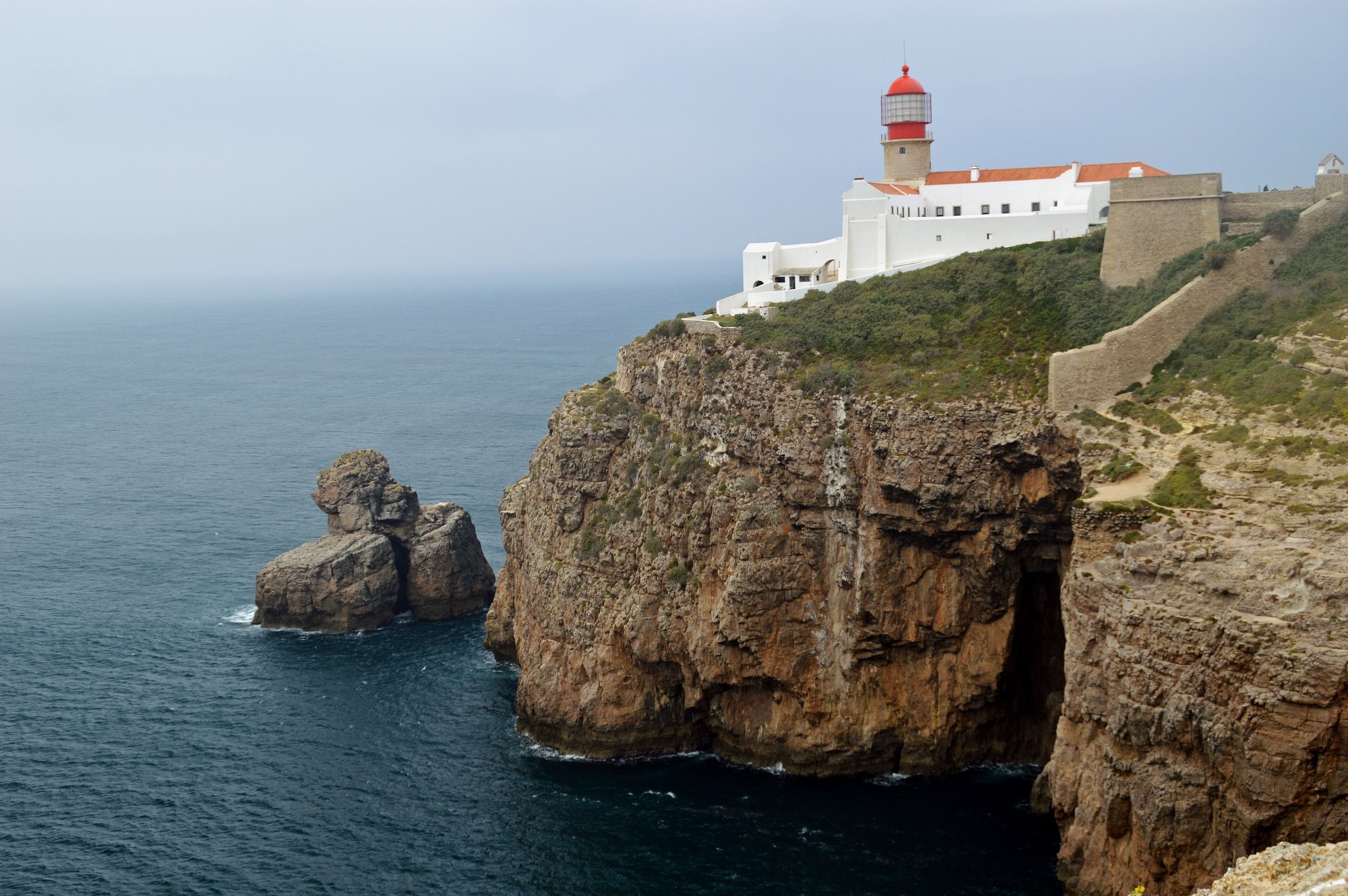
Photo above: Cape St Vincent near Sagres, the south-western tip of Portugal. Michael Gaylard from Horsham, UK, Wikimedia Commons, CC BY 2.0, cropped.

Portugal lies at the end of a long drive through France and Spain. Keep going and you find wine terraces in the Douro, medieval mountain villages, the wide plains of the Alentejo and a wild Atlantic coast, while the EN2 runs right across the country from Chaves to Faro. Porto is 19h45 of pure driving from Brussels and Lisbon 21h35, roughly as far as Andalusia: count on three days at the wheel.
- From BrusselsPorto in 19h45
- TollsElectronic, no vignette
- Toll-free since 2025Some 951 km of motorway
- Motorway120 km/h
On this page: Regions Road trip Rules When to go Food Questions
The best regions and routes for a road trip
Six tips, from north to south, with the driving time from Brussels where we have it.

18h25
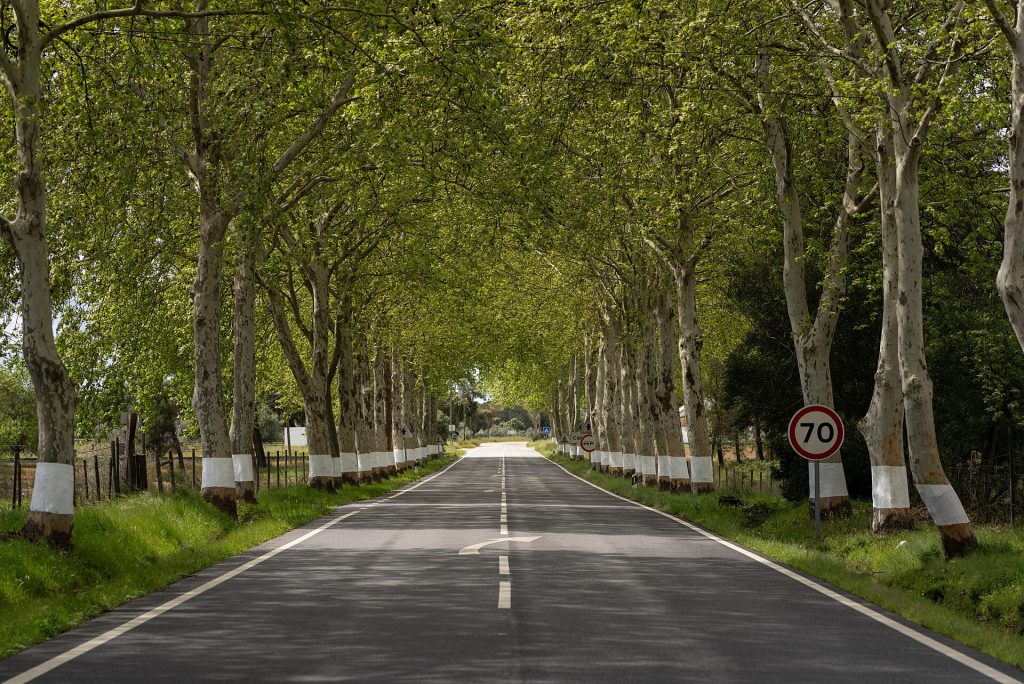
The EN2, from Chaves to Faro
738 km of national road from north to south, through 35 municipalities. You see the country from top to bottom, without the motorway.
More about this region
The EN2 national road runs from Chaves (kilometre 0) in the north to Faro (kilometre 738) in the Algarve, crossing 35 municipalities on the way. So you see the country from top to bottom, on an ordinary national road rather than the motorway. Chaves is 18h25 from Brussels, Faro 23h35.

19h00
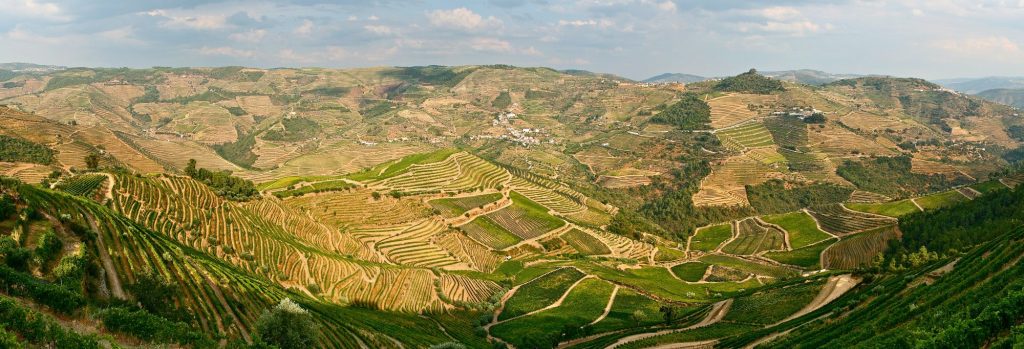
The Douro Valley
Roads winding up through the vineyards, in a wine landscape on the UNESCO list. Go in spring or autumn.
More about this region
Around Peso da Régua, Pinhão, Provesende and Favaios, roads wind up through the vineyards. The wine landscape is on the UNESCO list, and a car is recommended. Go in spring or autumn; the grape harvest is in September. Peso da Régua is 19h00 away.

c. 2,000 m
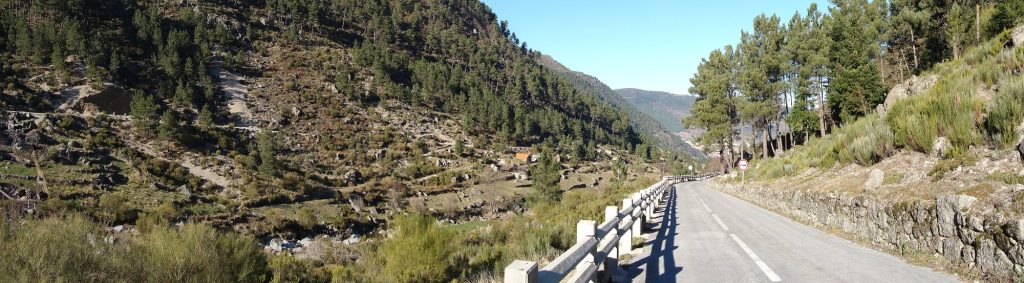
Serra da Estrela
The highest point of mainland Portugal. Walking weather from July to September, snow from January to March.
More about this region
Here lies the highest point of mainland Portugal, the Torre (about 2,000 m), with Manteigas, Seia, Gouveia and Covilhã as bases. July to September is walking weather; from January to March there is snow and the road to the Torre sometimes closes. From Lisbon it is about a 3.5-hour drive.
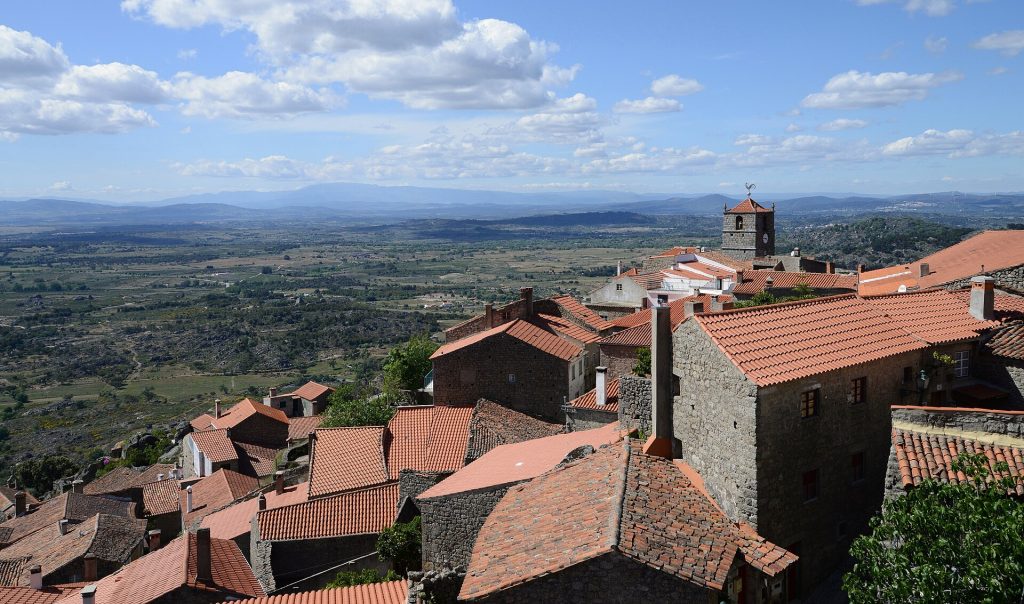

12 villages
Aldeias Históricas
Twelve fortified medieval villages in the Beira, in three clusters. Allow three days per cluster.
More about this region
Twelve fortified medieval villages in the Beira region, split into three clusters, including Monsanto, Piódão and Sortelha. Allow three days per cluster. In April the blossom is out and there is a medieval market; in summer the river beaches draw people in. The toll-free A23 and A25 run through the region.
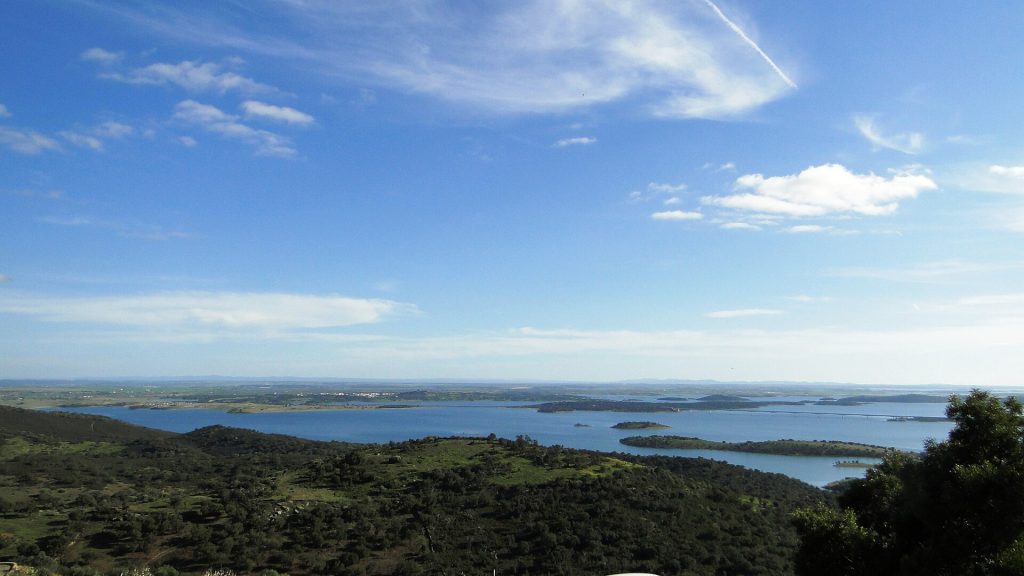

21h05
Alentejo: Évora, Monsaraz and the Alqueva lake
Évora on the UNESCO list, the castle village of Monsaraz and a Dark Sky reserve by the Alqueva lake. Go in spring or autumn.
More about this region
Évora is on the UNESCO list, and nearby stand the Almendres menhirs, “Portugal’s Stonehenge”. Further east, the castle village of Monsaraz overlooks the Alqueva lake: 83 km long, 250 km² in size and a Dark Sky reserve for stargazing. In the north of the Alentejo lie hill towns such as Marvão and Castelo de Vide. Go in spring or autumn, as summers are hot. Évora is 21h05 away.
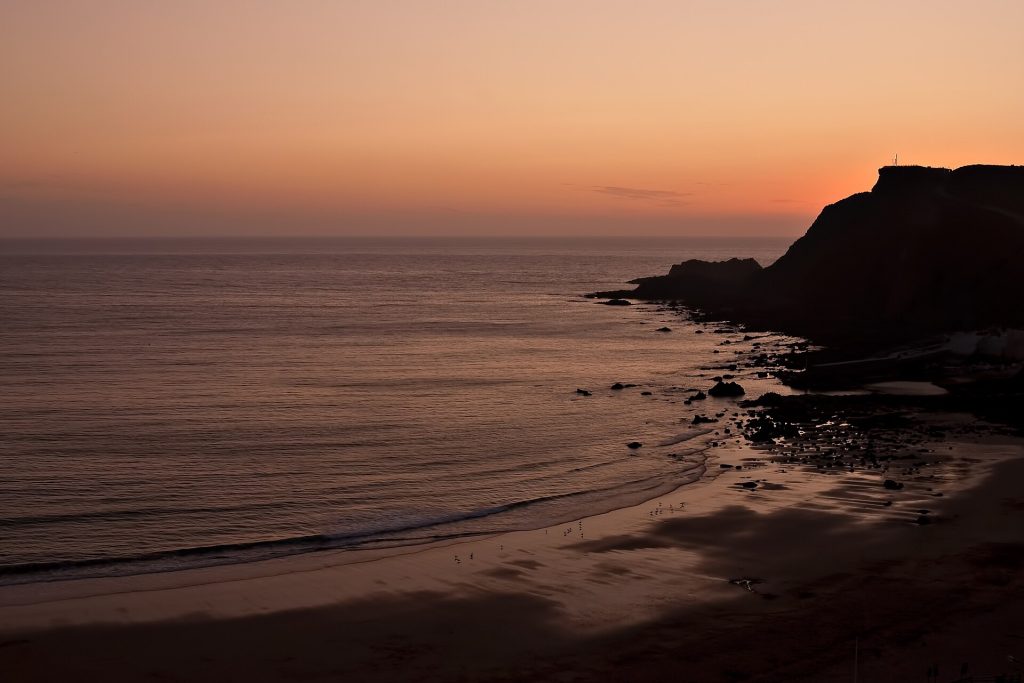

23h35
The western Algarve and Sagres
A wild surf coast from Aljezur to Sagres, at its best in spring and early autumn. Look for a campsite or motorhome area.
More about this region
Around Aljezur, Arifana, Amado and Sagres lies a wild surf coast, at its best in spring and early autumn. According to the local press, the GNR and the ICNF strictly enforce the rules on wild camping here, so look for a campsite or motorhome area. Faro is 23h35 away.
Road trip guide
Douro Valley in 3 days
3 days · from Porto to Pinhão on the N222
Day by day through the vineyard terraces: driving times, unpaved stretches and where to sleep.
The rules at a glance
Last checked on 24 November 2026. Rules change: check the official source listed at the bottom just before you leave.
On the road in Portugal
Motorways 120, ordinary roads 90
100 on expressways, 50 in built-up areas. If traffic suddenly slows down, switch on your hazard lights.
All rules
- Speed: 50 km/h in built-up areas, 90 on ordinary roads, 100 on expressways (vias reservadas) and 120 on motorways. With a trailer the limits are 50, 70, 80 and 100. Motorways have a minimum speed of 50 km/h.
- Alcohol: 0.5 g/l, and 0.2 g/l for novice and professional drivers.
- Phone: hands-free only.
- Driving style: Portuguese drivers are confident. Flashing your headlights means “I am overtaking”; a brief flash of the hazard lights is a thank-you.
- Roundabouts: traffic already on the roundabout has priority. Take the inner lane unless you turn off straight away, and move to the outer lane before your exit. At junctions without signs, traffic from the right has priority.
- Traffic jams: switch on your hazard lights when traffic suddenly slows down. If you do not, you risk €60 to €300.
- Parking and fuel: a blue zone means pay, a yellow line means no parking. Diesel is called gasóleo, and smaller filling stations sometimes close at night.
Vignettes, tolls and low-emission zones
Electronic tolls, no vignette
Arrange it in advance or at the border, for example with EasyToll. Since 2025 some 951 km of motorway has been toll-free.
All rules
Portugal has no vignette. Roads with electronic tolls only have no toll booths: cameras record your number plate. With foreign plates you have four options:
- EasyToll: you link your bank card to your number plate at a machine at the border. The official source lists the A28, A24, A25 and A22.
- TollCard: prepaid, valid for one year.
- TollService: 3 days unlimited for €20 plus €0.74.
- Via Verde Visitors: a temporary device for all motorways.
Since 1 January 2025 about 951 km of motorway has been toll-free, including the A13, A22, A23, A24, A25, parts of the A28 and, on the A4, the Transmontana and Marão Tunnel sections. So not all of the A4 is toll-free. That is handy for routes through the interior and the Algarve. As a result, some border roads with an EasyToll point are now free; we have not checked whether all those points still operate. Each municipality sets its own low-emission zones. We were unable to check the Lisbon zone (ZER). On the way through France and Spain you do pay tolls on some motorways. Everything in one place is on our page about vignettes, tolls and low-emission zones.
What you need in your car
Bring a triangle and hi-vis vest
Sources disagree on whether they apply to foreign cars. In practice: carry both.
More details
- Triangle and hi-vis vest: sources disagree on whether they are mandatory with foreign plates. Your Europe and the Portuguese highway code (article 88, according to auto.moto.pt) list both as mandatory. The ANWB, the TCS and the Portuguese site Pplware say they do not, or only partly, apply to foreign cars. In practice: carry both.
- Wearing the vest: according to the ADAC the driver wears it outside built-up areas, with a fine from €60.
- V-16: this light does not replace the triangle in Portugal. If you bought one for Spain, keep the triangle in the car anyway.
- Fire extinguisher: only mandatory in cars running on LPG or natural gas. Spare bulbs, a first-aid kit and a torch are recommended.
The full packing list is on our page about mandatory car equipment by country.
Winter
Winter tyres not mandatory
At the D9 sign chains must go on. If you head into the mountains, take them with you.
More details
Winter: winter tyres are not mandatory. Sign D9 makes snow chains mandatory on the two driven wheels; sign H5 recommends them. Whether snow socks are enough at a D9 sign is unclear: the regulation only mentions chains. In the Serra da Estrela, the road to the Torre (EN338) closes in snow, as it did on 21 January 2026. If you head into the mountains, take chains. More on our page about winter tyres and snow chains.
Where to sleep
Campervans: 48 hours per municipality
That rule applies to registered campervans. For an ordinary car or a roof tent there is no national rule.
All rules
A campsite is the safest choice everywhere, and the only place where a roof tent is never in question. For campervans there are motorhome service areas (ASA), where you may stay for 72 hours at most, without unpacking anything. Apps such as park4night and CamperContact show them, and through Portugal EasyCamp you can stay on farms and wine estates.
- Campervan: the 2021 campervan law only applies to vehicles officially registered as campervans. They may stay overnight (between 10 pm and 7 am) in the same municipality for 48 hours at most, outside protected areas, Natura 2000 and coastal zones. Fines: €60 to €300, €120 to €600 in protected areas.
- Ordinary car or roof tent: an ordinary car or an unconverted van falls outside that law. There is no national rule for simply sleeping in a car; the municipality decides. The rules say nothing about roof tents.
- Tent: outside a campsite you always need a permit from the municipality, by the letter of the law even for one night, and the landowner’s express consent. The fine is €150 to €200, according to the original 2002 legal text; whether that amount has changed since, we could not verify. Apply in good time: Cascais, for example, counts on at least 5 working days.
- Peneda-Gerês: overnight stays are only allowed on a trek of more than 15 km, more than 3 km from a road, with no more than 2 tents and with permission from the nature institute ICNF. Fires are always banned there.
All the conditions are on our pages about sleeping in your car, campervan or roof tent and wild camping in Europe.
Off-road and unpaved roads
No national ban found
Not officially confirmed. In protected areas only on existing roads, and at high fire risk forest roads are closed.
All rules
- Unpaved public roads: we found no national ban. Our reading of the highway code is that you may simply drive them, but we have no confirmation from the ICNF or the GNR police. So this is not officially confirmed.
- Protected areas: recreational off-roading only on existing roads and paths, organised drives only with permission. The fine is still stated in escudos, roughly €250 to €2,500 (our conversion).
- Beaches and dunes are off limits outside access roads and car parks. In Peneda-Gerês, only approved operators may drive unpaved roads in certain zones, with ICNF permission.
- Fire risk: at danger level “muito elevado” or “máximo”, public forest areas and forest roads are off limits. The Trans Euro Trail, a 1,486 km motorcycle route through Portugal, advises riding from October to May.
- Want to be sure? Book a tour with a registered and insured operator.
The rules for all ten countries are in our guide to legal off-road driving in Europe.
Everything in one table: Portugal at a glance
| Topic | What applies |
|---|---|
| Driving time from Brussels | Chaves (start of the EN2) 18h25 · Porto 19h45 · Lisbon 21h35 |
| Speed limits | Built-up areas 50 · outside built-up areas 90 (expressways 100) · motorways 120 |
| Alcohol limit | 0.5 g/l; novice and professional drivers 0.2 g/l |
| Vignette and tolls | No vignette; partly electronic tolls; about 951 km toll-free since 2025 |
| Low-emission zones | Per municipality |
| Mandatory in the car | Triangle and hi-vis vest: sources conflict for foreign plates, so carry both. Fire extinguisher only with LPG or natural gas |
| Winter rules | Winter tyres not mandatory; chains mandatory at sign D9 |
| Sleeping in a car or roof tent | Registered campervans max. 48 h per municipality; ordinary car: no national rule. Roof tent: no rule |
| Wild camping | Banned without a municipal permit and the landowner’s consent (fine €150–200, 2002 legal text) |
| Off-road | Protected areas: existing roads only; no national ban on unpaved public roads found (not confirmed); forest roads close in high fire risk |
| Emergency number | 112 |
Driving times are model values, calculated with OSRM on OpenStreetMap data, without breaks, traffic jams or waiting times.
When to go
best timegood timesnowfire season
Details by region
- In general: spring and autumn are the most pleasant. In summer the centre and south get extremely hot, with more forest fires. December and January are the coldest and wettest months, and the north can then see snow and frost.
- Douro: spring and autumn; the grape harvest is in September.
- Serra da Estrela: July to September for walking, January to March for snow.
- Algarve: April to June, while September and October are mild, around 20 °C.
- Fire season: the período crítico usually runs from 1 July to 30 September, and the government can extend it. At very high or maximum fire risk, campfires are banned. The daily fire risk is on ipma.pt.
Local flavours along the way
- North and Douro: folar de Chaves, francesinha and pastel de nata. This is also the home of port and vinho verde.
- Trás-os-Montes: posta mirandesa, the smoked sausage tabafeia and sopa transmontana.
- Centre and Serra da Estrela: queijo Serra da Estrela with rye bread, leitão (suckling pig) and oysters from Aveiro.
- Alentejo: açorda, carne de porco à alentejana, migas and porco preto.
- Setúbal: choco frito, found at the Mercado do Livramento.
- Algarve: cataplana and conquilhas à algarvia, and around Sagres frango da Guia.
Frequently asked questions
How do I pay tolls in Portugal with a foreign car?
Arrange it in advance or at the border. With EasyToll you link your bank card to your number plate at a machine at the border. There are also TollCard, TollService and Via Verde Visitors. On a large part of the motorways in the interior and the Algarve you have paid no tolls since 2025.
Does the 48-hour rule apply to my car with a roof tent?
No. That rule only applies to vehicles officially registered as campervans. There is no national rule for simply sleeping in a car, and the rules say nothing about roof tents: the municipality decides. To be safe, pitch your roof tent at a campsite.
Can I drive on unpaved roads in Portugal?
We found no national ban on unpaved public roads, but no official confirmation either. In protected areas you may only use existing roads and paths, and in high fire risk forest areas and forest roads are off limits. If you want to be sure, book a tour with a registered and insured operator.
Do I need winter tyres in Portugal?
No, winter tyres are not mandatory. At sign D9, though, chains must go on the driven wheels. If you drive to the Serra da Estrela in winter, take chains: the road to the Torre closes in snow.
Useful words
- bom dia: good morning; any attempt at Portuguese is appreciated
- autocaravana: campervan, motorhome
- pernoita: overnight stay
- parque de campismo: campsite
- portagem: toll
- perigo de incêndio: fire danger
- estradão: unpaved forest road
- gasóleo: diesel
Official sources
- Traffic rules and equipment: Your Europe – Portugal
- Tolls and low-emission zones: gov.pt – traffic rules and tolls
- Campervan stays: Lei n.º 66/2021 (pdf)
- Wild camping: Decreto-Lei 310/2002, Peneda-Gerês – regulations
- Off-road: Diário da República – DL 218/95
- Fire risk: IPMA – daily fire risk
- EN2: Portuguese government – 738 km along the EN2 (24/10/2025)
- Emergency number: Your Europe – single emergency number 112
Driving on?