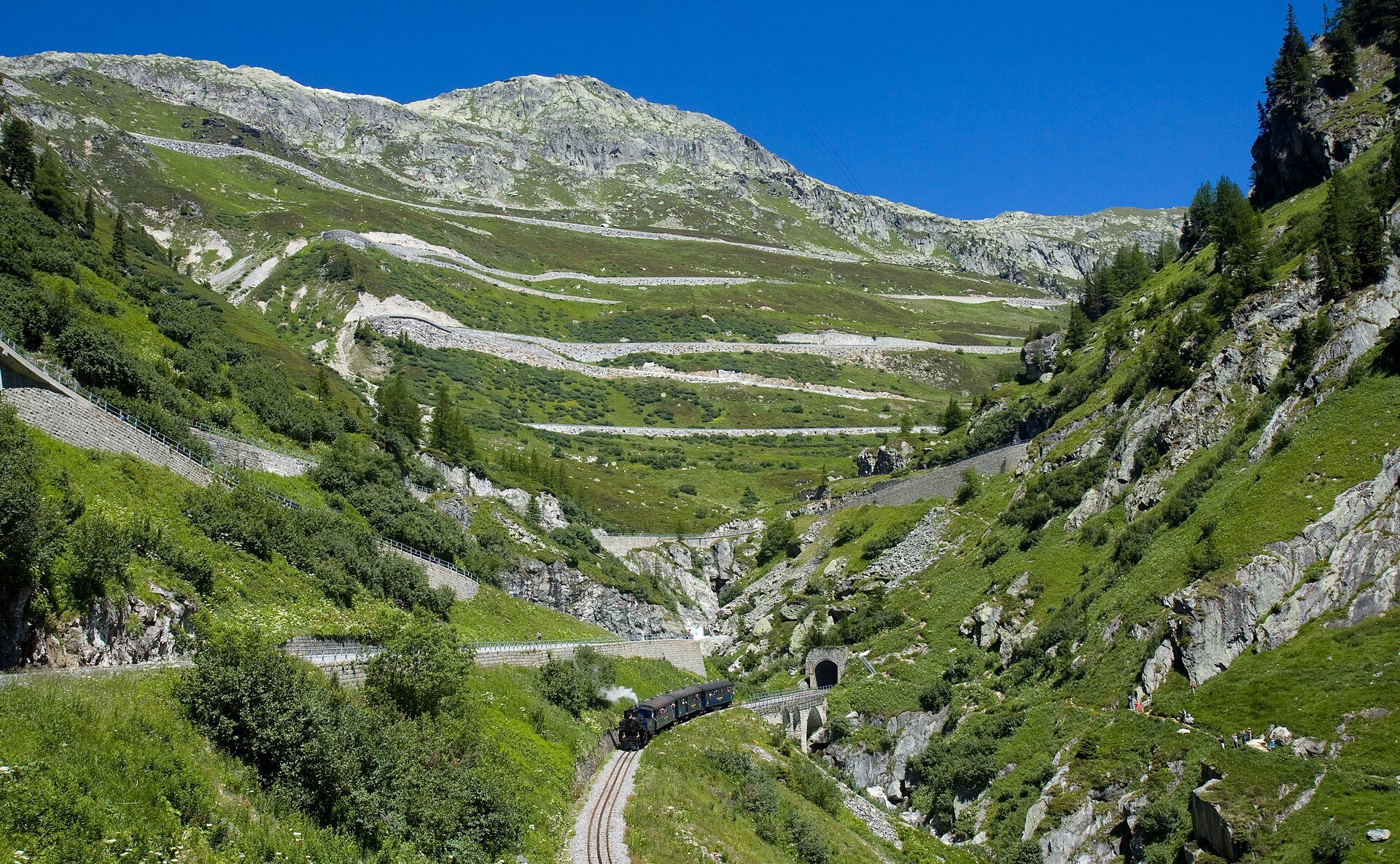
Photo above: The hairpins of the Grimsel Pass road above Gletsch. Kabelleger / David Gubler, Wikimedia Commons, CC BY-SA 3.0, cropped.

The three-pass loop from Andermatt is a classic on a small scale: in about 120 km you cross the Furka (2,429 m) with its view of the Rhône Glacier, the Grimsel (2,164 m) with its lake landscape and the Susten with its sweeping bends. You can drive the loop in a day, but with a night in Innertkirchen and the Tremola over the Gotthard added, it makes two full days. The passes are only open in summer, roughly from June to October.
Last checked on 24 November 2026. Rules and opening dates change: check the official source listed at the bottom just before you leave.
The route at a glance
| Topic | What you need to know |
|---|---|
| Start and finish | Andermatt (canton of Uri); the loop brings you back to where you started |
| Distance | About 120 km for the loop; about 175 km with the Tremola to Airolo and back |
| Pure driving time | About 2h15 for the loop; about 3h15 with the Tremola |
| Number of days | 2 days (one day also works), plus a day each way to get there and back |
| From Brussels | Andermatt about 8h10 (about 730 km) |
| Best time | Usually open from mid-May or early June to the end of October. In 2026 the Furka and the Grimsel opened on 29 May; the Susten was still closed then |
| Road type | Tarmac pass roads with hairpin bends, up to 2,429 m; the Tremola is a cobbled road |
| Suitable for | An ordinary car is fine; you do not need an SUV or a 4×4. Some passes have weight or trailer restrictions: check them with the TCS if you travel with a campervan or caravan |
| Tolls, vignette and costs | Vignette CHF 40 for the motorway to Andermatt (2027 vignette valid 1/12/2026 to 31/1/2028). The passes themselves are in principle free (according to the ADAC). The Realp–Oberwald car train is paid separately |
| Sleeping | Campsites, hotels and B&Bs in the valleys; sleeping in your car is up to the canton and municipality; with a roof tent, choose a campsite |
All driving times in this guide are route-planner model values (OSRM), without breaks or traffic. With stops on the passes, you will be on the road for much longer.
Before you go
- Vignette: CHF 40, annual only, required on motorways. The 2027 vignette is valid from 1 December 2026 to 31 January 2028. The e-vignette is linked to your number plate, the sticker to one vehicle. Only buy the e-vignette on the customs Via portal (via.admin.ch): the government explicitly warns against scam websites. Without a vignette you pay a CHF 200 fine plus the vignette.
- Coming through Germany: you need no vignette there, but you do need an Umweltplakette to enter a German Umweltzone.
- In the car: only the warning triangle is mandatory (without one: CHF 40). A hi-vis vest, first-aid kit and fire extinguisher are recommended. Daytime lights are mandatory. Bring your driving licence, vehicle registration certificate and proof of insurance. If your plate only carries an EU band, keep a separate country sticker in the glovebox to be safe.
- Speed: 50 km/h in built-up areas, 80 outside, 100 on expressways and 120 on motorways. Fixed fines apply from 1 km/h over the limit, after the measuring tolerance is deducted. Radar detectors are banned.
- Snow: winter tyres are not compulsory, but ignoring the “snow chains mandatory” sign costs CHF 100. The high passes are usually closed from November to May or June; then you take the Realp–Oberwald car train or the tunnel under the Gotthard.
- Keep an eye on: because of a fuel shortage, the government is examining 80 km/h on all motorways as an emergency measure, and a transit charge for foreign drivers has no amount or date yet. On 24 November 2026 neither had been decided.
- Pass information: check the current status of the passes with the TCS or on alpen-paesse.ch.
All the rules for driving, the vignette and overnight stays in Switzerland are in our guide to driving in Switzerland. For more on vignettes, tolls and low-emission zones, mandatory car equipment and winter tyres and snow chains, see our practical pages.
The route, day by day
The distances between the passes are short, so most of your time goes on stops, views and the climbs themselves. On narrow stretches, the driver going downhill stops and lets the uphill driver pass. Postbuses always have priority on narrow mountain roads and sound their horn before a bend. Do not leave your engine running while stationary: that costs CHF 60.
Day 1: Andermatt – Innertkirchen, over the Furka and the Grimsel (about 65 km, 1h15)
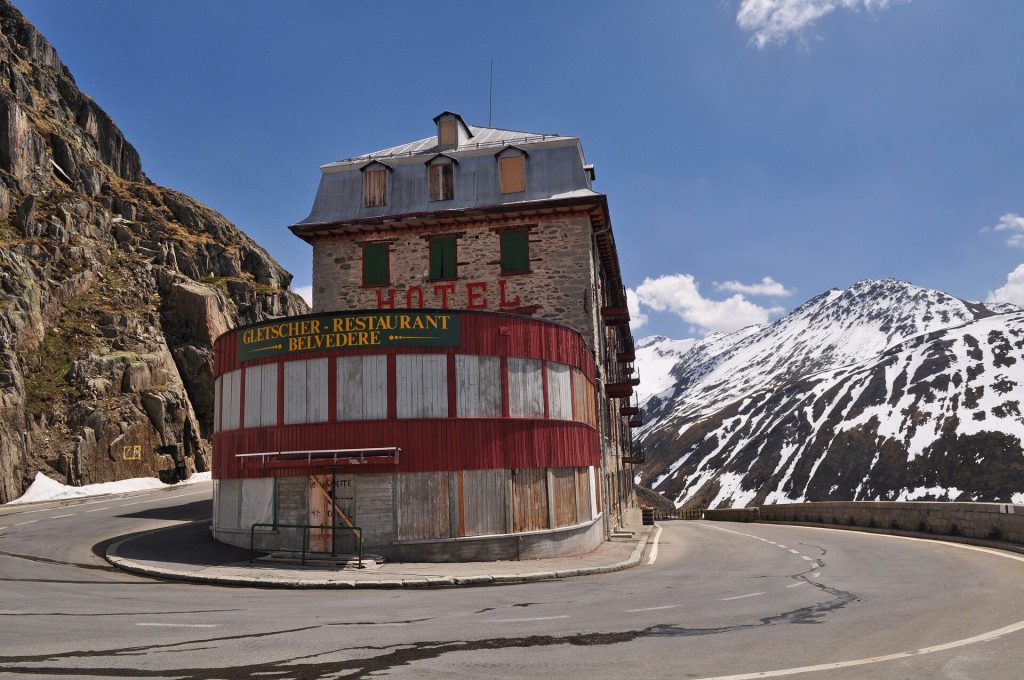

From Andermatt you drive through the Urseren valley, via Hospental and Realp, to the Furka (2,429 m), the highest point of the loop. From the Furka you can see the Rhône Glacier. At Gletsch, at the foot of the Furka and the Grimsel, you enter the Valais, and the climb to the Grimsel (2,164 m) starts straight away, with its lake landscape at the top. Then you descend through the Haslital, past Guttannen, to Innertkirchen.
Stop on the Furka, at Gletsch and on the Grimsel. If the Furka is still closed, the car train from Realp to Oberwald takes you under the pass.
Enjoy: in the Valais, Raclette du Valais AOP belongs on the table. Pick up bread and cheese in Andermatt for a picnic on one of the passes.
Sleeping: a campsite, hotel or B&B in Innertkirchen or in the Haslital. In the Valais you can never wild camp without a permit; we have not checked a separate rule for the canton of Bern, so choose a proper site.
Day 2: Innertkirchen – Andermatt, over the Susten (about 55 km, 1h00)
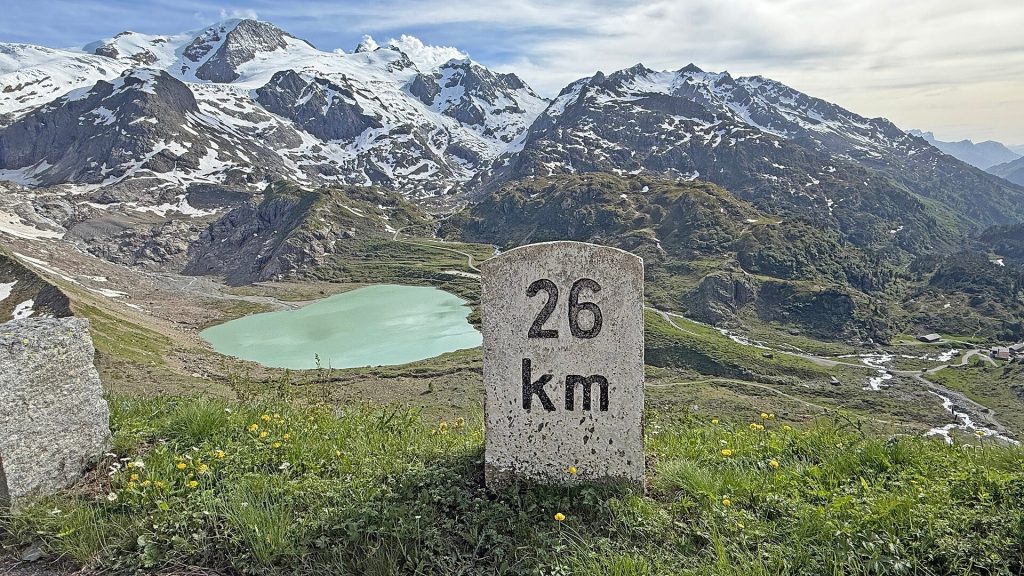

From Innertkirchen you climb through the Gadmertal to the Susten, the pass with the sweeping bends. On the eastern side you descend through the Meiental to Wassen, in the canton of Uri. Via Göschenen and the Schöllenen gorge you drive back to Andermatt. Because this stage is short, you have time for the Tremola in the afternoon.
In 2026 the Susten opened later than the Furka and the Grimsel: on 29 May it was still closed. If you travel early in the season, check the status first.
Enjoy: look for a cheese dairy, bakery or butcher selling local produce in the villages.
Sleeping: in Andermatt at a campsite, hotel or B&B. Wild camping is banned in Andermatt, as it is in Realp.
Option: the Tremola over the Gotthard (about 55 km there and back, 1h00)
From Andermatt you drive via Hospental to the Gotthard Pass (2,106 m), the “gateway to Ticino”. On the southern side you descend on the Tremola, the old cobbled road, to Airolo. Besides the Tremola there is a newer pass road and the Airolo–Göschenen road tunnel. Our route planner counts about 30 minutes each way; on the cobbles you will be slower. To return to Andermatt, take the pass road or the tunnel.
The Gotthard is usually closed from November to May. In 2026 it opened before the Ascension and Whitsun weekend, and closed on 5 November.
Enjoy: if you carry on south, Bellinzona has a Saturday market.
Sleeping: if you stay in Ticino, choose a campsite: in this canton you may not stay overnight at rest areas and car parks.
Unpaved and off-road
The three passes and the Tremola are all paved. Switzerland is first and foremost a country for paved passes, but there are a few legal ways to leave the tarmac:
- Forests: off limits to motor vehicles. The fixed fine is CHF 100, and up to CHF 20,000 in ordinary criminal proceedings. Ignoring a general no-driving sign also costs CHF 100.
- Gasterntal (Kandersteg, canton of Bern): a private gravel road, fine in an ordinary car too. You pay CHF 20 a day at the ticket machine or via PayByPhone (annual permit CHF 60). Through the gorge, traffic is one-way in hourly time slots. Open in summer, roughly from mid-May to mid-November; the road closes in thunderstorms or heavy rain. Check the 2027 dates on gasterntal.ch.
- TCS courses: from 1 January 2027 they are called Offroad Standard and Advanced (6 hours, in your own off-roader or SUV; Standard requires at least 20 cm of ground clearance). Offroad Expert takes place at Offroadpark Geisingen, just across the German border. Prices are not listed on the course pages, and your vehicle is not insured through the TCS during the course.
What is legally possible in the other countries is in our guide to legal off-road driving in Europe.
Where to sleep
- In your car or campervan: there is no national rule; the canton and municipality decide. Your vehicle must fit within a parking bay, and camping behaviour is not allowed. Always check the signs on the spot.
- Roof tent: the TCS counts staying overnight with a roof tent outside a campsite as wild camping, and says Stellplätze (motorhome areas) are not meant for roof tents. With a roof tent, choose a campsite.
- With a tent: generally tolerated are one night with a small tent above the tree line, in a small group, an emergency bivouac, or camping on private land with permission. Always banned: nature reserves, the National Park, federal game reserves (CHF 150) and wildlife rest zones. Along this loop, the Valais always requires a permit, and municipalities such as Andermatt and Realp ban it.
- Mountain huts: the Swiss Alpine Club (SAC) has more than 150. If you want to camp near a hut, ask the hut warden for permission first. On the Nomady platform, private hosts offer pitches for tents and vehicles.
- Fires only at official fireplaces, never in wind. In dry spells the cantons announce fire bans; check waldbrandgefahr.ch.
Read more in our guides to sleeping in your car, campervan or roof tent and wild camping in Europe.
When to go
- Mid-May or early June to the end of October: the high passes in Uri, Valais and Bern are usually open then.
- The 2026 season (according to Swiss press reports): the Furka and the Grimsel opened on 29 May, the Furka from 9 am according to the canton of Uri. The Susten was still closed then. In autumn the Susten and the Furka had been closed since the end of October, and the Gotthard closed on 5 November. The 2027 dates are not known yet.
- July and August are peak season on the passes.
- Winter: the passes on this loop are closed. If you still want to cross a pass, the Julier, Maloja, Bernina and Ofen Pass in Graubünden stay open all year.
- Check the current status with the TCS or on alpen-paesse.ch before you leave.
Shorter or longer
- Shorter: the loop in one day. About 120 km and 2h15 of pure driving, starting and finishing in Andermatt. Set off early to leave time for stops.
- Longer: add the Nufenen. From Airolo you can cross the Nufenen (2,478 m, gradients up to 16%) into the Goms and return over the Furka. The Nufenen is usually closed from November to June. We have not calculated this loop.
- Much longer: the Grand Tour of Switzerland. A 1,643 km circuit in 8 stages, taking in 5 Alpine passes, with the Furka as its highest point. Drive it between April and October.
Another road trip nearby? From Lake Geneva, the Route des Grandes Alpes runs to the Mediterranean, and in Austria the Grossglockner High Alpine Road awaits.
Frequently asked questions
How long does the three-pass loop take?
The Andermatt–Furka–Grimsel–Susten–Andermatt loop is about 120 km, with about 2h15 of pure driving. With stops, that is a full day. We split it over two days, with the Tremola as an extra.
When are the Grimsel, the Furka and the Susten open?
Usually from mid-May or early June to the end of October. In 2026 the Furka and the Grimsel opened on 29 May, the Susten later. Check the status with the TCS or on alpen-paesse.ch just before you leave.
Do I need a vignette for the passes?
Not for the passes themselves, but you do on the motorway to Andermatt. The vignette costs CHF 40; the 2027 vignette is valid from 1 December 2026 to 31 January 2028. Buy a sticker or an e-vignette, and the latter only on via.admin.ch.
Can I sleep in my car or roof tent in a car park on a pass?
The canton and municipality decide, so check the signs. In your car, no camping behaviour is allowed. The TCS counts a roof tent outside a campsite as wild camping, which always needs a permit in the Valais and is banned in Andermatt and Realp. With a roof tent, a campsite is the safe choice.
Official sources
- Vignette: FOCBS – Swiss motorway vignette, FOCBS – e-vignette via the Via portal
- Traffic and equipment: Your Europe – Switzerland, ch.ch – driving over the speed limit, TCS – Warnweste obligatorisch?
- Winter and passes: ch.ch – winter tyres, TCS – Pässe in der Schweiz, MySwitzerland – Alpine passes
- Overnight stays: TCS – Wild campen in der Schweiz
- Off-road: Gasterntal – Zufahrt, Forstamt Thurgau – Fahrverbote auf Waldstrassen, TCS – Offroad Standard
- Routes: MySwitzerland – Grand Tour of Switzerland
- News: Plattform J – Susten still closed (29/5/2026), ADAC – 80 km/h in Switzerland (24/11/2026)
- Driving times: OSRM route planner (OpenStreetMap data), calculated on 24/11/2026