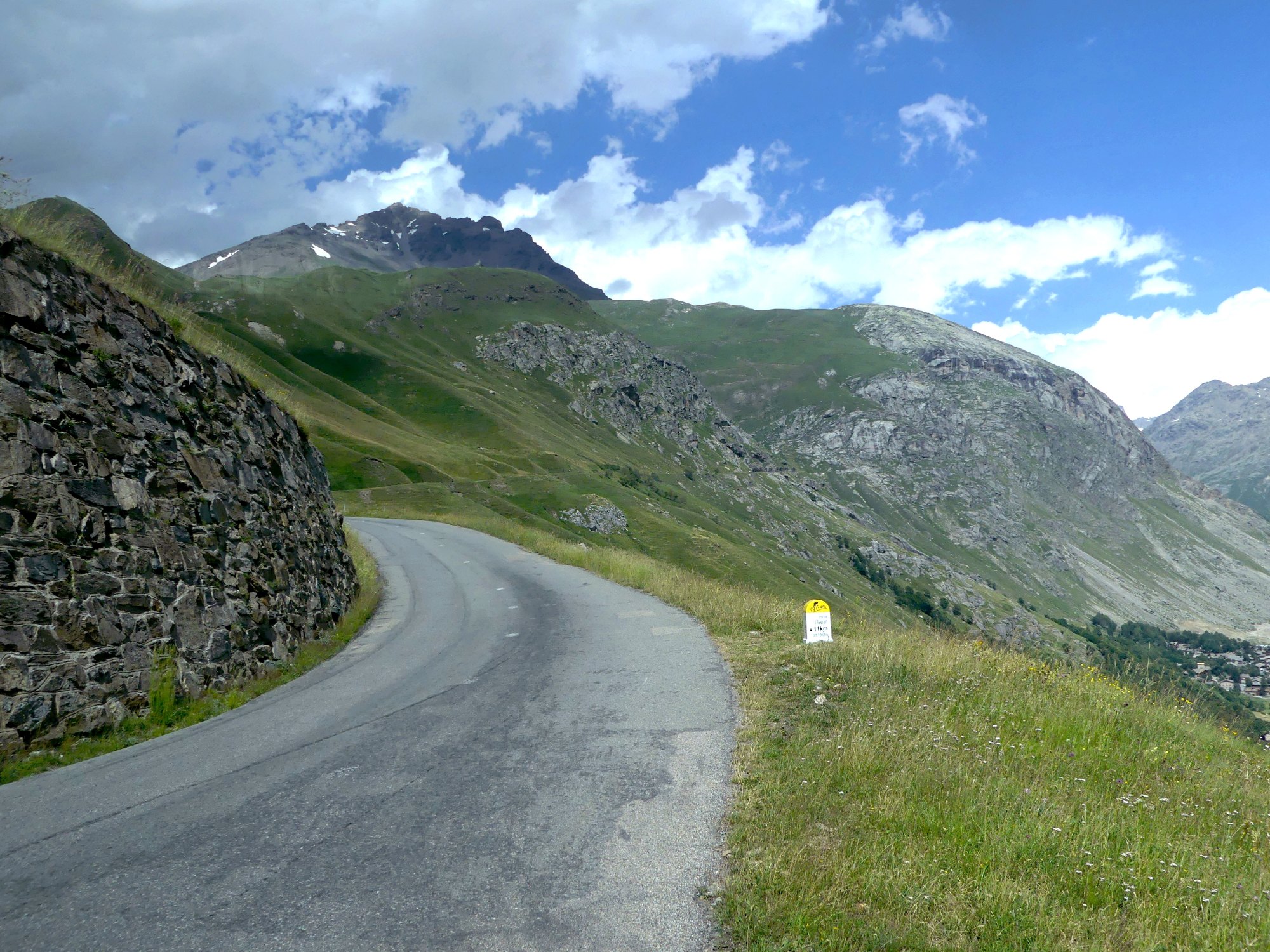
Photo above: The road from Bonneval-sur-Arc up to the Col de l’Iseran, on the Route des Grandes Alpes. Florian Pépellin, Wikimedia Commons, CC BY-SA 4.0, cropped.

France is made for road trips: mountain passes, deep gorges, wine routes and rugged coastlines, with the Vosges five hours from Brussels and the Alps and Provence a long day’s drive away. Thanks to its chemins ruraux, it is also one of the most open countries for legal driving on unpaved roads. Do sort out a few things before you go: how to pay tolls, whether you need a Crit’Air sticker, and the winter rules in the mountains.
- From Brussels5h10 to the Vosges
- TollsPéage, no vignette
- Low-emission zonesCrit’Air in 25 ZFEs
- Best time for the AlpsMid-June to mid-September
On this page: Regions Road trip Rules When to go Food Questions
The best regions and routes for a road trip
Each with the driving time from Brussels.

8h55
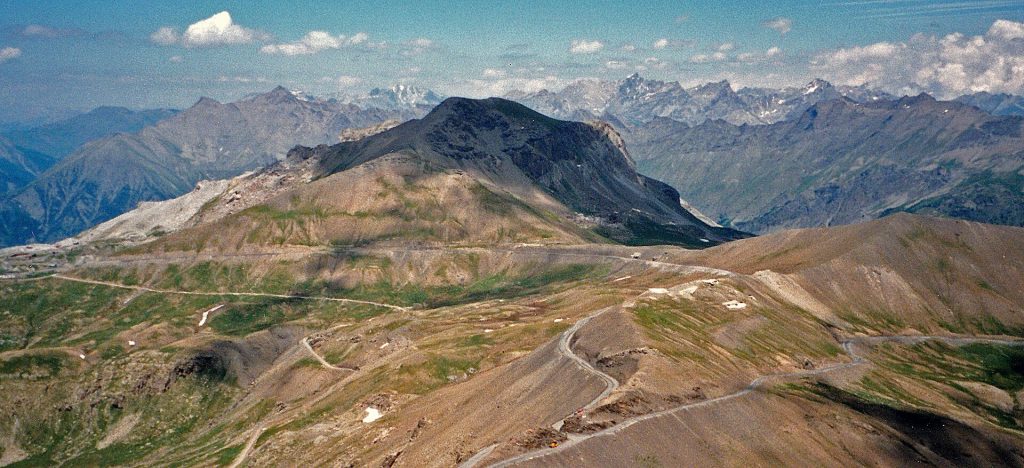
Route des Grandes Alpes
From Lake Geneva to the Mediterranean over 18 passes, with the Iseran and the Bonette. Fully open from June to October.
More about this region
The classic: from Thonon on Lake Geneva to Menton or Nice, some 684 to 748 km (sources differ) over 18 passes. Highlights include the Iseran (about 2,764 m) and a variant over the Bonette (2,802 m). Allow 5 to 7 days. The route is fully open from June to October. Fill up in Bourg-Saint-Maurice, and expect little mobile coverage around the Iseran and the Bonette.

5h10
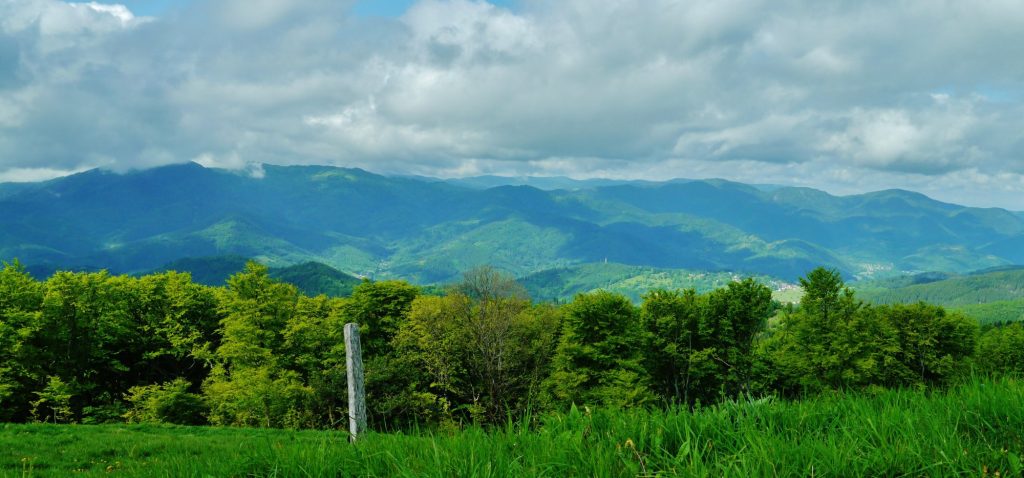
Vosges and Alsace
The closest mountain route, ideal for a long weekend. Combine the Route des Crêtes with the Alsace Wine Route.
More about this region
The closest mountain route, ideal for a long weekend. The Route des Crêtes runs for some 90 km along the ridges, from Sainte-Marie-aux-Mines to Cernay, and is open from April to mid-November. Combine it with the Alsace Wine Route (170 km, from Marlenheim to Thann), past the Haut-Koenigsbourg, walled villages and winstubs.

9h50
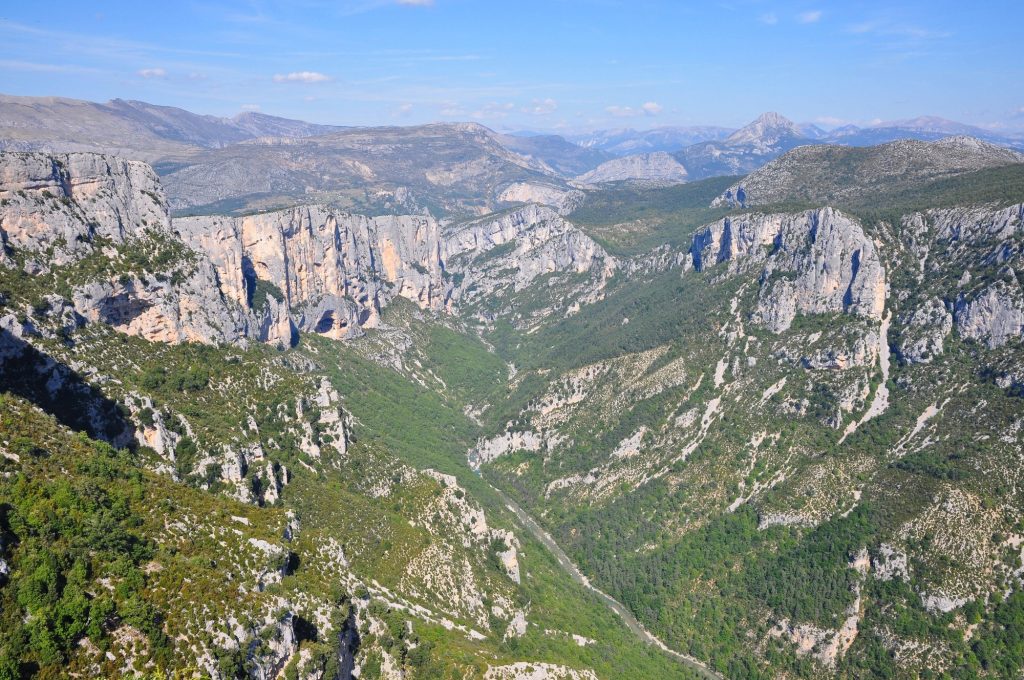
The gorges of the south
The Gorges du Tarn, the Ardèche with the Pont d’Arc, and the Gorges du Verdon up to 700 metres deep.
More about this region
The Gorges du Tarn cut 400 to 600 metres deep between the Causse Méjean and the Causse de Sauveterre, past castles and Sainte-Enimie. In the Gorges de l’Ardèche stands the natural arch of the Pont d’Arc (54 m high); inside the gorge you may only stay overnight at two bivouac sites. The Gorges du Verdon reach 700 metres deep: drive the north rim on the D952 between Castellane and Moustiers, and the south rim on the D71, D90 and D955, down to the Lac de Sainte-Croix. In summer, expect heat and fire risk.

7h50
Auvergne
A volcanic landscape in the Massif Central, with the Pas de Peyrol as its highest pass.
More about this region
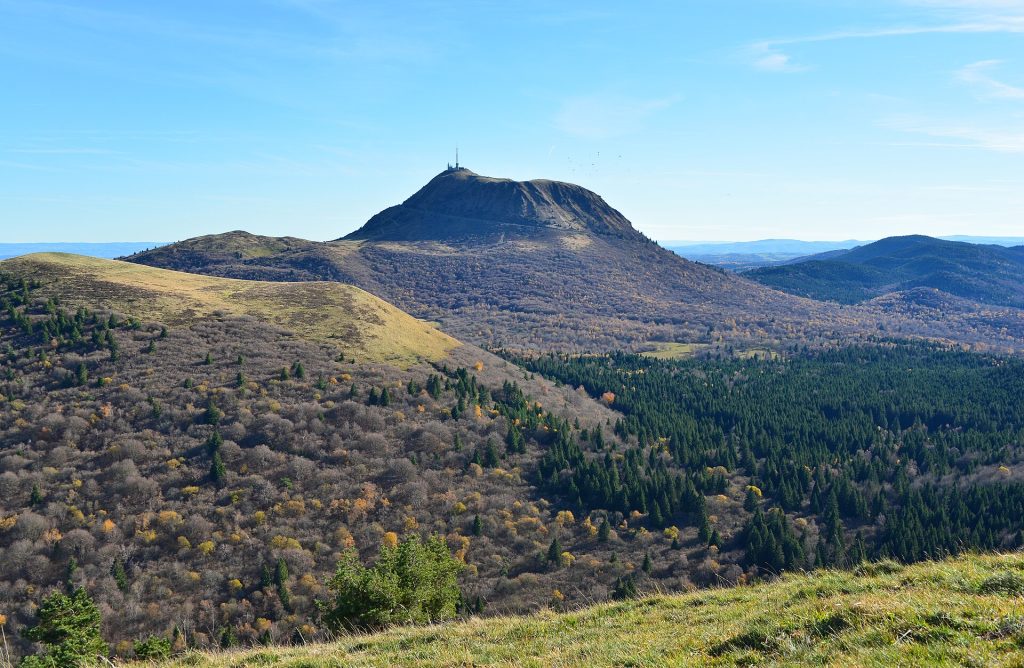
A volcanic landscape in the Massif Central. The Pas de Peyrol (1,589 m) in the Cantal is the highest pass in the Massif Central. You cannot drive up the Puy de Dôme, a UNESCO World Heritage site since 2018: private cars are not allowed, but the rack railway is.

5h30
Normandy and Brittany
No mountains, but shorter distances: the Route du Cidre, pink rocks and largely toll-free motorways in Brittany.
More about this region
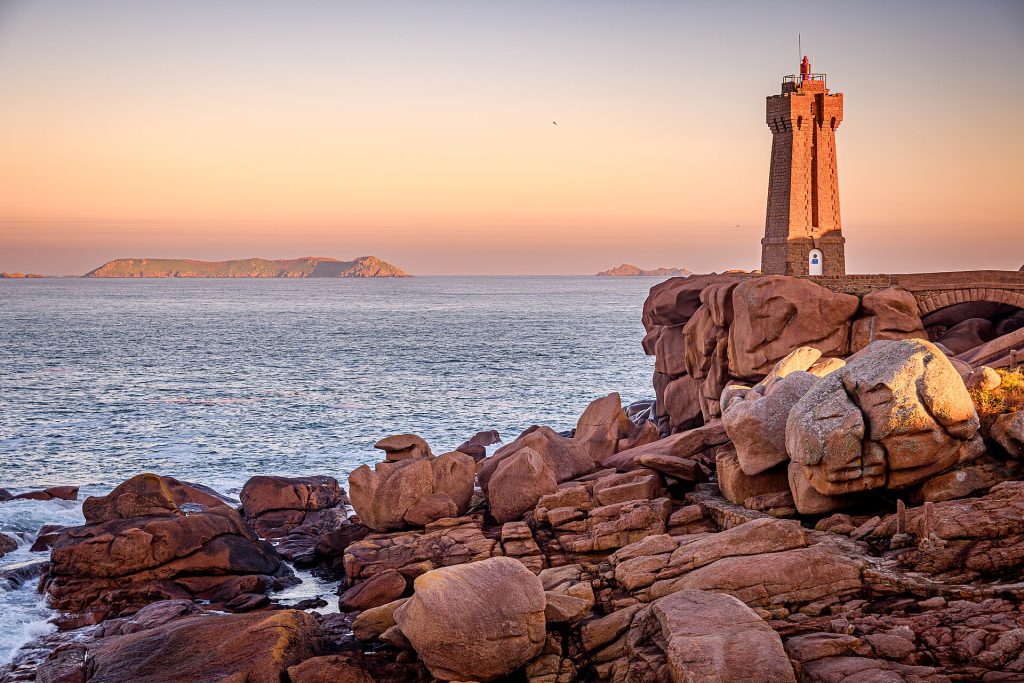
No mountains, but shorter distances. In Normandy you drive the Route du Cidre, a 40 km loop through the Pays d’Auge, past Beuvron-en-Auge and Cambremer. In Brittany you follow the Pink Granite Coast, with pink rocks and beaches around Trégastel. A bonus: the Breton motorways are largely toll-free.

11h30 + ferry
Corsica
Ferries from Toulon, Nice and Marseille. Around 40% of the island is protected.
More about this region
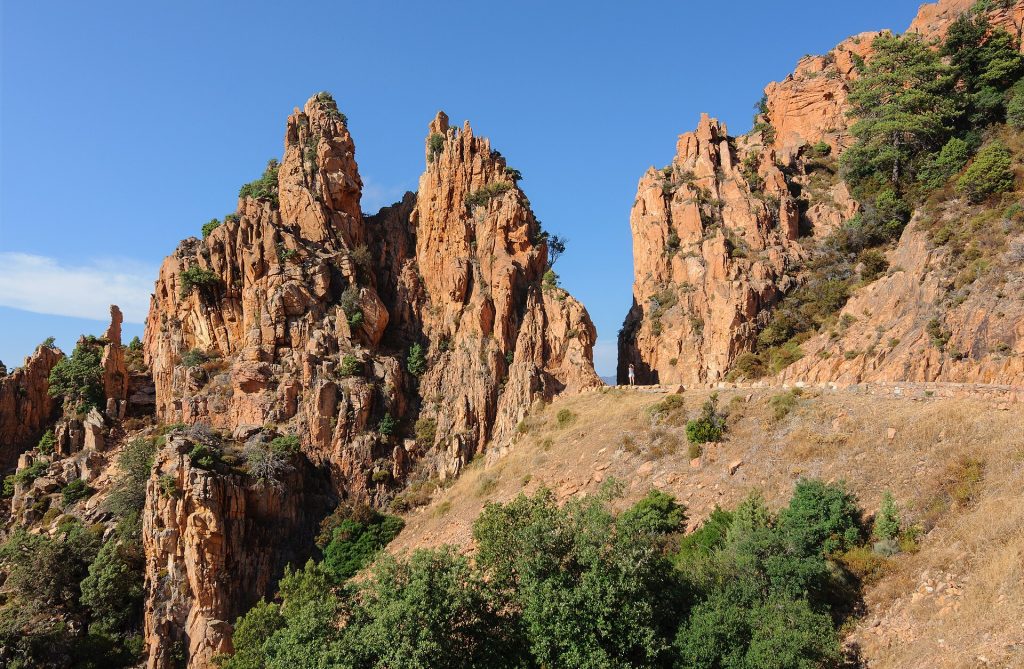
Ferries sail from Toulon, Nice and Marseille to Bastia, Ajaccio, Calvi and L’Île-Rousse, among other ports. Around 40% of the island is protected. For a stretch of unpaved road there is the track to Saleccia beach, for which a 4×4 is recommended.
Also worth it: the Pyrenees, with the Col du Tourmalet (2,115 m); Pau is 11h30 from Brussels.
Road trip guide
Route des Grandes Alpes in 6 days
6 days · 18 passes · open from June to October
Day by day from Lake Geneva to the Mediterranean: driving times, where you can legally sleep and what not to miss along the way.
Shorter? The Alsace Wine Route in 3 days, from Marlenheim to Thann, past wine villages and the Haut-Koenigsbourg.
The rules at a glance
Last checked on 24 November 2026. Rules change: check the official source listed at the bottom just before you leave.
Driving in France
Motorways 130, 110 in rain
Priority to the right, 0.5 g/l alcohol, and speed camera detectors are banned.
All rules
- Priority to the right is the basic rule at junctions, unless signs say otherwise.
- Rain means slower: in wet weather the limit drops from 130 to 110 km/h on motorways, from 110 to 100 on dual carriageways and from 90 to 80 on roads with two lanes in each direction. With visibility below 50 metres the limit is 50 km/h everywhere. At motorway roadworks it is usually 90 or 70.
- New drivers: holders of a French probationary licence have lower limits (110 on motorways). Whether that also applies to new drivers from abroad is not clear.
- Serious speeding: driving 50 km/h or more over the limit is a criminal offence (délit). You risk up to 3 months in prison and a €3,750 fine, and your car can be immobilised or impounded.
- Alcohol: from 0.8 g/l, drink-driving is a criminal offence with heavy penalties.
- Speed camera detectors are banned: owning, carrying and using one. You risk up to €1,500, and the device and even your car can be confiscated.
- With snow chains fitted, the maximum speed is 50 km/h.
- Scam toll texts are circulating around the barrier-free tolls. Only pay through the official channels.
Vignettes, tolls and low-emission zones
Péage per section, no vignette
On free-flow motorways you pay within 72 hours. In the 25 low-emission zones you need a Crit’Air sticker.
All rules
- Tolls (péage): there is no vignette. Usually you take a ticket at the entrance and pay at the exit. The motorways in Brittany are largely free.
- Free-flow, without barriers: on the A79 (Allier), the A13-A14 (Paris–Caen), the A69 (Toulouse–Castres) and the Boulay junction on the A4. Cameras read your number plate, and you pay within 72 hours online, at a sales point or with a toll tag. Paid late? Then €90 is added (€10 if you pay within 15 days), rising to €375 after two months.
- Crit’Air: in the 25 low-emission zones (ZFE), every car must display a Crit’Air sticker, including foreign-registered cars. Paris and Lyon ban cars rated Crit’Air 3 and above, roughly diesels from before 2011 and petrol cars from before 2006. Fine: €68.
- Ordering: only through certificat-air.gouv.fr, for €5.11, postage included. The sticker comes by post, so order in good time. How to order and the rules per city are on our page about the Crit’Air sticker.
- The ZFEs are staying: on 21 May 2026 the Conseil constitutionnel struck out the article that abolished them.
For the full details, see our page on vignettes, tolls and low-emission zones in Europe.
What to carry in your car
Hi-vis vest and warning triangle
A breathalyser and a spare wheel are not required.
More details
Mandatory: a CE-marked hi-vis vest within reach and an approved warning triangle. If you have to get out after an emergency stop, the driver wears the vest. If your car is stopped in a dangerous spot, you place the triangle at least 30 metres back, with your hazard lights on. A breathalyser is not required, and neither is a spare wheel; a first-aid kit and a fire extinguisher are recommended. More on our page on mandatory car equipment by country.
Winter in the mountains
1/11 to 31/3: winter tyres or chains
In the mountain municipalities of 34 departments. At sign B26, the chains go on.
More details
In winter the Loi Montagne applies from 1 November to 31 March in the mountain municipalities of 34 departments. There you need four tyres with the 3PMSF symbol, or chains or snow socks on board for at least the driven wheels. Tyres marked M+S only do not count. There is no fine for this requirement yet, but sign B26 (chains mandatory) applies all year and is fined. The Route des Crêtes in the Vosges is closed from 16 November 2026 until early April. More in our guide to winter tyres and snow chains.
Where to stay overnight
Sleeping in your car is allowed, max. 7 days in one spot
As long as you put nothing outside. Or pick an aire de service or France Passion.
All rules
Besides campsites, France has aires de service for motorhomes and France Passion, a network of some 2,200 farmers, winegrowers and craftspeople where members may stay for free for up to 24 hours. It is designed for self-contained motorhomes and vans, so ask whether a roof tent is welcome. Park4Night shows spots shared by other travellers, and Bienvenue à la ferme lists gîtes, chambres d’hôtes and campsites on farms.
- Sleeping in your car: no traffic rule bans it. A campervan may park wherever a car may. As soon as you put a table, chairs, awning or stabilisers outside, you are camping. You may stay in the same spot on the public road for 7 days in a row at most.
- Roof tent: no rule mentions it. From the definition of camping, though, it follows that an unfolded roof tent probably counts as camping. That is our interpretation, not a written rule. At a campsite you are always fine.
- Corsica: overnight stays in a car or campervan outside designated zones are banned from 10 pm to 6 am.
- With a tent: camping is allowed with the consent of whoever uses the land, but not on the coast, at protected sites, near listed monuments or within 200 m of drinking water catchments. A one-night bivouac is often tolerated; that is a practice, not a right. National parks have their own rules, such as the Écrins since June 2026.
- Fire: in and within 200 m of forests, anyone other than the owner may not light a fire, barbecues included.
More in our guides to sleeping in your car, campervan or roof tent and wild camping in Europe.
Off-road and unpaved roads
Chemins ruraux open, off the road banned
Fines up to €1,500. In doubt, ask at the mairie.
All rules
Driving off the road is banned in France too, but the choice of legal unpaved roads is wide. What is allowed:
- Open: public roads and chemins ruraux, unless they are closed. An unpaved road that is wide and passable enough for an ordinary passenger car counts as open.
- Closed: footpaths, fire service tracks (DFCI), towpaths and dykes, tracks that have formed on their own, private roads without permission, and driving among the trees.
- Closures: the mayor or the prefect closes a road by decree and with sign B7b. We found no public map of open roads in any department. In doubt, ask at the mairie.
- Fine: up to €1,500, and you also risk immobilisation of the vehicle, suspension of your licence or confiscation.
- Well-known tracks: the Col du Parpaillon tunnel has been closed since the storm damage of 2023. The track to Saleccia on Corsica ends at a paid car park (€6 per car under the 2023 arrangement); once it is full, no more vehicles may go down.
- Organised: 4×4 courses with an instructor, and guided drives at the Salon du Tout-Terrain et du Voyage in Valloire.
Drive in small groups, slow down for walkers and switch off your engine near horses. Country by country, see our guide to legal off-road driving in Europe.
Everything in one table: France at a glance
| Topic | What applies |
|---|---|
| Driving time from Brussels | Gérardmer (Vosges) 5h10, Bayeux (Normandy) 5h30, Thonon-les-Bains (start of the Route des Grandes Alpes) 8h55 |
| Speed limits | Built-up areas 50 km/h; outside built-up areas 80 (locally 90); motorways 130, 110 in rain |
| Alcohol | 0.5 g/l (probationary licence and accompanied driving 0.2) |
| Vignette and tolls | No vignette. Péage per section; on a few free-flow motorways you pay afterwards, within 72 hours |
| Low-emission zones | Crit’Air sticker required in the 25 ZFEs, also for foreign cars |
| Mandatory in the car | CE-marked hi-vis vest within reach and an approved warning triangle; breathalyser not required |
| Winter | 1/11 to 31/3 in mountain zones of 34 departments: 3PMSF tyres, or chains or snow socks on board. Fit chains at sign B26 |
| Sleeping in your car or roof tent | Allowed without camping behaviour, max. 7 days in the same spot. Roof tent: no rule (probably camping) |
| Wild camping | Allowed with the land user’s consent; not on the coast, at protected sites or near drinking water catchments |
| Off-road | Banned off the road (up to €1,500); public roads and chemins ruraux are open unless closed |
| Emergency number | 112 |
Driving times are model values from central Brussels, without breaks or traffic.
When to go
idealopen or good timestricter fire ruleswinter rules (Loi Montagne)
Details by region
- Alps: ideally from mid-June to mid-September. July and August are the busiest, and after mid-September the first passes can already close because of snow.
- Vosges: the Route des Crêtes is open from April to mid-November.
- South: from mid-June to mid-September stricter fire rules often apply, and on days of very high fire risk entire forest areas can be closed.
- Corsica: for mountain walks from May to early October; the huts on the GR20 were staffed from 16 May to 4 October in 2026.
- Winter: from 1 November to 31 March the Loi Montagne applies in the mountains.
Food along the way
- Alsace and Lorraine: choucroute, flammekueche and quiche lorraine.
- Normandy: scallops, apples and crème Chantilly; cider and calvados.
- Brittany: buckwheat galettes, mussels and lobster.
- Savoie and Jura: Beaufort, Reblochon, Comté, Morbier and Mont d’Or.
- Aubrac and Auvergne: aligot, a purée made with tomme fraîche.
- Basque Country: jambon de Bayonne, often rubbed with piment d’Espelette.
- Périgord: black truffle, foie gras and confit.
- Corsica: brocciu, figatellu and dishes made with chestnut flour.
Farm shops and producers’ shops are listed on Bienvenue à la ferme.
Frequently asked questions
Do I need a Crit’Air sticker?
Yes, as soon as you enter one of the 25 low-emission zones (ZFE), such as Paris or Lyon, also with a foreign-registered car. Order it only through certificat-air.gouv.fr, and in good time: it comes by post.
How do I pay a barrier-free toll?
On the free-flow motorways you pay within 72 hours online, at a sales point or automatically with a toll tag. Pay late and a surcharge is added. Beware of scam texts: only pay through the official channels.
Can I sleep in my car in France?
Yes, as long as you are legally parked and put nothing outside your car, for 7 days in the same spot at most. On Corsica it is banned outside designated zones from 10 pm to 6 am.
Will I be fined without winter tyres?
Not yet for the Loi Montagne requirement itself: the fine has not been introduced. If you ignore sign B26, you can be fined. Without 3PMSF tyres, take chains or snow socks.
Useful words
- péage / flux libre: toll / barrier-free toll, paid afterwards
- aire de service / aire de repos: motorhome area with water and waste disposal / rest area
- chemin rural / chemin privé: municipal country road (open in principle) / private road
- bivouac / camping sauvage: one night during a trek / wild camping
- massif fermé: forest area closed
- équipements spéciaux obligatoires: chains mandatory (sign B26)
- priorité à droite: priority to the right
Official sources
- Traffic rules: Service Public – vitesse au volant, Service Public – alcool au volant, Sécurité routière – intersections et priorités, Légifrance – Code de la route, art. R415-5
- Emergency number: Service Public – European emergency number 112
- Tolls and low-emission zones: Ministère de la Transition écologique – free-flow tolls, Certificat qualité de l’air (Crit’Air), Service Public – Circuler en ZFE
- Equipment and winter: Service Public – équipements obligatoires en voiture, Service Public – pneus hiver et chaînes
- Overnight stays and nature: Banque des Territoires – camping sauvage, Parc national des Écrins – bivouac order 2026, Feux de forêt – emploi du feu
- Off-road: DREAL – circulation des véhicules motorisés, PNR Monts d’Ardèche – mémento
Driving on?